
Trees
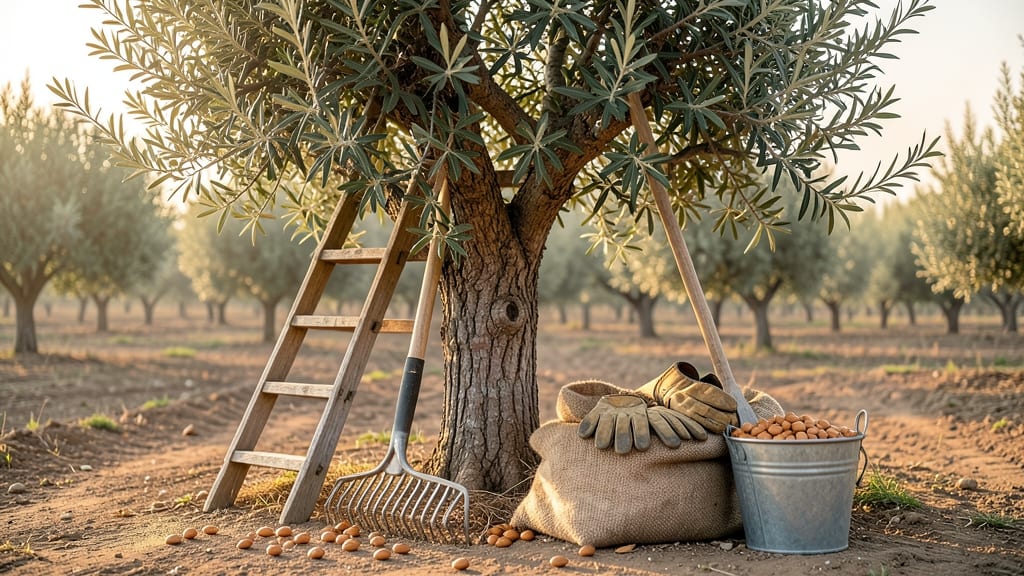
Harvesting the almond tree at the right time is everything—because waiting too long means bitter nuts, while picking too early leaves you with underdeveloped flavor.
Picture this: your 🌰 almond tree in General (USDA Zone 6 as default) is loaded with nuts, but you’re not sure if they’re ready. One wrong move, and you could ruin a season’s worth of work.
The good news? There’s a science to it—hull color, shell firmness, and even the time of day you harvest all play a role.
In this guide, I’ll break down the exact late summer to early fall window (August–October) when your tree’s nuts are at peak sweetness, plus how to spot the telltale signs of ripeness. No more guesswork—just a foolproof method for home growers to maximize yield and flavor.
You’ll also learn how climate zones shift the timeline, what to do if your nuts split too soon, and the one post-harvest step that keeps them fresh for months. Let’s get those almonds off the tree—and into your kitchen—at their absolute best.

Best almond harvest months by variety (with exact timing guide)
Harvesting almonds at the perfect moment transforms your labor into sweet, flavorful rewards. Each almond variety matures slightly differently, and regional climates—especially California’s Mediterranean zones vs. traditional Mediterranean regions—shift those windows.
Missing the harvest window by even a week can leave you with bitter, underdeveloped nuts or overripe ones prone to mold. Let’s break down the exact timing for popular varieties so you never miss peak ripeness.
California’s Central Valley, home to 100% of U.S. commercial almond production, typically harvests between late August and early October. Mediterranean climates (like Spain or Greece) may shift this by 2–4 weeks earlier, depending on spring rainfall and summer heat.
For home growers, understanding these nuances ensures you’re ready with ladders, pruners, and drying racks when the time comes.
🌰 Variety Matters: Nonpareil, the most widely planted commercial variety, ripens 2–3 weeks earlier than Butte or Fritz. Carmel, a popular home orchard choice, falls in the middle. Below, I’ve mapped out the ideal harvest windows for each, adjusted for both California and Mediterranean climates.
If you’re in California’s Central Valley, mark your calendar for late August through early October—this is when most varieties hit peak ripeness.
But if you’re in Mediterranean climates (like Spain or Italy), expect harvests to shift 2–4 weeks earlier, often aligning with early to mid-August for early varieties like Nonpareil. Temperature swings can also delay ripening; if summer heat waves persist, nuts may take longer to mature.
For home growers, regional adjustments are critical. In cooler coastal areas (e.g., Northern California or the Pacific Northwest), harvests may extend into early November, while desert regions (like Arizona or Southern California) might see earlier harvests due to intense heat.
Always monitor your tree’s hull color and nut firmness—these are your best indicators of readiness.
Pro tip: Shake a few nuts from the tree—if they rattle inside the hull and the shell feels hard, they’re ready. If the hulls are still green or the nuts feel soft, wait 3–5 more days.
Overripe almonds lose flavor and are prone to mold and pests, so don’t delay once you spot these signs.
Once you’ve identified the peak harvest window for your variety, gather your tools: a harvesting bag (or old sheets to collect fallen nuts), pruning shears for stubborn branches, and a ladder if your tree is tall.
Work on dry, sunny days to prevent mold growth during drying. Spread nuts in a single layer under a shade cloth (
How to determine when your almond tree is ready for harvest
Knowing the exact harvest time for your almond tree ensures you pick nuts at their peak flavor and texture. Unlike many fruits, almonds don’t ripen after picking, so timing is everything. The key lies in observing three critical signs: hull color, nut firmness, and moisture levels.
Each variety may vary slightly, but these universal cues will guide you to a perfect harvest every time.
First, focus on the outer hull—the papery covering around the nut. When it turns from bright green to tan or brown, that’s your first signal. However, don’t rush—wait until the hull begins to crack open naturally.
This usually happens in late summer to early fall, depending on your climate zone. In USDA Zone 7 or warmer, you might see these changes as early as August, while cooler regions could extend it to October.
⚠️ callout warning
- Underripe nuts (green hulls, soft shells) taste bitter and won’t store well.
- Overripe nuts (shriveled, moldy hulls) lose flavor and may spoil quickly.
- Check daily in the final harvest week—nuts can go from perfect to ruined in 24-48 hours.
The nut detachment test is your next best friend. Gently grasp a nut and twist it—if it separates cleanly from the hull, it’s harvest-ready. If the nut stays firmly attached, wait another 3-5 days.
This test is especially useful for self-pollinating varieties like Nonpareil or Butte, where nuts mature more uniformly. For cross-pollinated types like Fritz, you may need to check multiple branches to account for variability.
Don’t overlook the moisture content of the nuts themselves. A ripe almond should feel completely dry inside its shell—no dampness or stickiness. To test, crack open a nut (use a nutcracker or hammer) and check the kernel color. It should be uniform brown with no green or white patches.
If you see moisture or partial browning, your nuts need more time on the tree. Overripe nuts may also shrink slightly and develop a musty smell, signaling they’ve passed their prime.
Watch the leaves and branches too—they’re silent indicators of ripeness. As nuts mature, your tree’s leaves will start to yellow and drop, especially in drought-prone areas. This natural leaf fall helps the tree conserve energy for nut development.
However, avoid harvesting if heavy rain is forecast—wet nuts are prone to mold and spoilage. Always harvest on a dry, sunny day to preserve quality.
Once you’ve confirmed all three signs—brown hulls, easy detachment, and dry kernels—act fast! Almonds can go from perfect to overripe in as little as 2-3 days.
Use a pruner or harvesting rake to gently collect nuts from the ground (they’ll naturally drop) or shake branches over a tarpaulin for a cleaner harvest. After picking, spread nuts in a single layer under a shade cloth to dry for 1-2 weeks before storage.