
Picking
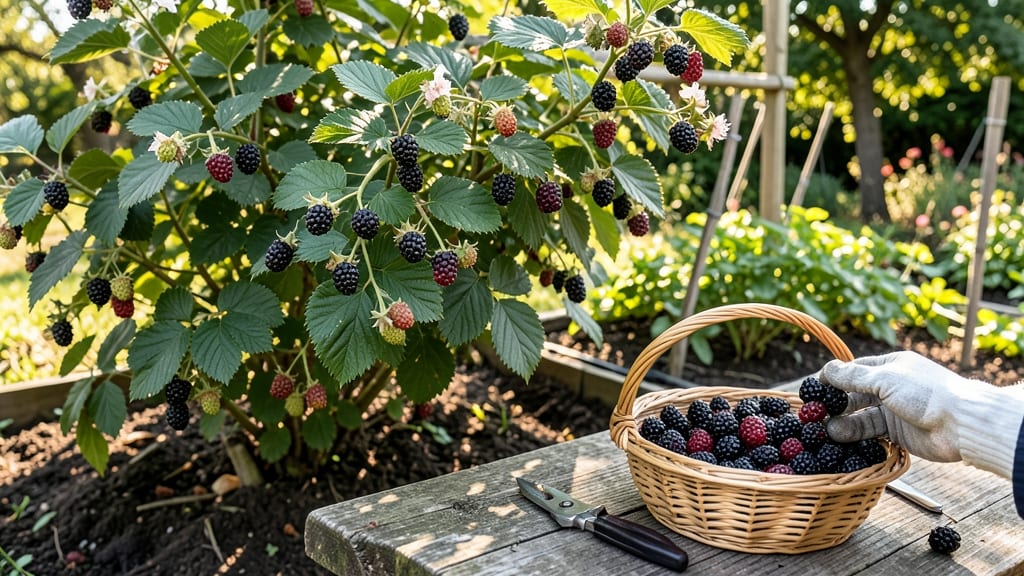
Summer brings the sweetest blackberry harvest season when those juicy 🫐 berries ripen just right.
Picture this: you’re reaching for a handful of plump, glossy blackberries—only to find they’re still tart or already turning to mush. The difference between a perfect harvest and a wasted one often comes down to timing and knowing the exact signs of ripeness.
In most of the U.S., blackberries peak in June through August, but regional climate shifts that window. A late spring frost in Zone 6a might delay ripening, while Southern growers could see berries ready by May.
Even the color isn’t the only clue—texture and how easily they detach from the vine matter just as much.
Below, I’ll break down the best months to pick by region, how to test for peak sweetness, and pro tips to stretch your harvest without overworking the plant. Ready to turn your summer into a berry bonanza?

Blackberry harvest season timeline: exact months and ripeness cues
Timing your blackberry harvest is an art that balances sweetness, yield, and plant health. In the U.S., summer harvests typically begin in late June for early varieties and stretch through August for late-season types.
The exact window depends on your USDA zone, with Zone 5 gardeners harvesting 2-3 weeks later than Zone 8 growers. Understanding these regional shifts ensures you don't miss peak flavor or waste overripe fruit.
Climate plays a surprising role in ripening. Cooler summers (like those in the Pacific Northwest) produce slower-ripening berries that need 8-10 weeks from flower to harvest, while Southern climates (Zone 9+) can yield ripe fruit in just 6 weeks.
Heatwaves can accelerate ripening, making berries overripe faster—so monitor your plants daily during heat spikes. Even a 5°F temperature drop can delay ripening by a week.
Here’s how to spot perfectly ripe blackberries: They should be deep black (not purple or red), plump, and easily detachable from the stem with a gentle tug. Press a berry—if it yields slightly (like a ripe peach), it’s ready.
Berries that are hard or still attached tightly need more time. Pro tip: Harvest in the morning when sugars are highest and temperatures are cooler.
| Variety Type | Harvest Window (U.S.) | Ripening Time (Days) | Climate Notes | Best For |
|---|---|---|---|---|
| Early Varieties (e.g., 'Triple Crown', 'Chester') |
Late June - Early July | 60-70 days | Thrives in cooler climates (Zones 5-7) | Fresh eating, jams |
| Mid-Season Varieties (e.g., 'Natchez', 'Ouachita') |
Mid-July - Late July | 70-80 days | Adaptable to Zones 6-9 | Canning, freezing |
| Late Varieties (e.g., 'Apache', 'Arapaho') |
August - Early September | 80-90 days | Heat-tolerant (Zones 7-10) | Long storage, baking |
| Ever-bearing Varieties (e.g., 'Illini Hardy', 'Shawnee') |
June + September (2 harvests) | 50-60 days (spring) / 70-80 days (fall) | Cold-hardy (Zones 4-8) | Extended harvests |
If you’re in the Southern Hemisphere, flip the calendar: Harvests occur from December to February, with early varieties ripening in late November and late types extending into March. The key difference?
Southern Hemisphere summers are hotter and drier, so berries ripen faster—check for readiness every 2-3 days during peak season. Mulching with straw or wood chips helps retain moisture and slows ripening slightly.
Birds are the ultimate blackberry thieves, and they’ll swoop in when berries turn even slightly ripe. To outsmart them, harvest every 2-3 days during peak season, focusing on fully ripe clusters first. Use bird netting if your plants are near trees or open areas.
A quick trick: Pick berries that are 90% ripe and leave them in a cool, dark place for 24 hours—they’ll finish ripening off the plant with better flavor retention.
Overripe blackberries are a sad reality for many gardeners, but you can salvage them by using them in baked goods or fermented products. Look for these signs of overripeness: Shriveled skin, mushy texture, or berries that fall off easily when touched.
If your plants produce more than you can handle, consider <
How to pick blackberries for maximum sweetness (and avoid common mistakes)
Blackberries at their peak are a burst of flavor, but knowing exactly when to pick them is an art. Many gardeners assume fully black berries are ready, but subtle cues—like plumpness and stem detachment—often signal true ripeness.
Ignoring these details can leave you with underripe tartness or overripe mush, and even stress your plant if you’re too aggressive with harvesting.
Beyond color, the texture and ease of picking are your best friends. A ripe blackberry should yield slightly when gently pressed and detach cleanly from the stem with a light twist.
Picking too early forces the plant to redirect energy to unfinished fruit, while waiting too long means bird raids or rotting clusters. Let’s break down the exact techniques commercial growers use to maximize both flavor and plant health.
🌱 Pro Tips for Picking Blackberries
- 🔹 1. Check for shine: Fully ripe blackberries have a slight glossy sheen—dull berries need more time.
- 🔹 2. Gently squeeze: A ripe berry will yield slightly under light finger pressure—like pressing a ripe peach.
- 🔹 3. Twist, don’t pull: Grasp the berry and twist gently—it should detach cleanly from the stem.
- 🔹 4. Harvest in stages: Pick every 2-3 days to avoid overloading the plant and encourage continuous fruiting.
- 🔹 5. Use sharp shears: For large clusters, pruning shears prevent damage to canes and speed up the harvest.
- 🔹 6. Avoid wet berries: Harvest dry berries in the morning to prevent mold growth from evening dew.
💡 Why it matters: These techniques ensure maximum sweetness, minimal waste, and healthier plants for next season’s harvest.
One of the biggest mistakes I see is picking berries by color alone. While fully black berries are usually ripe, some varieties—like Cheyenne or Natchez—may stay slightly red-tinged even when sweet. Always combine color with the texture test to avoid disappointment.
Another pitfall is harvesting in the heat, which can cause berries to overheat and spoil faster—stick to cool morning hours for the best quality.
Protecting your blackberry plants during harvest is just as important as picking ripe fruit. Over-picking weakens canes, reducing next year’s yield, while rough handling can damage the plant’s structure. Always support canes with trellises and avoid tugging on unripe clusters.
After harvesting, rinse berries gently in cool water and pat dry immediately to prevent rot. Store them in the fridge for up to 3 days or freeze for long-term use.
If you’re growing multiple varieties, track their ripening schedules separately—early varieties like Triple Crown may ripen weeks before late-season types like Ouachita. This staggered approach ensures you’re not missing peak ripeness or overwhelmed with a sudden glut of berries.
For large patches, consider color-coding harvest days in your garden journal to stay organized.
Remember, the health of your blackberry plant directly impacts next summer’s harvest. By following these proven techniques, you’ll enjoy sweeter berries, fewer losses, and a stronger plant year after year. Happy picking—and may your garden be overflowing with juicy, flavorful blackberries! 🫐