
How To
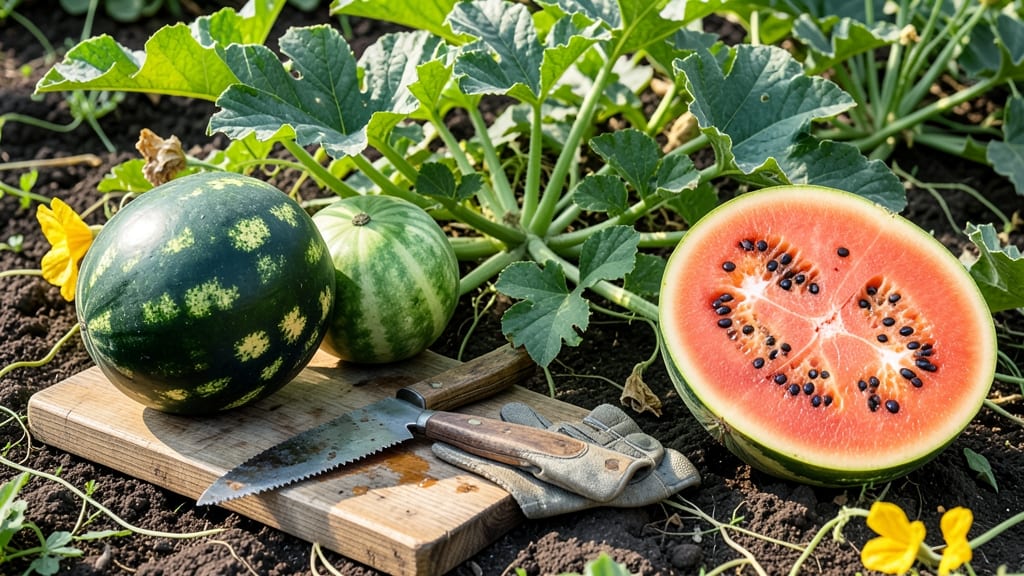
To harvest watermelon at peak sweetness, timing is everything—most varieties need 75 to 90 days from planting to ripeness, but guessing too early or too late can ruin the flavor.
Wondering why your watermelons taste bland or never ripen properly? Timing your harvest correctly is the secret to juicy, sweet 🍉 that burst with flavor—and avoiding a bitter disappointment.
From the moment those first male flowers appear, you’ve got a countdown to harvest, but not all watermelons follow the same schedule. Some varieties, like Sugar Baby, mature in as little as 60 days, while heirlooms like Moon and Stars can take 90 days or more.
In this guide, I’ll walk you through the exact signs to watch for—from the color of the tendril to the hollow thump of a ripe fruit—and how to adjust your harvest timing for the sweetest, juiciest 🍉 your garden has ever produced.

Watermelon ripening timeline: days to harvest from flowering for peak sweetness
Timing your watermelon harvest from flowering is the key to unlocking that perfect balance of sweetness and juiciness. Most gardeners focus on planting dates, but the real magic happens in those critical weeks after pollination when the fruit develops its signature flavor.
Understanding your watermelon variety and growth conditions will help you predict when to expect ripe fruit.
Watermelons typically take 70–90 days from flowering to harvest, though this varies by variety. Early varieties like Sugar Baby may be ready in as few as 65 days, while larger heirlooms like Moon and Stars can take up to 90 days.
The countdown begins when you spot those telltale yellow male flowers and see bees buzzing around them.
Here’s the game-changer: Watermelon ripening isn’t linear. The first 30 days after flowering focus on rapid fruit expansion, while the final 2–3 weeks are when sugars concentrate. Skipping this stage means bland, watery melons—even if they look big and ripe.
Your growing conditions matter too. Hot, dry climates can speed up ripening, while cooler or cloudy weather may stretch the timeline. In USDA Zone 6a, where summer days are long but not scorching, most varieties hit peak ripeness around mid-to-late August.
Adjust your expectations if you’re in a different zone or using black plastic mulch to warm the soil.
| Variety | Days to Harvest from Flowering | Key Ripeness Signs | Best For |
|---|---|---|---|
| Sugar Baby | 65–75 days | Brown tendril, cream/yellow underside | Small gardens, quick harvests |
| Crimson Sweet | 75–85 days | Deep red rind, hollow thump | Classic flavor, storage |
| Moon and Stars | 85–90 days | Star patterns visible, firm yet yielding | Heirloom lovers, slicing |
| Seedless Watermelon | 70–80 days | Uniform color, sweet aroma | Family-friendly, convenience |
| Charleston Gray | 80–90 days | Gray-green rind, creamy flesh | Southern gardens, storage |
Pay close attention to the tendril near the stem. When it turns brown and dries out, that’s your first clue the watermelon is nearing ripeness. Combine this with the classic thump test: A ripe watermelon should sound hollow when tapped near the blossom end.
If it’s dull, it needs more time on the vine.
Don’t overlook the ground spot—the area where the watermelon touches the soil. When the rind turns a creamy yellow or pale green here, it’s a dead giveaway that sugars are concentrating. This spot is often overlooked but is one of the most reliable indicators of ripeness.
Harvesting too early is a common mistake that leads to disappointing flavor. Even if your watermelon looks large, if it’s still firm and lacks that sweet aroma near the blossom end, it’s not ready.
Patience pays off—waiting those extra 7–10 days can transform a mediocre melon into a sweet, juicy masterpiece.
Pro tip: Mark your planting date and set reminders for 30, 60, and 80 days after flowering. This simple tracking system helps you stay on top of ripening progress and adjust your harvest plans based on weather changes.
For example, a late summer heatwave might accelerate ripening, while a sudden cold snap could delay it.
Remember, every watermelon variety has its own personality. While Sugar Baby might be ready in 70 days, a Moon and Stars could need 10 extra days to reach peak sweetness.
Trust the signs, not just the calendar, and you’ll always know when to pick your watermelons for that perfect burst of flavor.
Field-proven tricks to determine watermelon ripeness (beyond the guesswork)
If you've ever cut into a watermelon only to find it bland or underripe, you're not alone. The key to peak sweetness lies in knowing exactly when to harvest—and it's not just about counting days. Watermelons communicate their ripeness through subtle visual and physical cues that most gardeners overlook.
Instead of guessing based on days from planting, I rely on five foolproof methods to determine ripeness. These tricks work for all varieties, from small Sugar Baby melons to massive heirlooms. The best part? They don't require any special tools—just your eyes, ears, and a little patience.
⚠️ callout-warning
Overestimating maturity by 3-5 days can turn sweet watermelons bitter. Most varieties reach optimal ripeness 3-5 days after passing all ripeness tests—don't wait too long! For storage melons, harvest 1-2 days earlier than peak ripeness to extend shelf life.
First, check the tendril color near the stem. When ripe, this curly vine section turns completely brown and dries out. This is your most reliable early sign—ignore any green tendrils, as they indicate the melon needs more time. I've seen gardeners miss this clue entirely, leading to premature harvests.
The thump test is my favorite method for confirming ripeness. Tap the watermelon with your knuckles—it should sound hollow and deep, like a drum. A dull thud means it's underripe.
Pro tip: Compare two melons side by side; the one with the deeper sound is usually ready first. This test works best when the melon is warm from the sun.
Don't overlook the ground spot where the watermelon rests. When fully ripe, this area turns from white to a creamy yellow or light tan color. This natural bleaching occurs as the melon's sugars develop. I've found this method particularly useful for striped varieties where rind color can be misleading.
For aroma lovers, sniff the blossom end (the small stem area opposite the main vine). A ripe watermelon emits a sweet, musky scent—almost like a mix of honey and cantaloupe.
If you smell nothing, the melon needs more time. This is my final check before harvesting, as it confirms all other signs.
Finally, examine the stem separation. Gently twist the stem near the melon—it should detach cleanly with minimal resistance. If it tears or requires force, the melon isn't ready. This test ensures you're not harvesting too early, which is especially important for varieties prone to overripening quickly.