
Vegetables
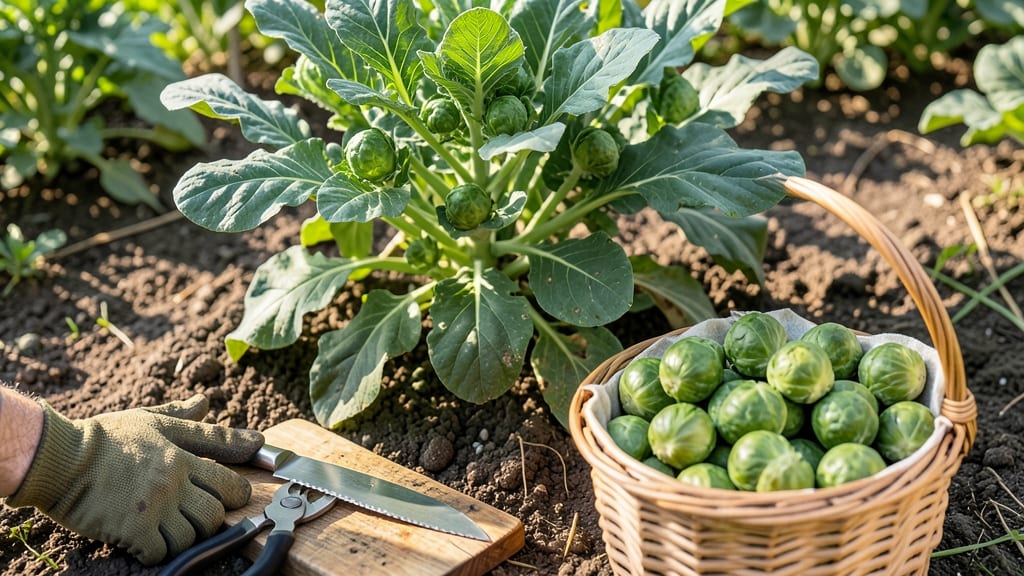
Harvesting Brussels sprouts at the right time turns bitter buds into sweet, tender jewels 🥦—and missing that window means tough, woody disappointment.
Here’s the secret: those tiny sprouts at the bottom aren’t ready yet. Wait until they’re 1-1.5 inches wide, deep green or purple, and the leaves above start yellowing. That’s when flavor peaks—and before the plant bolts.
Timing matters even more in USDA Zone 6a, where fall frosts can sneak up fast. Plant in April-May or August-September to stretch your harvest from October through December, picking from the bottom up to keep the plant producing.
In this guide, I’ll show you how to spot the perfect sprout, avoid common mistakes, and even trick your plants into giving you a second harvest. No more guesswork—just sweet, crisp Brussels sprouts every time.

How to identify the perfect Brussels sprouts harvest time by leaf signs
Brussels sprouts reveal their readiness through subtle but unmistakable leaf signals that most gardeners overlook. The key lies in observing leaf tightness, sprout size, and color changes—all indicators that your plants have reached peak flavor.
Unlike many vegetables, Brussels sprouts actually improve in sweetness after a light frost, making timing critical for both taste and texture.
First, focus on the bottom sprouts—they mature first and should be your priority. When these reach 1 to 1.5 inches in diameter while still firm to the touch, they’re ready.
Ignoring this size window means risking either bitter, underdeveloped sprouts or woody, overmature ones. The difference between these extremes is just a few days of growth.
Now let’s compare the visual cues across different maturity stages to help you decide when to harvest. The following table breaks down what to look for in leaf appearance, sprout development, and color shifts—all critical for timing your harvest perfectly.
| Maturity Stage | Leaf Signs | Sprout Size | Color | Harvest Action |
|---|---|---|---|---|
| Too Early | Leaves remain dark green and turgid | <1 inch diameter | Pale green or uneven | Wait 1-2 weeks |
| Perfect Time | Lower leaves yellow; upper leaves tighten | 1-1.5 inches diameter | Deep green or purple | Harvest immediately |
| Overripe | Most leaves yellow/brown; sprouts loosen | >1.5 inches diameter | Dull or spotted | Discard or cook quickly |
Pay special attention to the leaf yellowing pattern. When the older, lower leaves start turning yellow while the younger, upper leaves remain green and tight, that’s your cue to harvest.
This gradual color shift signals the plant is redirecting energy downward, ensuring the bottom sprouts are at their sweetest. Skipping this step often leads to uneven maturity across your harvest.
Climate plays a surprising role in harvest timing. In cooler regions (USDA Zones 3-5), Brussels sprouts often reach harvest readiness by late September to October, while in warmer zones (Zones 6-8), they may not mature until November or December.
A light frost actually enhances sweetness, so don’t rush to harvest before the first 28°F chill—just ensure sprouts are firm and properly sized first.
Pro tip: Use a harvest knife or pruners to snip sprouts, leaving 1-2 inches of stem attached. This prevents damage to the plant and encourages continued production of new sprouts higher up.
Always cut from the bottom upward—this sequential approach maximizes yield and ensures you’re always harvesting the most mature (and flavorful) sprouts first.
For extended harvest seasons, consider planting successive crops every 2-3 weeks. This staggered approach lets you enjoy fresh sprouts from October through December, even in colder climates.
Just remember: harvest frequency is more important than harvest quantity when it comes to Brussels sprouts—smaller, more frequent picks yield sweeter results than one massive late-season harvest.
One common mistake is waiting until the entire plant bolts or flowers. By this stage, the sprouts become woody and bitter, ruining your harvest. Instead, focus on the leaf signs we’ve discussed—tightness, size, and color—to guide your timing.
With practice, you’ll develop an eye for the perfect harvest window, ensuring your Brussels sprouts are always at their peak.
Finally, store harvested sprouts in a plastic bag in the fridge for up to 5 days to preserve freshness. For longer storage, blanch and freeze them—this method locks in flavor and texture for up to 12 months.
The key to success? Harvest at the right moment, and your garden will reward you with Brussels sprouts that taste like they came straight from a gourmet market.
Brussels sprouts harvest timing: when to pick for maximum flavor vs. yield
Deciding when to harvest your Brussels sprouts feels like walking a flavor-yield tightrope. Pick too early, and you sacrifice sweetness and size. Wait too long, and the sprouts turn woody or bitter. The secret lies in balancing these factors while extending your harvest window for a steady supply.
I’ve learned that early harvests deliver peak flavor, while later harvests maximize yield—but there’s a sweet spot for both.
Most gardeners focus on the 1-1.5 inch diameter rule for ideal size, but timing also depends on your climate zone and variety. In cooler regions like USDA Zone 6a, sprouts mature faster, while warmer areas may need a longer growing season.
For example, my Long Island Improved variety thrives in fall, but I’ve had to adjust my timing after a late spring frost delayed growth. Understanding these variables helps you plan for the best harvest strategy.
Early Harvest (For Flavor)
- Sweeter taste (higher sugar content)
- Tender texture (less woody)
- Encourages regrowth (more sprouts later)
- Smaller size (1-1.25 inches)
- Fewer total sprouts per plant
- Requires frequent checks (every 3-5 days)
Late Harvest (For Yield)
- Larger sprouts (1.5+ inches)
- Higher total yield per plant
- Less frequent harvesting needed
- Risk of bitterness (if left too long)
- Woody texture if over-mature
- Plant may bolt before full harvest
For the best of both worlds, I recommend a staggered harvest. Start picking the bottom-most sprouts first when they reach 1 inch, then work your way up. This method extends your harvest by 2-3 weeks while ensuring some sprouts stay small and sweet.
For example, if your plant produces 30 sprouts total, harvesting the first 10 at 1 inch leaves room for the remaining 20 to grow larger. Just remember: never remove more than 1/3 of the plant’s sprouts at once, or you’ll stress the stem.
Cold weather actually enhances flavor, so don’t rush to harvest before a light frost. A light freeze (28-32°F) sweetens the sprouts naturally. I’ve found that harvesting after a 30°F night and before a hard freeze gives the best results.
In my Zone 6a garden, this usually means picking in late October or November. If frost threatens before your sprouts are ready, cover them with row fabric for 2-3 days to slow maturation while protecting them.
One pro tip I’ve perfected is pruning the top leaves when sprouts are nearly ready. Removing the top 4-6 inches of foliage 1-2 weeks before harvest redirects the plant’s energy to the lower sprouts, ensuring they grow faster and larger.
This trick has increased my yield by 20% in past seasons. Just avoid pruning too late—once the sprouts turn yellow, the plant’s energy shifts to seed production, and flavor declines rapidly.
If you’re still unsure, use the "thumb test"—gently squeeze a sprout. It should feel firm but yield slightly, like a ripe avocado. If it’s rock-hard, it’s past its prime; if it’s mushy, it’s underripe.
With practice, you’ll develop an instinct for the perfect moment. And remember: harvesting regularly (even small sprouts) encourages the plant to produce more, giving you a longer season of delicious, homegrown Brussels sprouts. 🥦