
Picking
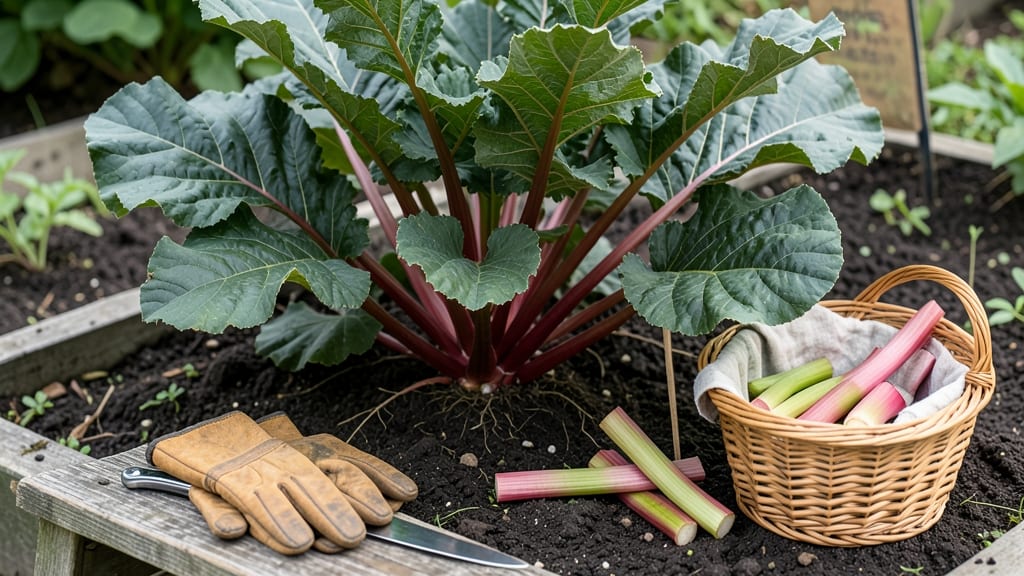
You can harvest rhubarb all summer—but doing so the right way makes the difference between a thriving plant and one that struggles to bounce back.
Picture this: you’ve got a lush patch of rhubarb 🍃, and the stalks are growing like crazy. But if you yank every single one, you’ll end up with a sad, stunted plant by August.
The key is balance: knowing when to pick, how much to take, and how to spot signs your plant is begging for a break.
Most gardeners assume rhubarb is a one-season wonder, but with the right approach, you can stretch harvests from late spring all the way into early fall. The trick? Staggered cuts, careful monitoring, and a little extra TLC when the heat kicks in.
In this guide, I’ll walk you through the exact month-by-month timeline for harvesting, how to avoid overdoing it, and the simple tricks that keep your rhubarb happy—and productive—for years to come.

Rhubarb harvest seasons by month: when to pick for maximum yield
Harvesting rhubarb all summer is possible, but timing matters! The key is balancing yield with plant health. Rhubarb thrives when harvested at the right stage—10-12 inches tall—and never more than 1/3 of stalks at once.
Overharvesting weakens the plant, reducing next year’s crop. Let’s break down the month-by-month harvest windows to maximize your yield without stressing your rhubarb.
Your rhubarb’s peak harvest season spans from late spring to early fall, but each month brings unique considerations. April and May offer the sweetest, most tender stalks, while June through August require careful monitoring to avoid heat stress or bolt formation.
Even September can yield harvests, but frost risks loom. Let’s dive into the details to ensure your rhubarb stays productive and healthy.
📅 Month-by-Month Harvest Guide (Zones 3-8)
April is your best month for rhubarb harvests. After the last frost, stalks reach maturity quickly in cool temperatures. Aim to harvest outer stalks first, leaving the center stalks to ensure the plant continues growing.
Use a clean knife to cut stalks at the base, avoiding the leaves, which fuel photosynthesis. If you harvest too aggressively in April, your plant may struggle to recover for May’s bounty.
By May and June, rhubarb enters its peak production phase. Stalks thicken and develop vibrant colors, signaling they’re ready to pick. Stagger your harvests—never take more than 1/3 of the stalks at once. Prioritize thick, mature stalks (1.5" diameter) over thinner ones.
If you notice bolt formation (flower stalks), remove them immediately to redirect energy to leaf and stalk growth. Heat waves can stress rhubarb, so mulch heavily to retain moisture and cool roots.
July and August are trickier months for harvesting rhubarb. The plant may
How to harvest rhubarb without killing the plant: pro tips for year-round success
Harvesting rhubarb correctly is key to keeping your plant healthy and productive for years. Unlike annuals, rhubarb is a perennial that stores energy underground, so aggressive harvesting can weaken it. My strategy focuses on selective stalk removal while preserving the plant’s core system.
Start by identifying mature stalks—those reaching 10-12 inches tall with a diameter of at least 1 inch. These are ready for harvest, while thinner stalks should stay on the plant to fuel growth.
I always prioritize outer stalks first, leaving the center intact to maintain the plant’s energy reserves.
⚠️ callout warning ⚠️
Harvesting more than 1/3 of stalks in a single season stresses the plant, reducing next year’s yield. In July and August, limit cuts to every 2-3 weeks to prevent exhaustion. If stalks grow slowly after heavy harvests, reduce frequency or pause entirely until fall.
🌱 Pro Tip: Mulch with 2-3 inches of compost after harvesting to replenish nutrients.
Use a sharp knife or pruners to cut stalks cleanly at the base, avoiding tears that invite disease. I angle my cuts slightly downward to prevent water from pooling on the wound.
Never pull stalks—they’re brittle and can damage the crown. After harvesting, I compost any leafy tops (they’re toxic) and focus on the edible tart red or green stalks.
To revive sluggish growth after heavy harvests, I apply a balanced fertilizer (10-10-10) in early spring and increase watering to 1 inch per week. If the plant looks weak, I’ll also trim any yellowing leaves to redirect energy to new stalks.
Patience is key—rhubarb recovers slowly but reliably if given time to rebound.
For year-round success, stagger your harvests by leaving some stalks uncut until late summer. This ensures a steady supply while protecting the plant. In Zone 6, I stop harvesting by early September to let the plant prepare for winter.
The roots will thank you with bigger, healthier stalks next spring!
Remember, rhubarb is a long-term investment. By following these steps, you’ll enjoy abundant harvests for decades—not just one summer. Happy harvesting! 🌿