
Planting
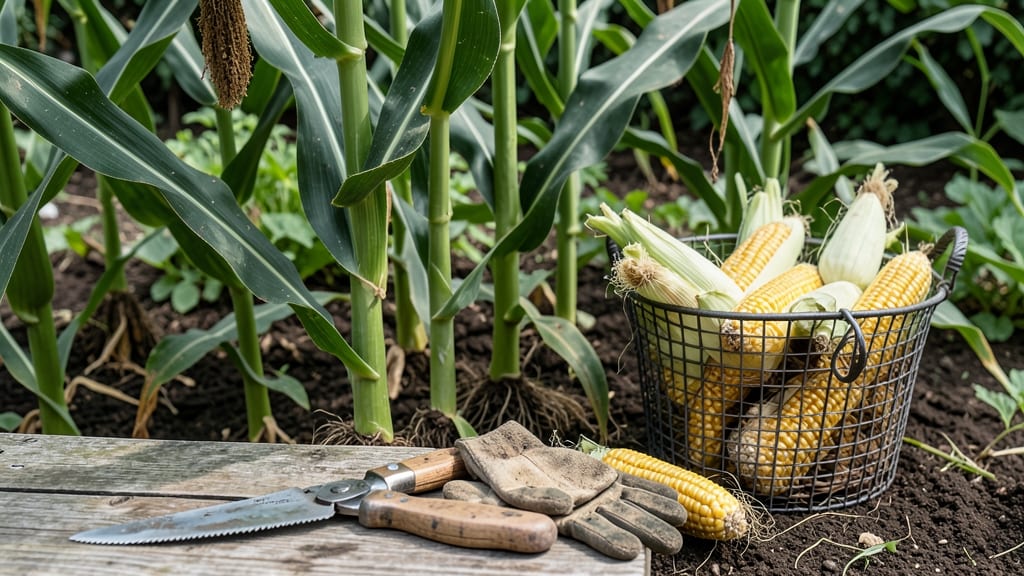
Corn growth stages timeline: critical days 0-90 for optimal harvest
Understanding your corn’s 90-day growth cycle is key to harvesting sweet, tender ears packed with flavor. Each stage—from seedling to kernel development—requires specific care, and missing these critical windows can turn your harvest into tough, starchy disappointment.
Let’s break down what happens every 10 days so you can nurture your plants to perfection.
Corn doesn’t grow in a straight line; it follows distinct phases with visible milestones that signal when to adjust water, fertilizer, or pest control. For example, days 30-40 are all about pollination, while days 60-75 focus on kernel plumpness.
By recognizing these stages early, you’ll avoid common pitfalls like poor ear development or uneven ripening across your plants.
During the seedling stage (days 0-14), your corn’s first true leaves will emerge, and you’ll need to thin seedlings to prevent overcrowding. This is also when soil temperature matters most—keep it above 60°F for optimal germination.
If your seedlings look leggy or pale, they’re not getting enough light, and you’ll need to transplant them to a sunnier spot or use grow lights.
The vegetative growth phase (days 15-30) is where your corn plants bulk up, developing 6-12 leaves and reaching 3-5 feet tall. This is the perfect time to side-dress with nitrogen (like compost or a balanced fertilizer) to fuel rapid stem and leaf growth.
Watch for corn borers or aphids—their damage can stunt growth later.
When your plants hit days 30-40 (tasseling stage), you’ll spot the male flowers (tassels) at the top of the plant. This is nature’s cue that pollination is imminent!
If your silks (female flowers) look dry or brittle, you may need to hand-pollinate by gently brushing tassels over them. Increase watering slightly during this phase to support pollen production.
Silking (days 40-50) is one of the most critical windows for your harvest. The silks should be moist and bright yellow—if they’re dry or brown, pollination failed.
Fertilize with a potassium-rich blend now to encourage strong ear development. This is also when earworm moths become active, so consider wrapping ears in paper sacks for protection.
By days 50-70 (kernel development), your ears will start forming, and kernels will transition from clear to milky white. Reduce watering slightly to prevent kernel splitting, and keep an eye out for fungal diseases like rust or blight.
If leaves near the ear start yellowing, your plant may be nutrient-deficient—apply a balanced fertilizer to revive it.
The final stretch (days 70-90) is all about harvest timing. Your corn is ready when silks turn brown and kernels
How to calculate your corn’s exact harvest date based on variety and planting time
Calculating your corn’s exact harvest date starts with understanding the days-to-maturity label on your seed packet. This number tells you how many days it takes from planting to harvest under ideal conditions—usually 60 to 120 days for most varieties.
For example, a 75-day variety planted on May 1st will have a target harvest date of July 15th, but real-world factors like frost dates and local climate can shift this timeline significantly.
Don’t rely solely on the seed packet’s estimate, though. Your last frost date and first frost date are critical. Corn needs a 120- to 150-day frost-free growing season to reach maturity.
If you’re in Zone 6a (like me!), with a 165-day frost-free window, you can safely plant early-mid season varieties. But in shorter seasons, opt for 60- to 80-day varieties to avoid frost ruining your crop before harvest.
- Check your seed packet for days-to-maturity (e.g., 70, 85, or 100 days).
- Add your planting date to the days-to-maturity to get your initial harvest estimate.
- Subtract 10-14 days for pollination delays (silking to kernel fill takes time!).
- Verify against your first frost date—corn won’t survive frost after silking!
- Adjust for local heat stress (hotter summers may speed up maturity by 5-7 days).
Once you’ve nailed down your estimated harvest window, watch for visual cues like silk browning and kernel development. Early-maturity varieties (like ‘Early Sunglow’) may be ready in 60-70 days, while sweet corn varieties (like ‘Silver Queen’) take 85-100 days.
Pro tip: Pierce a kernel with your fingernail—if it’s milky white, it’s perfect for eating; if it’s translucent, it’s past its prime.
Timing is everything when it comes to husk tightness and leaf color. The husk should be snug but not brittle, and the lower leaves near the ear should start yellowing.
If you see brown silks and the kernels feel plump, grab your knife—harvesting at this stage ensures maximum sweetness and crisp texture. Waiting too long turns your sweet corn into starchy dent corn, which is perfect for grinding into flour but not for fresh eating.
For succession planting, space your corn varieties by 2-3 weeks to extend your harvest season. Plant early varieties first (like ‘Ambrosia’ at 65 days), then mid-season (like ‘Peaches and Cream’ at 80 days), and finally late varieties (like ‘Country Gentleman’ at 110 days).
This way, you’ll have fresh ears every 2-3 weeks instead of one big harvest that spoils quickly.
Remember, local microclimates matter! If your garden gets hotter than average, your corn may mature 5-10 days faster. Conversely, cooler summers can delay harvest by a week or more.
Keep a gardening journal to track your corn’s progress year over year—this helps you refine your planting and harvest schedule for future seasons. With practice, you’ll predict your harvest date like a pro!