
Vegetables
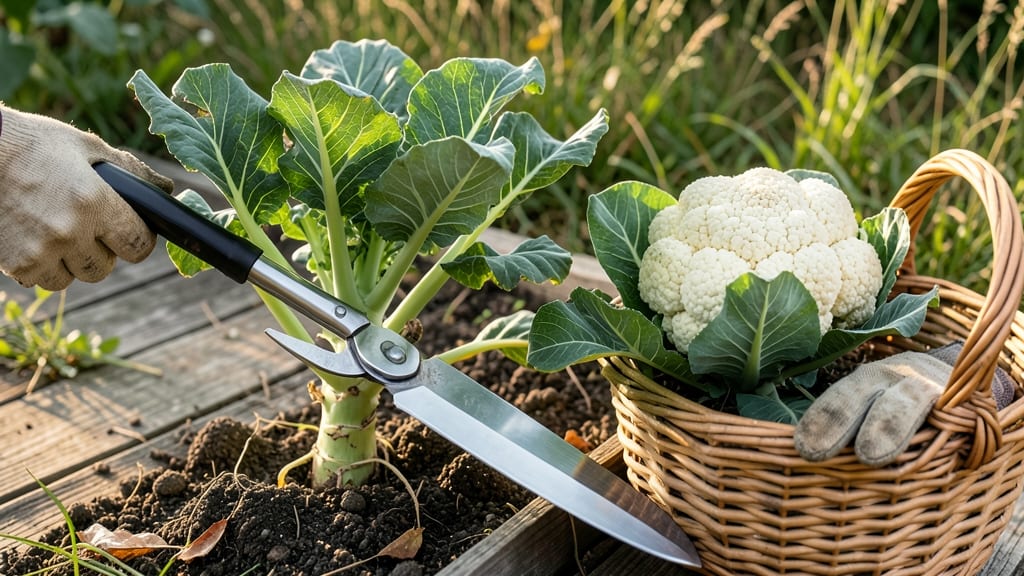
Knowing the exact harvest time for cauliflower means the difference between a crisp, snowball-perfect head and a bitter, split mess.
Nothing beats the satisfaction of harvesting a perfectly formed cauliflower head—crisp, tight curds ready to transform into your favorite dishes. But timing is everything: harvest too early, and you’ll get loose, underdeveloped florets; too late, and the head may split or turn bitter.
In USDA Zone 6a, your cauliflower will be ready between July and September, but the real trick is reading the plant’s signals. Look for tightly packed curds, a firm head, and outer leaves that start to yellow—those are your cues that the harvest window is open.
Below, I’ll walk you through the visual and tactile signs to watch for, how to cut the stem cleanly without damaging the plant, and what to do if your heads start to split or bolt too soon.

How to identify the perfect harvest time for cauliflower curds
Mastering the harvest time for cauliflower means knowing when those tight curds are at their peak. The ideal moment arrives when the head reaches 6-8 inches in diameter—firm, compact, and before the buds begin to open.
This window ensures your cauliflower stays crisp and flavorful, not woody or bitter. I’ve learned that patience pays off; rushing the harvest can leave you with loose florets that fall apart when cooked.
One of the first visual cues is the color of the head. For white cauliflower varieties, the curds should be a pure, creamy white, while purple varieties develop a deep, consistent hue.
If you notice yellowing leaves at the base, this is another sign the plant is redirecting energy to the head—nature’s way of telling you it’s almost time. But don’t wait too long; once the head starts to split or open, the quality declines rapidly.
Here’s where tactile cues come into play. Gently press the head with your thumb—it should feel solid and dense, like a well-packed snowball. If it gives slightly or feels spongy, it’s not ready.
I also check the outer leaves: they should begin to yellow and die back naturally, signaling the head is mature. This is your green light to harvest before the plant puts all its energy into flowering, which can turn the curds bitter.
Timing matters beyond just the head’s appearance. The time of day can affect how well your cauliflower holds up post-harvest. I always aim to harvest in the early morning when temperatures are cooler.
This reduces stress on the plant and keeps the curds fresher longer. Avoid harvesting after a heavy rain, as wet conditions can make the stems slippery and increase the risk of damage.
Now, let’s talk about common mistakes that can turn a perfect harvest into a disappointment. Overlooking the head size is a big one—I’ve seen gardeners pull cauliflower heads that are still too small, only to watch them grow unevenly or split later.
Another pitfall is ignoring the leaf health. If the leaves are still vibrant and green, the head likely needs more time. Conversely, if the leaves are brown and crispy, you might’ve waited too long.
Here’s a quick comparison-table to help you visualize the differences between a ready-to-harvest cauliflower and one that needs more time:
| Cue | Not Ready | Ready to Harvest |
|---|---|---|
| Head Size | Small (<4 inches) | 6-8 inches (firm) |
| Curds | Loose, uneven | Tight, compact |
| Leaf Color | Bright green | Yellowing at base |
| Head Color | Pale or uneven | Vibrant (white/purple) |
| Tactile Test | Spongy | Firm, dense |
Understanding these cues will help you avoid the heartbreak of a split cauliflower head, which happens when the plant can’t keep up with the growth of the curds. This often occurs due to inconsistent watering or nutrient deficiencies.
To prevent this, maintain even moisture levels and ensure your soil is rich in organic matter. If you’re growing cauliflower in hot climates, consider using shade cloth to protect the heads from excessive heat.
Don’t forget that some cauliflower varieties, like Romanesco, have unique harvest signals. Their heads form a fractal-like pattern and are ready when the individual florets are tightly packed and still white. Even with these varieties, the same rules apply: check for firmness, size, and leaf color.
The key is to harvest before the buds begin to open, as this is when the flavor and texture start to decline.
Once you’ve identified the perfect head, the next step is to harvest it correctly. Use a sharp knife or pruning shears to cut the stem about 1-2 inches below the head.
This leaves enough of the stem intact to allow the plant to produce side shoots, which can yield additional smaller heads. I’ve found that this method not only gives you more cauliflower but also extends the harvest season by a few weeks.
Finally, store your freshly harvested cauliflower in a cool, dark place for up to a week, or wrap it in a damp cloth and refrigerate for longer storage. If you’re not ready to cook it right away, blanching the heads can help preserve their color and texture.
With these tips, you’ll be well on your way to harvesting perfect cauliflower curds every time—crisp, flavorful, and ready for
Step-by-step guide to harvesting cauliflower without damaging the plant
Harvesting cauliflower at the right time ensures you get crisp, flavorful heads—not woody or bitter ones. The best time to harvest is early morning when temperatures are cool, as this helps preserve moisture and quality.
Avoid harvesting in the evening or after rain, which can leave the heads damp and prone to rot.
Before you begin, gather your harvesting tools: a sharp knife or pruning shears, a bucket of cool water, and a clean towel. These will help you cut cleanly and keep your cauliflower fresh post-harvest.
Always sanitize your tools with a 10% bleach solution to prevent disease spread between plants.
🌱 Step-by-Step Cauliflower Harvest Guide
- 1 Check for readiness: Gently squeeze the cauliflower head—it should feel firm and compact. Look for tight curds and yellowing outer leaves, signs it’s ready for harvest.
- 2 Choose the right tool: Use a sharp knife or pruning shears to make a clean cut. Avoid tearing the stem, which can damage the plant and invite pests.
- 3 Cut 1-2 inches below the head: Angle your cut slightly downward to allow water to drain away from the stem. This prevents rot and keeps the plant healthy for future harvests.
- 4 Immerse in cool water: Place the harvested head in a bucket of cool water for 10-15 minutes. This helps remove dirt and maintains crispness during storage.
- 5 Store properly: Wrap the head in a damp towel and place it in a plastic bag with a paper towel to absorb excess moisture. Store in the crispest drawer of your fridge for up to 5 days.
After harvesting, inspect the remaining plant for side shoots—small heads that may form near the base. These can be harvested 2-3 weeks later if they reach the right size. Keep the soil moist but not soggy and fertilize lightly with a balanced 5-10-10 mix to encourage new growth.
If your cauliflower plant is still healthy after the main harvest, it may produce secondary heads. These are often smaller but still delicious. Continue to monitor for pests or diseases, and remove any damaged leaves to keep the plant thriving until the first frost.
Pro tip: Use the harvested stems for compost or mulch. The fibrous stems break down quickly and add valuable nutrients back to your garden soil—perfect for next season’s cauliflower patch! 🥬