
How To
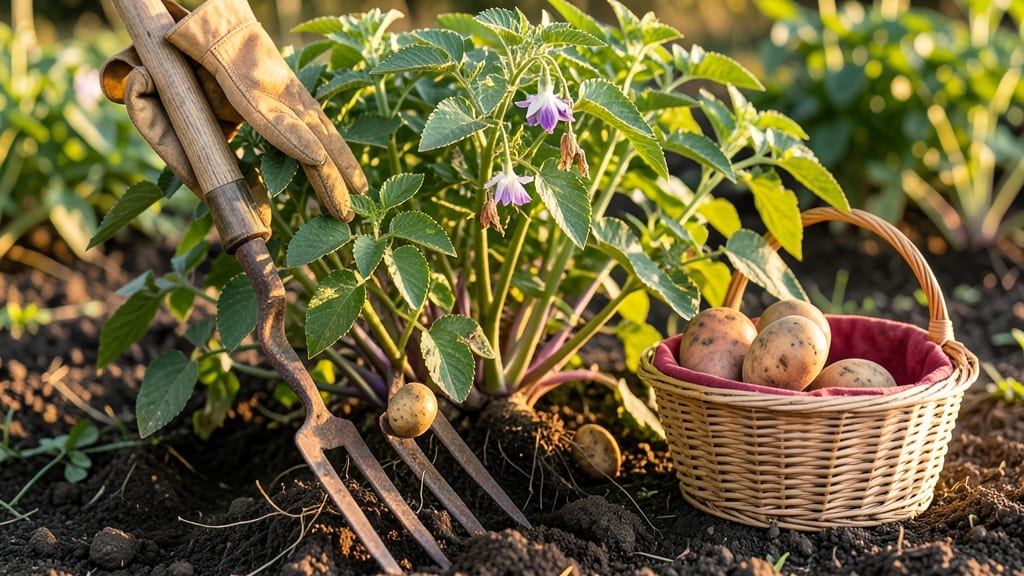
Harvesting potatoes takes how long till harvest—anywhere from 60 to 120 days after planting, depending on the variety and growing conditions—but getting the timing right means the difference between crisp, flavorful spuds and tough, starchy disappointments.
If you've ever dug up potatoes only to find them still small and green, or worse, already sprouting in the ground, you know how frustrating it can be. The key to perfect timing isn't just counting days—it's reading your soil and plants like a pro.
Most gardeners focus on days-to-maturity labels, but soil temperature—especially in the 50°F to 60°F range—actually dictates when potatoes are truly ready. Too cold, and they won’t develop properly; too warm, and they’ll start breaking down.
In this guide, I’ll break down exactly how to use soil temperature, plant signals, and variety-specific timelines to harvest potatoes at their peak—whether you’re growing early, mid-season, or late varieties.

Potato harvest timeline by variety: days to maturity vs. soil temperature
Timing your potato harvest is more than just counting days—it’s about understanding how soil temperature interacts with your chosen variety. Early varieties like Red Pontiac mature in just 60-70 days, while late varieties such as Yukon Gold need 90-120 days to reach peak flavor.
Soil temps below 50°F slow growth, while ideal 55-60°F speeds up tuber development. This balance is why your harvest window can shift by weeks depending on your climate.
For new potatoes, you can start checking as early as 45-50 days after planting, but full maturity requires patience. Early varieties often signal readiness when foliage yellows and flowers fade, while late varieties may need a frost warning to trigger full harvest.
Ignoring these cues can lead to underdeveloped tubers or overly starchy spuds—neither of which you want in your kitchen.
🌱
If you’re growing early varieties, you’ll often find new potatoes ready for harvest as soon as 45 days, but stopping here means missing out on larger tubers. For example, Red Norland can yield 2-3 oz potatoes at 50 days but doubles in size by full maturity.
The trick is to check weekly starting at 40 days, gently brushing away soil to spot 1-inch tubers—these are your first harvest candidates.
For mid-season varieties like Kennebec, soil temperatures between 55-60°F accelerate growth, shaving off 10-15 days from the maturity timeline. If your soil stays cooler, extend your timeline by 2-3 weeks. Always prioritize soil warmth over calendar dates—this variety’s 75-90 day range is just a guideline.
Watch for flower stalks dying back, a clear signal that energy is shifting from foliage to tubers.
Late varieties like Yukon Gold demand patience, with 90-120 days to full maturity. In cooler climates, these may need black plastic mulch to maintain 60°F soil temps and meet the timeline. If frost threatens before harvest, prioritize digging immediately—even if tubers aren’t fully sized.
Cure them in a dark, humid space (60°F, 85% humidity) for 1-2 weeks to develop skin and improve flavor.
One common mistake is assuming days-to-maturity are fixed. In reality, soil temperature can adjust this by 20% or more. For instance, a 70-day variety in 50°F soil might take 90 days, while the same variety in 60°F soil could be ready in 60 days.
Use a soil thermometer to track conditions—this simple tool can save you from harvesting too early or too late.
For container-grown potatoes, reduce your days-to-harvest estimates by 10-15% due to faster warming in pots. However, containers also dry out quicker, so consistent moisture is critical. If you’re growing organic potatoes, avoid harvesting when soil is dry or waterlogged, as this stresses tubers and leads to scab or
Soil temperature triggers: when to harvest based on climate Zones
Soil temperature isn't just a number—it's the decision-maker for your potato harvest. Most gardeners rely on days-to-maturity labels, but those estimates assume ideal conditions. In reality, soil temps below 50°F can delay harvest by weeks, while consistent 60°F+ speeds up tuber development.
Understanding these triggers helps you avoid starchy, underripe potatoes or sprouting tubers that lose flavor.
Your USDA zone matters because cooler climates (like Zones 3-5) need earlier harvests than warmer ones (Zones 8-10).
For example, a Yukon Gold planted in Zone 4 might need digging by late July when soil hits 55°F, while the same variety in Zone 9 can wait until September at 65°F.
High-altitude gardens (5,000+ ft) add another layer—cooler air means soil warms slower, often requiring 2-3 weeks earlier harvests than sea-level gardens.
- Zone 3-5: Harvest when soil reaches 50°F (early varieties) or 55°F (late varieties). Use black plastic mulch to warm soil faster.
- Zone 6-7: Aim for 55-60°F soil. Container-grown potatoes may need harvesting 1-2 weeks earlier than in-ground.
- Zone 8-10: Wait for 60-65°F soil. Late varieties (like Russet) can stay until first frost if soil stays warm.
- High Altitude: Subtract 10-15°F from zone-based targets. For example, Zone 7 at 6,000 ft acts like Zone 5.
- Containers: Soil cools faster. Check temps at root depth (6-8 inches)—harvest when it hits 50°F, even if air is warmer.
Container-grown potatoes deserve special attention because their limited soil volume heats and cools faster than in-ground beds. I’ve found that 5-gallon buckets in full sun can hit 60°F by early June in Zone 6, while the same potatoes in shade might not reach harvest temp until July.
Always use a soil thermometer—never guess based on air temperature. Pro tip: Bury the thermometer 6 inches deep, where the tubers form, for accurate readings.
High-altitude gardens (3,500+ ft) often face shorter growing seasons and cooler soils. In Zone 5 at 7,000 ft, I’ve seen Red Pontiac potatoes ready by mid-July when soil hits 52°F, while the same variety at sea level waits until August.
To compensate, plant early-maturing varieties (like Kennebec) and use row covers to warm soil by 5-10°F. Avoid late varieties—they’ll never reach full maturity before frost.
One common mistake is ignoring nighttime soil temps. Even if daytime soil hits 60°F, if nights drop below 50°F, tuber development slows.
I learned this the hard way with Zone 7 container potatoes—they looked ready in the morning but took 10 extra days to fully mature because evening temps dipped. Check your thermometer at dusk for the most accurate harvest window.
Remember, soil temperature isn't the only factor, but it’s the most reliable predictor. Combine it with visual cues (like flower stalks dying or foliage yellowing) for foolproof timing.
Whether you're in frost-prone Zone 4 or warm Zone 10, mastering these triggers ensures you harvest potatoes at their peak flavor and texture—every time. 🥔