
How To
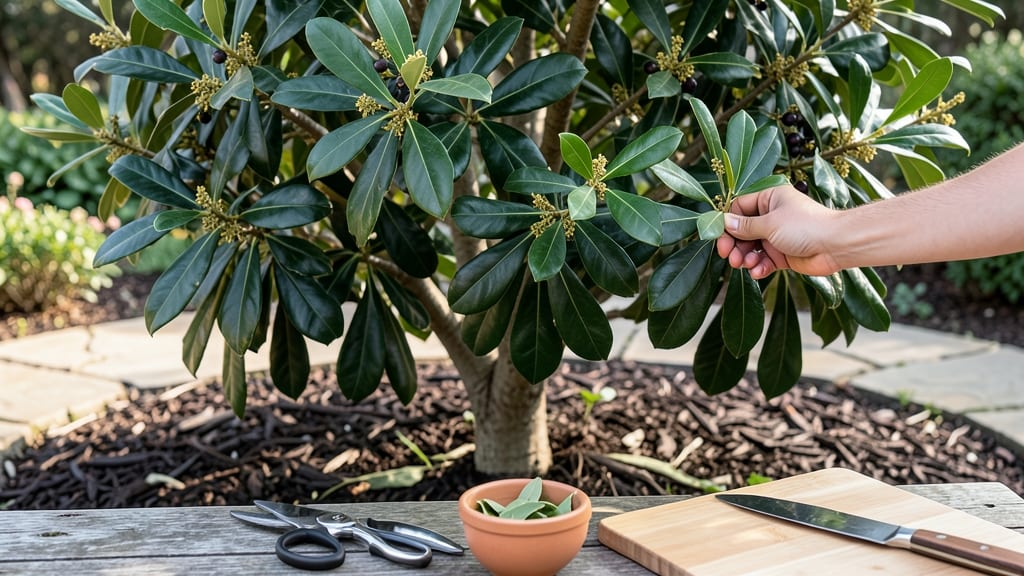
To harvest bay leaves at their peak flavor, wait until they’re fully open, dark green, and glossy—typically when your 🌿 Bay Laurel is at least three years old in Zone 6.
Picture this: you’re reaching for a leaf, and the moment you pinch it, that unmistakable aroma fills the air—like a burst of Mediterranean sunshine in your kitchen. That’s the moment you know you’ve got the perfect harvest, and it’s all about timing and technique.
Harvesting too early means milder flavor, while waiting too long can leave your plant stressed. The key is to snip just the right leaves—never more than one-third of the plant at once—and do it in the morning when oils are most concentrated.
In this guide, I’ll walk you through the exact steps to harvest, store, and even revive your Bay Laurel so you can enjoy that rich, fragrant flavor every time you cook.

When to harvest bay leaves for peak flavor and fragrance
Harvesting bay leaves at the right moment unlocks their full aromatic potential. Unlike many herbs, bay leaves don’t lose flavor when dried—so timing your harvest correctly ensures you get the richest, most fragrant leaves for both fresh and preserved use.
The key lies in recognizing maturity cues and understanding how climate affects your bay laurel tree.
In Mediterranean climates, where bay laurel trees thrive naturally, the best harvest window spans from late spring through early fall. However, homegrown trees in cooler climates (like USDA Zone 6) may produce optimal leaves slightly later, around mid-summer to early autumn.
The difference comes down to temperature and daylight—both critical for leaf development.
Here’s what to look for when your bay laurel is ready:
| Maturity Cue | Description | Best Months |
|---|---|---|
| Leaf Size | 2-4 inches long, firm, and fully unfurled (no curled edges) | June-August (Northern Hemisphere) |
| Leaf Color | Deep green with a glossy finish; avoid pale or yellowing leaves | July-September (cooler zones) |
| Fragrance Test | Crush a leaf—intense citrusy aroma (like eucalyptus with a hint of clove) | Year-round (if grown in warm zones) |
| Plant Age | At least 3 years old for maximum oil content and flavor | Year-round (after 3rd year) |
| Growth Stage | Harvest before flowering—leaves lose potency once buds form | Spring-Summer (pre-flowering) |
If you’re harvesting from a younger tree (under 3 years old), the leaves will be smaller and less aromatic. Patience pays off—wait until the plant is mature for the best results. Never harvest more than 1/3 of the foliage in a single session to avoid stressing the tree.
Seasonal timing matters too. In warmer climates, you can harvest bay leaves year-round, but the most flavorful leaves appear in late spring to early summer when growth is vigorous. In cooler regions, focus on harvesting from July through September to capitalize on extended daylight hours.
Pro tip: Morning harvests yield the freshest leaves, as evening dew can dilute their essential oils. Always use clean, sharp pruners to avoid tearing the leaves, which bruises them and reduces shelf life.
A quick sniff test after harvesting is your best quality check—strong, sweet scent means you’ve timed it right!
For Mediterranean-grown bay leaves (like those sold in markets), the peak harvest season aligns with their natural cycle: April to June for the first flush and September to October for a second harvest. These leaves are often more potent due to the region’s ideal growing conditions.
Remember, over-harvesting weakens your bay laurel tree. Space out harvests by at least 4-6 weeks to allow the plant to recover. A well-maintained tree can produce harvestable leaves for decades, making it a worthwhile investment for any home gardener.
Once you’ve mastered the timing, you’ll notice a dramatic difference in flavor—whether you’re using them fresh in soups or drying them for long-term storage. The secret? Harvest young, harvest often, and always prioritize quality over quantity. 🌿
Step-by-step guide to harvesting bay leaves without damaging the plant
Harvesting bay leaves properly ensures your bay laurel tree stays healthy while maximizing flavor and fragrance. The key is timing—wait until leaves are fully mature but before flowering begins. Over-harvesting weakens the plant, so always leave at least half the foliage intact to support photosynthesis.
Before you begin, gather your tools: sharp pruning shears (sterilized with rubbing alcohol), a clean cutting board, and a paper bag for storage. Avoid using dull scissors, as they crush leaves and release bitter compounds.
Work on a dry, sunny day to prevent fungal growth from moisture on fresh cuts.
Harvesting Bay Leaves: Step-by-Step
- 1 Select mature leaves: Choose 2-4 inch leaves that are dark green and glossy. Avoid leaves near the base or on young shoots.
- 2 Make clean cuts: Use pruning shears to cut just above a leaf node at a 45-degree angle. Never tear leaves—they bruise easily.
- 3 Harvest sparingly: Remove no more than 1/3 of leaves per season. Prioritize outer leaves to encourage new growth inward.
- 4 Store immediately: Place leaves in a paper bag (not plastic) to allow airflow. Store in a cool, dark place for up to 2 weeks before drying.
- 5 Revive the plant: After harvesting, water the tree deeply and apply a balanced fertilizer (10-10-10) to support recovery.
One common mistake is harvesting young leaves, which lack the robust flavor of mature ones. Always check for pest damage or disease before cutting—discard any leaves with holes or spots.
If your bay tree is young (under 3 years old), limit harvests to a few leaves to avoid stressing the plant.
For long-term storage, dry leaves thoroughly before storing in an airtight container away from light. Test dried leaves by crushing a few—if they release a strong, aromatic scent, they’re ready for culinary use. Over-harvesting can stunt growth, so always balance your needs with the plant’s health.
With proper technique, your bay laurel will thrive for decades, producing high-quality leaves year after year. Happy harvesting! 🌿✂️🌱