
How To
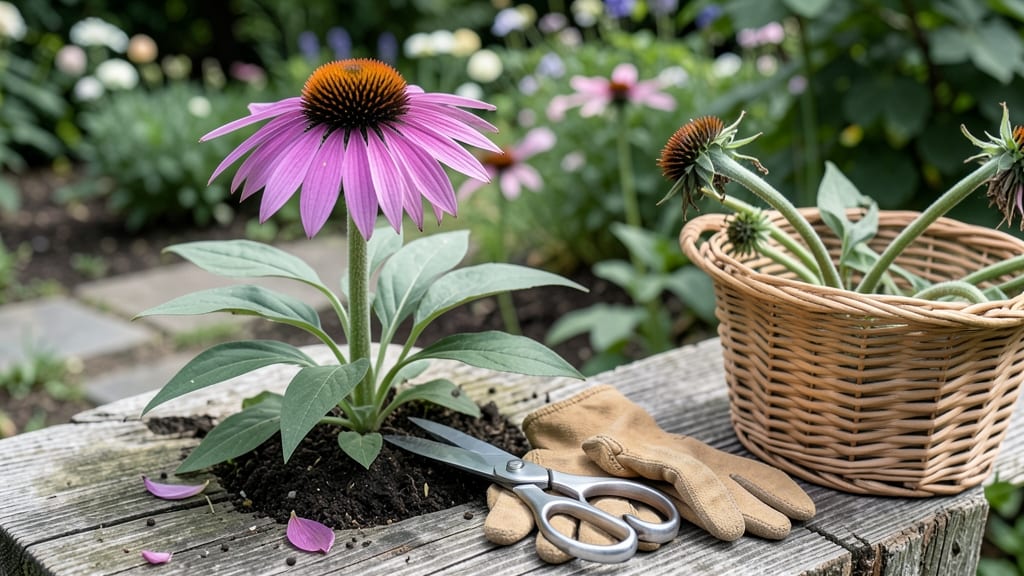
To harvest echinacea at its peak, look for fully dried cones and stems that bend naturally under their own weight—this is your cue that the medicinal compounds are concentrated and ready to use.
Picture this: you’ve nurtured your 🌸 echinacea all season, and now the blooms are fading, but the cones are turning brown and crisp. That’s the golden window—cut too early, and you lose potency; wait too long, and the plant’s energy drains.
Timing is everything, and I’ll show you exactly how to spot it.
Beyond the right moment, harvesting echinacea wrong can stress the plant or even ruin your harvest. A sharp cut, proper drying, and storing the right parts (roots, seeds, or flowers) make all the difference.
Skip these steps, and you might end up with weak tea or moldy bundles instead of a potent remedy.
In this guide, you’ll learn the step-by-step process—from when to snip stems to drying methods that preserve potency, plus how to store your harvest for teas, tinctures, or long-term use. No more guesswork, just proven techniques to maximize every bloom.

When to harvest echinacea: key signs cone dries and stems bend
Harvesting echinacea at the right moment ensures maximum potency and medicinal benefits. The perfect harvest window arrives when the cone dries and the stem bends naturally—not when petals are still vibrant. Timing depends on your local climate, but visual cues trump calendar dates every time.
In cooler regions (USDA Zones 3-5), harvest typically occurs between mid-July and early September. Warmer climates (Zones 6-9) may see harvests as early as late June or extend into October. The key is watching the flower head and stem structure, not the calendar.
First, look for closed buds on the flower head. When the petals droop inward and the central cone turns brown, it’s time to act. This stage signals the plant has redirected its energy from blooms to seed production, maximizing the alkaloid content in the cone.
Next, gently bend the stem near the base. If it bends without breaking and the cone feels crisp to the touch, your echinacea is ready. A soft or green stem means it’s too early, while a brittle stem suggests you’ve waited too long.
| Harvest Stage | Visual Cues | Climate Impact | Action |
|---|---|---|---|
| Bud Stage | Petals fully unfurled, vibrant color | Early summer (June-July) | Deadhead spent blooms |
| Cone Development | Petals droop inward, cone turns brown | Mid-to-late summer (July-Sept) | Harvest at this stage |
| Overripe Stage | Cone splits open, seeds scatter | Late summer/fall (Sept-Oct) | Avoid harvesting |
| Stem Test | Bends without breaking, crisp texture | All climates | Confirm harvest readiness |
Morning is the best time to harvest because dew is minimal, and the stems are stiffest. Use clean, sharp pruners to cut stems about 4-6 inches below the flower head. This leaves enough stem to hang for drying while preserving the plant’s energy reserves for next year’s blooms.
If you’re unsure about timing, focus on the cone’s texture. A properly dried cone should snap cleanly when broken—like a dry twig—rather than bending or feeling spongy. Overripe echinacea loses potency and may develop mold during drying, so don’t delay once you spot these signs.
In cooler climates, harvest may stretch into early October, but avoid waiting until frost threatens. Cold temperatures can damage the plant and reduce the quality of your harvest. In warmer regions, harvest earlier to avoid humidity-related mold during drying.
Pro tip: Label your harvests by variety and date. Some echinacea types (like Echinacea purpurea) have slightly different drying times than Echinacea pallida. Tracking this helps you refine your timing for future seasons.
Remember, the earlier you harvest, the more alkaloids and polysaccharides remain intact. These compounds are what give echinacea its immune-boosting properties, so precision pays off in both medicinal value and garden productivity.
Step-by-step echinacea harvesting and drying process for maximum potency
Once you’ve spotted the perfect harvest window—when echinacea cones turn brown and stems bend easily—it’s time to act fast. The drying process determines whether your harvest stays potent or loses its medicinal value. Rush it, and you risk mold; delay it, and the plant’s energy depletes.
I’ll walk you through every step, from the sharpest cut to the driest storage, so you end up with echinacea that’s ready for teas, tinctures, or long-term use.
Start by gathering your tools: a clean, sharp pair of pruners, a damp cloth for wiping blades, and a brown paper bag or mesh drying rack. Avoid touching the flower heads directly—oils from your skin can reduce potency.
Work on a cloudy day or in the early morning to prevent wilting before drying begins.
How to Harvest Echinacea
- Step 1: Cut stems 2-3 inches below the flower head using sterilized pruners. Angle the cut slightly to increase surface area for drying.
- Step 2: Remove lower leaves from the stem, leaving only the top 2-3 inches attached. This reduces moisture content during drying.
- Step 3: Gently shake off excess debris and place stems in a paper bag with the flower heads facing downward to prevent mold.
- Step 4: Tie stems in small bundles of 5-10 with twine or rubber bands, leaving 1-2 inches of space between each bundle for airflow.
- Step 5: Hang bundles upside down in a dry, dark, well-ventilated space (like a garage or shed) with 50-60% humidity and 70°F temperature.
For faster drying, use a dehydrator set to 95°F (35°C). Spread flower heads on the trays, ensuring they don’t touch, and dry for 2-4 hours until the cones rattle when shaken. Avoid high heat—it can burn the delicate compounds you’re trying to preserve.
Test for full dryness with the snap test: pinch a dried stem between your fingers. If it snaps cleanly with no resistance, it’s ready. If it bends or feels spongy, return it to dry for another 24 hours.
Store dried echinacea in airtight glass jars away from light and moisture—this keeps it potent for up to 1-2 years.
Avoid these common mistakes: drying in direct sunlight (causes fading), storing in plastic bags (traps moisture), or harvesting overripe flowers (leads to mold). With the right technique, your homegrown echinacea will be more potent than store-bought—ready to boost your immune system naturally.