
How To
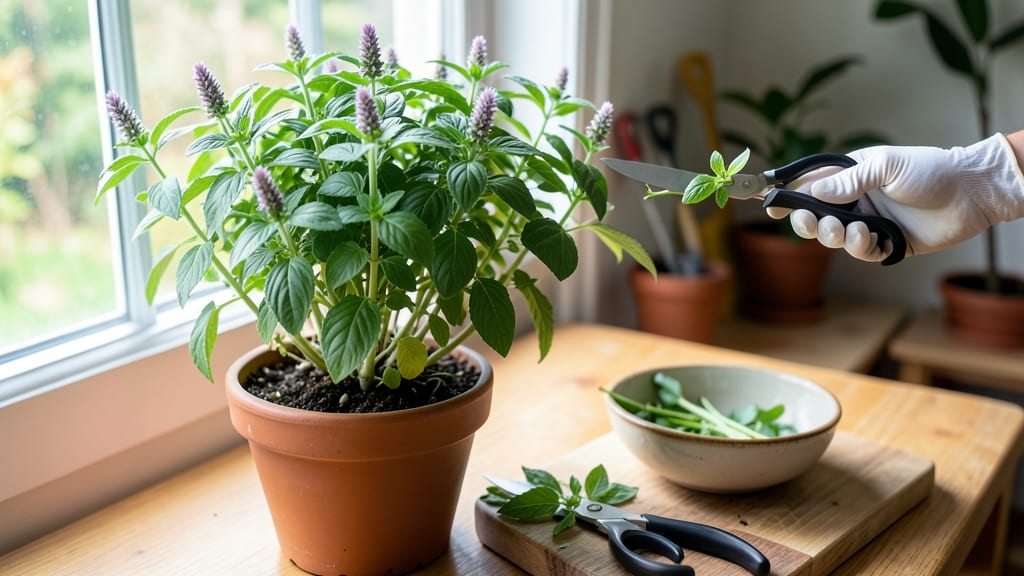
To harvest holy basil 🌿 at its peak flavor and keep your plant thriving, you need to time it just right and cut it the right way.
Holy basil isn’t just a sacred herb—it’s a flavor powerhouse, but harvesting it wrong can kill your plant’s growth and dull its taste. Follow this precise leaf-by-leaf guide to maximize flavor, ensure regrowth, and avoid common mistakes that waste your harvest.
You might think snipping leaves here and there won’t hurt, but over-harvesting or cutting at the wrong time can stress your plant and reduce future yields. The secret? Harvesting in the morning when essential oils are strongest and always leaving enough foliage to keep the plant healthy.
In this guide, I’ll walk you through the best time to harvest, the tools you’ll need, and step-by-step techniques for pruning or pinching—plus how to store your harvest so it stays fresh and potent for cooking or medicinal use.

When and how to harvest holy basil for maximum flavor & plant health
Harvesting holy basil at the right time isn’t just about getting fresh leaves—it’s about preserving that intense, spicy-sweet flavor while keeping your plant thriving.
I’ve learned the hard way that harvesting too much or at the wrong time can turn your basil into a leggy, flavorless shadow of its former self. The key? Timing, technique, and knowing which leaves to pick.
Let’s break it down so you can enjoy a continuous harvest all season long.
Timing is everything when it comes to harvesting holy basil. The best time of day to harvest is early morning, right after the dew has dried but before the sun gets too intense.
This is when the essential oils that give holy basil its signature aroma are at their peak. If you harvest in the afternoon, the leaves can taste slightly bitter or lose some of their potency.
Think of it like catching the sun’s first kiss on the plant—it’s all about that fresh, vibrant energy.
Now, let’s talk about the visual cues that tell you it’s time to harvest. Look for vibrant green leaves that are fully grown but not yet flowering.
The stems should be firm but not woody, and when you crush a leaf between your fingers, it should release that unmistakable aromatic scent. If your basil is still small or the leaves are tender and easily breakable, it’s not ready.
Patience here pays off—you’ll get a richer flavor and a healthier plant in the long run.
- Harvest in the early morning (6-8 AM) when essential oils are strongest for peak flavor.
- Select fully grown leaves (3-4 inches long) with vibrant green color and firm stems.
- Use clean, sharp scissors or pruning shears to cut just above a leaf node to encourage new growth.
- Avoid harvesting more than 1/3 of the plant at once to prevent stress or stunted growth.
- Focus on outer leaves first to allow inner leaves to mature and maintain the plant’s energy balance.
Seasonal variations play a huge role in how you harvest holy basil. During the peak growing season (late spring to early summer), your plant will be more resilient and recover faster from harvesting. That’s when you can be a little more aggressive with your cuts.
However, as temperatures rise in late summer, holy basil can become stressed, so I recommend light harvesting or focusing on maintaining the plant’s health rather than maximizing yield. In cooler months, growth slows down, so harvest sparingly to avoid shocking the plant.
One of the biggest mistakes I see gardeners make is over-harvesting. If you take too many leaves at once, your holy basil can become woody and leggy, with fewer flavorful leaves.
To avoid this, I follow the 1/3 rule: never harvest more than one-third of the plant in a single session. This keeps the plant balanced and encourages bushier growth.
Also, always leave at least 6-8 inches of new growth on the plant to ensure it can continue photosynthesizing and producing new leaves.
When it comes to leaf selection, young leaves are tender and mild, while mature leaves pack the most flavor. For the best taste, focus on harvesting the larger, outer leaves first. This allows the inner leaves to mature and ensures your plant stays lush and productive.
If you’re growing holy basil for medicinal purposes, the leaves just before flowering are often the most potent, but don’t let it flower if you want to keep harvesting leaves—those flowers signal the end of the leaf-producing cycle.
Proper cutting techniques make all the difference. Always use clean, sharp scissors or pruning shears to make clean cuts just above a leaf node (the point where a leaf meets the stem). This encourages the plant to branch out and produce more leaves.
Avoid tearing leaves by hand, as this can damage the plant and make it more susceptible to disease. After harvesting, rinse the leaves gently and pat them dry to remove any dirt or debris before storing or using them.
If you’re harvesting for long-term storage, I recommend drying or freezing the leaves to preserve their flavor. To dry, bundle the stems together and hang them upside down in a dark, well-ventilated area for 1-2 weeks.
Once dry, strip the leaves from the stems and store them in an airtight container. For freezing, wash and dry the leaves thoroughly, then spread them out on a tray before transferring to a freezer bag. This way, you can enjoy the full flavor of holy basil all year round.
Finally, keep an eye out for signs that your plant is struggling after harvesting. If the leaves start turning yellow, wilting, or the plant looks leggy, it might be a sign of over-harvesting.
Give it some time to recover, and consider giving it a light fertilizer to boost its growth. With the right care, your holy basil can keep producing flavorful leaves for months, making it one of the most rewarding herbs to grow.
Step-by-step harvesting techniques: pruning vs. pinching for holy basil
Harvesting holy basil correctly determines whether your plant thrives or struggles. The two main methods—pruning and pinching—each serve distinct purposes. Pruning involves cutting stems to encourage bushier growth, while pinching focuses on removing the topmost leaves to stimulate new shoots.
Both techniques preserve leaf potency and flavor, but the approach matters for regrowth.
Before you begin, gather your tools: a pair of sharp pruning shears, sterilized scissors, and a small bowl for harvested leaves. Always sanitize your tools with rubbing alcohol to prevent disease transmission.
Holy basil is sensitive to bacteria, so cleanliness is key to maintaining a healthy plant. Work in the morning hours when essential oils are at their peak for maximum flavor.
Best for young plants (under 6 inches) or encouraging bushier growth.
- Use your fingers to gently pluck the top set of leaves from the main stem.
- Remove 1-2 leaves per stem, leaving at least 2-3 leaves remaining.
- Focus on the outer leaves first to avoid damaging the center growth.
Ideal for mature plants (6+ inches) or heavy harvesting.
- Use sterilized shears to cut stems at a 45-degree angle, ¼ inch above a leaf node.
- Target stems with 3-4 mature leaves to encourage branching.
- Avoid cutting more than ⅓ of the plant at once to prevent stress.
For continuous harvests without stunting growth.
- Gently twist and pull individual leaves at the base of the stem.
- Harvest outer leaves first to protect the plant’s center.
- Never remove more than 10% of leaves in a single session.
Critical for regrowth and flavor retention.
- Place harvested leaves in a paper bag (not plastic) to retain moisture and aroma.
- Store in the refrigerator for up to 5 days or dry for long-term use.
- Water the plant deeply after harvesting to support recovery.
After harvesting, watch for new growth within 7-10 days. Healthy holy basil should sprout fresh leaves at the nodes where you pruned or pinched. If you notice yellowing leaves or stunted growth, you’ve likely over-harvested.
Reduce future cuts and increase watering to revive the plant. For medicinal use, always harvest leaves in the morning when their active compounds are most potent.
Pro tip: Use a small notepad to track your harvesting schedule. Aim for weekly pinching and monthly pruning to maintain a balanced, productive plant. Over time, you’ll develop an instinct for when your holy basil needs attention—just look for those vibrant green leaves and firm stems as your cues!
Remember, the goal is sustainability. Holy basil rewards patience with abundant regrowth and richer flavor. With these techniques, you’ll enjoy a thriving plant and a steady supply of leaves for culinary and medicinal uses all season long. 🌿✂️💚