
How To
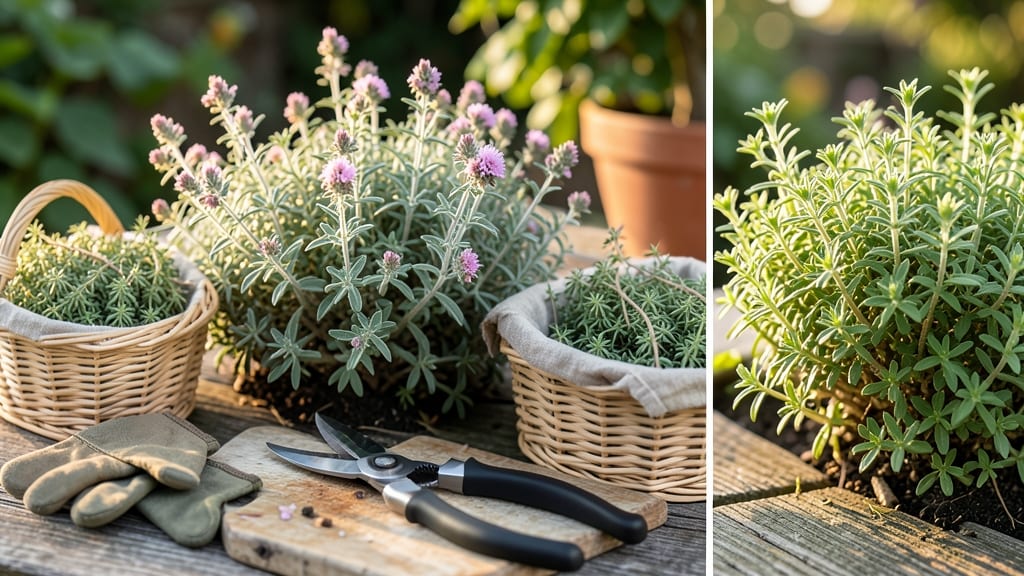
Harvesting thyme the right way keeps it growing strong and full 🌿—cutting back just above a leaf node and never more than a third at once is the key.
Struggling to keep your thyme bushy and thriving? The secret isn’t in how much you harvest—but when and how you do it. Master these pruning techniques to enjoy lush, flavorful thyme all year long without stunting its growth.
Thyme thrives when you follow its natural rhythm: trim after flowering in early summer to encourage fresh growth, but avoid heavy cuts in fall when it’s prepping for winter. Skip the scissors and snip with clean pruners—sharp cuts heal faster, so your plant stays healthy.
In this guide, you’ll learn the exact timing, tools, and techniques to harvest thyme without sacrificing its future—plus how to store your bounty so you can enjoy homegrown flavor year-round.

The best time and technique to harvest thyme without killing growth
Harvesting thyme at the right time and with the proper technique ensures your plant stays bushy, healthy, and productive for years. Unlike many herbs, thyme thrives when you encourage new growth through strategic pruning.
The key is cutting just above leaf nodes—where new shoots emerge—while avoiding over-pruning that weakens the plant. By following these steps, you’ll enjoy a flavorful, evergreen thyme bush that grows back stronger each time.
Timing matters just as much as technique. The best time to harvest thyme is early morning after dew has dried, when essential oils are at their peak. Avoid harvesting in late summer or winter, as this can stress the plant.
For perennial thyme, focus on spring and early summer when growth is vigorous. If you’re growing annual varieties, you can harvest more aggressively, but always leave at least 3-4 inches of growth to sustain the plant.
Here’s how to harvest thyme without stunting its growth:
- 1
- 2
- 3
- 4
- 5
- 6
After harvesting, give your thyme a light watering if the soil feels dry. Thyme is drought-tolerant, but it appreciates consistent moisture during active growth. If you’re growing thyme in containers, ensure the pot has drainage holes to prevent root rot, which can weaken the plant and reduce regrowth.
Seasonal adjustments are key to keeping thyme thriving. In spring and early summer, you can harvest more frequently to promote bushiness. By late summer, reduce harvesting to allow the plant to store energy for winter.
In fall and winter, focus on light pruning to shape the plant rather than heavy harvesting. This ensures a strong root system for next year’s growth.
One common mistake is cutting too close to the base, which removes the plant’s ability to regrow. Always leave at least 2-3 inches of stem below your cut. Another pitfall is harvesting with dull tools, which crushes stems and invites disease.
Invest in a sharp pair of pruners and clean them with rubbing alcohol between uses to keep your thyme healthy.
With these techniques, your thyme will reward you with dense foliage, strong flavor, and year-round productivity. The secret to long-term success lies in patience and precision—harvesting just enough to enjoy fresh thyme while giving the plant the chance to bounce back stronger. 🌿
How often to prune thyme for maximum yield and longevity
Pruning thyme isn't just about keeping your plant tidy—it's the key to encouraging dense, flavorful regrowth while preventing woody stems and overcrowding. Unlike annual herbs, thyme is a perennial powerhouse that thrives with the right timing and technique.
The golden rule? Never remove more than one-third of the plant in a single session, and always cut just above a leaf node to stimulate new growth.
Seasonal timing matters more than you might think. Spring is when thyme wakes up from dormancy, making it the perfect time for a light shaping trim to encourage bushier growth. Summer is harvest season—this is when you'll want to prune more aggressively to maintain yield, while fall should be a gentle touch to prep for winter.
Let's break down exactly how to balance these cycles without shocking your plant.
Watch for over-harvesting signs like sparse foliage or bare stems—these are red flags that you're pruning too aggressively. A healthy thyme plant should always have dense green leaves and woody stems only at the base.
If your plant looks leggy or woody, it's time to cut back harder in the next pruning session to rejuvenate growth.
Pro tip: Use sharp, clean pruners to avoid crushing stems, which can invite disease. Always sterilize your tools with rubbing alcohol between plants to prevent spread of pathogens. And remember—morning pruning is best because it gives the plant all day to recover before evening moisture sets in.
With this seasonal rhythm, your thyme will stay bushy, productive, and healthy for years. The key is consistency and patience—never rush the process, and always prioritize the plant's long-term health over short-term harvests. Your efforts will pay off with year-round thyme that's ready whenever you need it! ✂️🌿