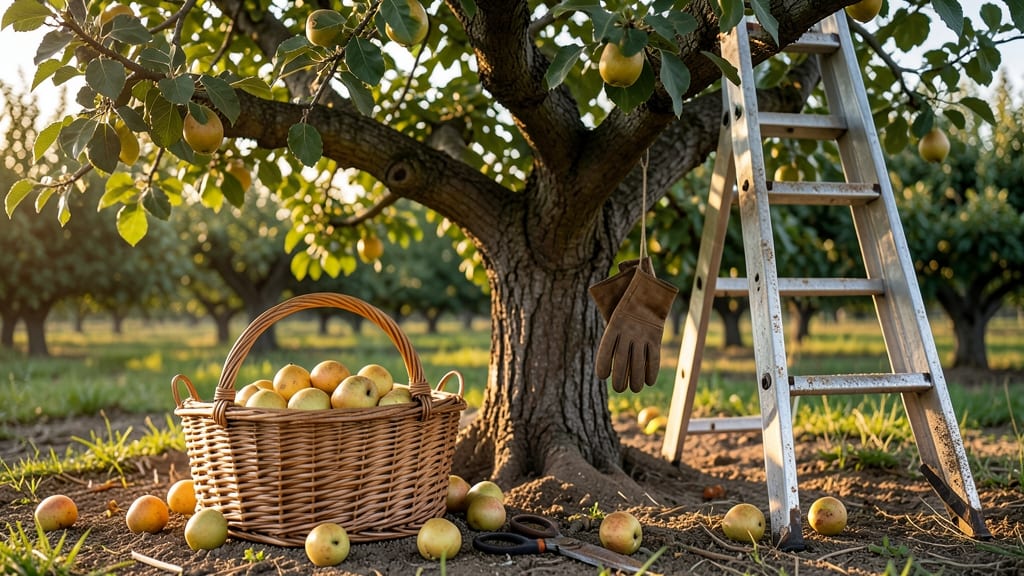
Harvesting pears at the right time during their late summer to early fall season 🍐 is the difference between sweet, juicy fruit and something that tastes like a sad, mealy sponge.
Picture this: You’ve spent years nurturing your pear tree, and now it’s finally loaded with fruit. But if you pick too soon, you’ll miss the peak flavor window—or worse, the pears never ripen off the tree at all.
The good news? With a few simple tricks, you can time your harvest perfectly, no guesswork required.
In this guide, I’ll break down the exact week-by-week ripeness calendar for popular varieties like Bartlett, Bosc, and Anjou, plus the non-negotiable signs that your pears are truly ready. We’re talking color, texture, and even that elusive "stem twist test" that tells you for sure.
You’ll also learn how to avoid common mistakes—like storing pears too soon or ignoring temperature swings—that can turn your harvest into a disappointment. By the end, you’ll know exactly when to pick, how to test ripeness, and how to keep your pears fresh for weeks after the season ends.
When to harvest pears by variety: exact ripeness calendar
Harvesting pears at the perfect moment transforms a simple fruit into a juicy, flavorful delicacy. But timing varies dramatically by variety, climate, and region. For example, Bartlett pears ripen weeks earlier than Bosc pears, while Asian pears follow their own schedule.
Understanding these differences ensures you avoid mealy, underripe fruit or wasted labor from picking too late.
Most pear varieties ripen between late summer and early fall, but exact timing depends on your USDA hardiness zone and local weather patterns. Warmer climates (Zones 8-10) may see harvests 4-6 weeks earlier than cooler regions (Zones 3-6).
Below, I’ve mapped out the exact week-by-week harvest windows for the top 10 home-garden varieties, plus pro tips to adjust for your location.
🚨 NON-NEGOTIABLE RULE: Never harvest based on color alone. Many pears (like Bosc) stay green even when ripe. Instead, focus on stem separation, firmness, and aroma. I’ll cover these cues in detail after the harvest calendar.
| Variety |
Peak Harvest Window (Zone 6) |
Climate Adjustments |
Key Ripeness Cues |
| Bartlett |
Late August - Mid-September |
Zones 8-10: 2-3 weeks earlier |
Yellow skin, stem twists off, slight give when pressed |
| Bosc |
Mid-September - Early October |
Zones 3-5: 1-2 weeks later |
Green/yellow skin, firm but yields slightly, fragrant aroma |
| Anjou |
Early September - Late September |
Warmer zones: harvest by early September |
Red blush, stem separates cleanly, crisp texture |
| Asian (Oriental) |
Late August - Mid-September |
Zones 7-9: 1 week earlier |
Green/yellow, firm but not hard, sweet scent |
| Seckel |
Mid-August - Late August |
Cooler zones: extend to early September |
Yellow-green, small size, stem pulls away easily |
| Comice |
Late September - Early October |
Zones 5-6: harvest by late September |
Reddish-yellow, soft but not mushy, rich aroma |
| Forelle |
Mid-September - Late September |
Warmer zones: harvest by mid-September |
Reddish speckles, firm but yields, floral scent |
| Moonglow |
Early September - Mid-September |
Zones 3-4: extend to late September |
Yellow-green, crisp texture, stem snaps cleanly |
| Hooded |
Late August - Early September |
Coastal areas: 1 week earlier |
Green/yellow, firm but not hard, sweet-tart flavor |
How to test pear ripeness: 5 non-negotiable signs you’re ready to pick
Picking pears at the perfect moment transforms your harvest from bland to burstingly sweet. But here’s the catch: color alone isn’t enough to guarantee ripeness. Many gardeners make the mistake of waiting until pears turn their final hue—only to end up with mealy, flavorless fruit.
The truth? Pears ripen best on the tree, and you need to test for five key signs before harvesting. Let’s break down what to look (and feel) for to nail that sweet spot.
First, understand that pears ripen after harvest for some varieties (like Bartlett), while others (like Bosc) must be picked ripe. This confusion leads to wasted fruit.
The solution? Master these non-negotiable tests to avoid overripe or underripe pears. Pro tip: Check pears every 3-5 days during harvest season—timing is everything.
1
Stem Separation Test
Gently twist the pear at its stem. If it snaps cleanly (not pulls away), it’s ready. A stubborn stem means wait 3-5 more days.
2
Thumbprint Test
Press your thumb into the pear’s skin. A ripe pear will yield slightly (like pressing a ripe avocado) but won’t feel mushy. A hard pear? Not ready yet.
3
Color Consistency
Look for uniform color across the entire pear. Uneven hues (e.g., green patches on a red pear) mean it’s not ripe. Bosc pears stay green but soften when ripe.
4
Aroma Check
Sniff near the stem. A ripe pear emits a slightly sweet, floral scent. No smell? It’s not ready. Overripe pears smell fermented—discard these.
5
Temperature Matters
Cooler temps (60°F or below) slow ripening. If your area has hot days followed by cold nights, pears may ripen unevenly. Harvest slightly early and ripen indoors.
Now, let’s troubleshoot common ripening issues. If your pears are ripening too fast, they’re likely overripe on the tree. This happens in hot, dry climates—harvest early and store in a cool, dark place (like a paper bag with an apple to speed up ripening).
Conversely, if pears stay hard and green, they need more time on the tree. Avoid picking just because they’re changing color—wait for all five signs.
One last pro tip: Don’t wash pears before storing. The moisture speeds up spoilage. Instead, gently wipe them with a damp cloth and let them air-dry completely. Store in a single layer in a perforated bag in the fridge for up to 2 weeks.
For varieties like Asian pears, which ripen off the tree, place them in a bag with a banana or apple to release ethylene gas and hasten ripening.
Master these tests, and you’ll never miss the perfect pear harvest again. The difference between a juicy, sweet pear and a mealy disappointment comes down to these five simple checks. Happy picking! 🍐
★★★★★4.8(2 reviews)
|