
Picking
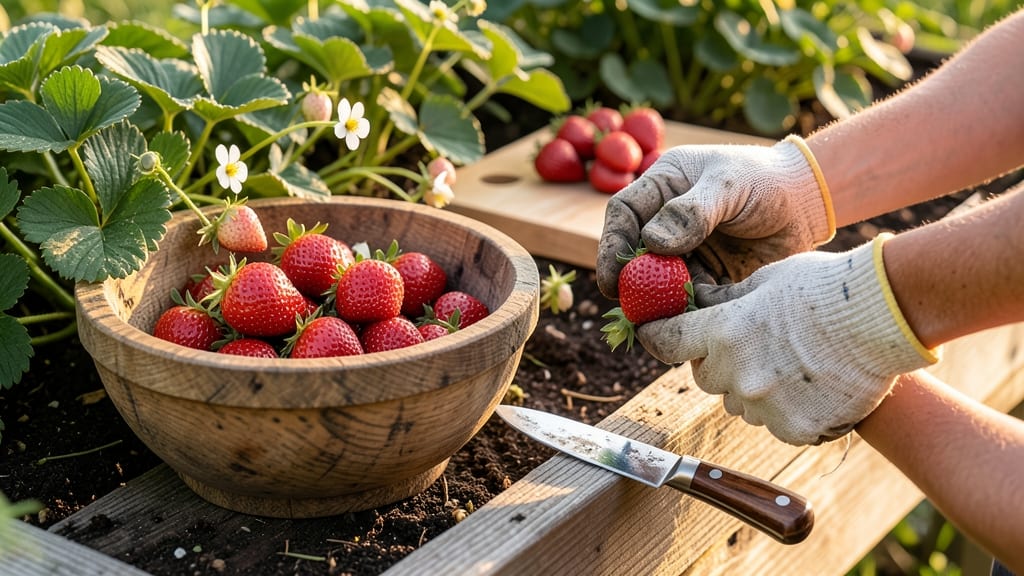
Your strawberry harvest season in Zone 6a kicks off in early June, but timing is everything to avoid bland or bruised fruit.
Nothing beats the taste of a freshly picked strawberry—unless it’s the frustration of bruised fruit or bland flavor. Timing your harvest perfectly ensures juicy, sweet berries every time, but knowing when and how to pick is an art even experienced gardeners master.
In this guide, you’ll learn the exact cues to watch for—like fully red color and a slight softness—plus how to handle rain delays or pest damage without wasting a single berry.
From pruning to storage tips, I’ll show you how to maximize your 🍓 harvest and keep those sweet flavors lasting all summer.


Strawberry harvest season timeline: month-by-month picking guide
Timing your strawberry harvest correctly transforms bland berries into explosion-of-flavor treats. The harvest window shifts dramatically between USDA zones 5-10, with first-year plants producing 50% fewer berries than established beds.
Temperature plays a starring role too—cool springs delay ripening, while 80°F+ days can turn berries mealy if picked too late.
June-bearing varieties dominate spring harvests (May-July in most zones), while everbearing types stretch yields from late spring to fall. In Zone 10, you might harvest year-round with proper care, but Zone 5 gardeners face a tight 6-8 week window before frost.
Understanding these rhythms means never missing peak sweetness again.
🌱
In Zone 5, your June-bearing strawberries will race toward ripeness as temperatures climb. The first berries appear in late May, but true peak harvest happens in June when days stretch long and warm.
I’ve seen June-bearing varieties like Jewel or Chandler produce 90% of their yield in just 2-3 weeks, so be ready with containers and a cool storage plan.
Temperature matters more than dates—below 50°F slows ripening, while above 85°F can cause sunscald or mealy texture. In Zone 8, I harvest everbearing varieties like Seascape from April through November, but I always check for uniform red color and easy detachment before picking.
The cap (green top) should twist off cleanly—if it resists, the berry needs more time.
First-year plants deserve special attention. They’ll produce only 10-20 berries compared to 500+ from established beds, but timing still matters. Focus on June-bearing types planted in spring—they’ll give you a small harvest in their first year, while fall-planted everbearers might wait until next spring.
Mulch heavily in Zone 5 to protect roots from late-spring frosts that can delay ripening by 2-3 weeks.
Peak harvest season is your reward for patience. In Zone 7, I pick June-bearing strawberries for 3-4 weeks straight in June, then switch to everbearing varieties that keep producing until September.
The key is morning harvests—berries picked in the cool of the day stay firmer longer. Store them in single layers with <
How to test strawberry ripeness: 5 signs of perfect picking time
Picking strawberries at the right moment transforms your harvest from meh to mouthwatering. The key? Knowing the 5 foolproof signs of ripeness that go beyond just color.
I’ve learned the hard way—overripe berries taste mushy, while underripe ones stay bland. Let’s dive into the exact cues to time your harvest perfectly.
First, forget the myth that strawberries must be deep red to be ripe. While color is a clue, some varieties like Albion stay pale yellow. Instead, focus on uniform color across the berry.
A fully ripe strawberry will show its true hue from top to bottom, with no green or white patches lingering.
-
1. Full Color
Uniform red, yellow, or white (varies by type) with no green patches. -
2. Slight Softness
Gently press—ripe berries yield slightly but don’t squish like overripe fruit. -
3. Easy Detachment
Grasp the berry and gently tug—it should pop off cleanly from the stem. -
4. Sweet Aroma
Sniff it! A fruity, sweet scent means peak ripeness. -
5. Shiny Surface
A slight sheen on the skin signals full hydration and sweetness.
The squeeze test is my secret weapon. A ripe strawberry should feel firm but slightly soft—like a ripe peach. If it’s rock-hard, it’s underripe; if it squishes between your fingers, it’s past its prime.
I once picked a batch that was too soft, and they turned to mush within 24 hours. Lesson learned: timing is everything!
Avoid these common mistakes that ruin your harvest: picking berries still attached to their green calyx (the leafy top), waiting until they’re overripe and leaking, or harvesting in morning dew when they’re slippery. Always pick on dry, sunny mornings for the best flavor and texture.
Pro tip: Check your strawberries every 2-3 days during peak season. Everbearing varieties produce fruit in multiple flushes, so stay vigilant! If you miss a batch, they’ll overripe quickly, attracting pests like birds and rodents.
A quick harvest keeps your plants healthy and your table stocked with sweet, juicy berries.
Master these 5 signs, and you’ll never waste another strawberry again. The difference between blah and bursting-with-flavor is just a few days of patience. Happy picking! 🌱