
Picking
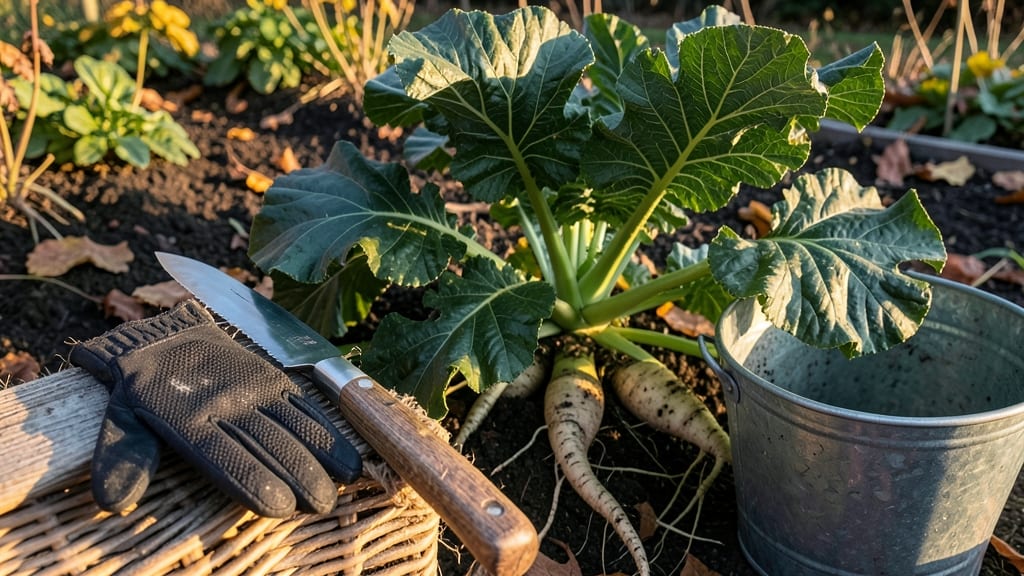
Harvesting horseradish at the right time means roots packed with fiery heat and zero waste—here’s exactly when to dig for the boldest flavor.
Picture this: you’ve waited years for your 🌱 horseradish to mature, only to pull it too early and end up with mild, underwhelming roots. Or worse, you wait too long and lose your harvest to frost.
The difference between a spicy success and a bland failure comes down to timing—and it’s simpler than you think.
For gardeners in Zone 6a and beyond, the sweet spot is late fall to early winter, just before hard frost sets in. But how do you know for sure?
I’ll walk you through the three key signs—root size, leaf color, and soil temperature—that guarantee a harvest bursting with that signature kick.
Stick around, and you’ll learn how to store your harvest for months (yes, even through winter) and troubleshoot common mistakes that dull the heat. Ready to turn your garden into a spice powerhouse?

3 Key root size indicators for optimal horseradish harvest timing
Harvesting horseradish at the right time ensures you get the spiciest, most pungent roots possible. Unlike many vegetables, horseradish doesn't just get edible—it develops maximum heat potential over time.
But how do you know when your roots are ready? The answer lies in three key root size indicators that signal peak maturity for harvest.
Horseradish is a perennial plant that takes 3-5 years to reach full maturity. In its first year, it focuses on leafy growth, while years two and three build root mass.
By year four or five, the roots develop their signature fiery kick—but only if harvested at the right moment. Missing these cues means sacrificing flavor intensity for milder, less exciting roots.
🌱 When Should You Harvest Horseradish?
- 1 Check root diameter—aim for 1-2 inches thick.
- 2 Look for length of 6+ inches—longer roots store better.
- 3 Harvest when foliage yellows and dies back in late fall.
First, focus on the root diameter. A mature horseradish root should measure between 1-2 inches in thickness. You can test this by gently brushing away soil with your fingers—if the root feels thick and firm, it's ready.
Thin roots (under ½ inch) are still developing and will lack the bold flavor you crave.
Next, examine the root length. Ideal roots should extend at least 6 inches into the soil. Longer roots not only pack more heat but also store better for future use.
To check, carefully dig around the base until you can see the full length—this is especially important in year 4 or 5 when roots reach their peak.
Don't overlook the foliage cues. As horseradish approaches harvest time, its leaves will naturally yellow and die back, typically in late fall. This signals the plant is redirecting energy to root storage.
If leaves remain green and lush, your roots aren't mature enough yet—wait another 4-6 weeks before checking again.
One common mistake is harvesting too early, which results in milder, less pungent roots. Young horseradish contains sinigrin compounds that develop over time, giving it that signature kick.
For the spiciest harvest, wait until roots are 3-5 years old and show all three indicators: proper diameter, length, and foliage decline.
For gardeners in warmer climates, you might see a second harvest opportunity in early spring as new growth emerges. However, the fall harvest always yields the most intense flavor. Always prioritize soil temperature—roots develop best when soil stays above 60°F during the growing season.
Pro tip: Use a garden fork to gently loosen soil around roots before digging. This minimizes damage to the root structure while making it easier to assess size and maturity. Once harvested, store roots in a cool, dark place (like a root cellar) to preserve their heat potential for months.
Remember, horseradish is a perennial crop, meaning it can regrow year after year. If you harvest a portion of the root, leave enough behind to regenerate—this ensures future harvests with even more bold, fiery flavor.
With these three indicators in mind, you'll never miss the perfect harvest window again!
Best harvest seasons and soil conditions for maximum pungency
Timing your horseradish harvest isn’t just about avoiding frost—it’s about capturing the peak heat developed through years of root growth. In Zone 6a, the ideal window spans from late October to November, when soil temps hover between 40°F and 50°F.
This chilly shift triggers the plant’s natural sinigrin compounds, the chemical behind that signature fiery kick. Miss this window, and you risk roots that are either underdeveloped or frozen solid.
But here’s the catch: spring harvests are possible too, though they yield milder roots. If you’re in a milder climate (like Zone 7+), you might harvest as late as December or even January.
The key is always to dig before hard frost—once temps drop below 20°F, your roots will turn to mush. I’ve learned this the hard way after leaving a patch too long in Zone 6a’s brutal winters!
Now, let’s talk soil conditions. Horseradish thrives in well-draining soil with a slightly acidic pH (6.0-6.5). Overly moist soil leads to rotten roots, while dry conditions stunt growth. Aim for consistent moisture—think of it like a well-watered sponge, not a swamp.
In my garden, I’ve found that mulching with straw in late summer helps maintain even moisture while insulating roots from temperature swings.
⏰ When to Harvest Horseradish: Pros & Cons
- Max pungency from cold triggers
- Larger roots (1-2" diameter)
- Ideal storage for winter use
- Waiting too late = frost damage
- Overwatering = soft, mushy roots
- Thin roots (<1" diameter)
- Milder flavor (good for fresh use)
- Smaller roots (regrowth from last year)
- Earlier eating for spring recipes
- Underdeveloped roots (smaller yield)
- Missed peak heat (less pungent)
- Frost risk if harvesting late
💡 Pro Tip: Test root heat by cutting a small slice—if it makes your eyes water, it’s ready!
Temperature plays a critical role in heat development. Horseradish roots need cool nights (below 60°F) to convert glucosinolates into allyl isothiocyanate, the compound that sets your nose on fire.
In my Zone 6a garden, I monitor soil temps with a digital thermometer—once it dips to 50°F, I know it’s harvest time. If you’re in a warmer climate, aim for consistent temps below 65°F for at least 2-3 weeks before digging.
One common mistake? Harvesting when the leaves turn yellow but the roots are still small. While yellowing foliage signals maturity, root size is the real giveaway. I’ve seen plants with wilted leaves but pencil-thin roots—those need another year in the ground.
Always dig up a small test root to check size before committing to a full harvest. A 1-2 inch diameter is your target for maximum heat.
Finally, don’t overlook post-harvest care. After digging, trim the tops and brush off soil, but leave a 1-inch stem to prevent rot. Store roots in a cool, dark place (like a root cellar or garage) for up to 6 months.
I’ve kept mine in a sand-filled bucket in my basement—it’s worked like a charm for winter storage.