
How To
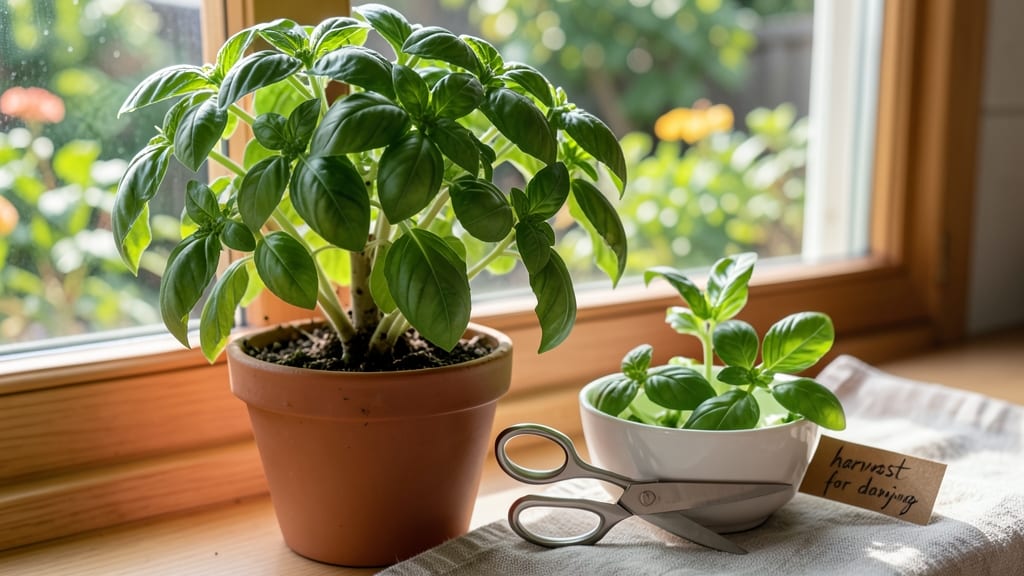
Harvesting basil for drying at the right time means capturing its peak flavor before it turns bitter or loses aroma.
Drying basil at the wrong time can turn your harvest into bitter, flavorless leaves—so knowing the perfect moment to pick is key to preserving that fresh, aromatic taste.
Look for dark green, glossy leaves that are fully developed and release a strong scent when crushed. The stems should snap easily but not feel woody, signaling the ideal window between June and September in most growing zones.
In this guide, I’ll walk you through the exact signs to watch for, how to avoid common mistakes, and the best storage practices to keep your dried basil potent and ready for cooking.

How to identify peak harvest time for basil drying using leaf color & stem tests
Timing your basil harvest is everything when drying—picking too early means weak flavor oils, while waiting too long introduces bitterness. The key lies in two simple but powerful indicators: leaf color and stem snap resistance.
These visual and tactile cues reveal when your basil has reached its prime for drying, locking in that garden-fresh aroma for months to come.
Start by examining your basil's leaf color. At peak ripeness, the leaves should be a vibrant, deep green with a glossy finish. Look for leaves that are fully expanded—about 2-3 inches long—with visible veins but no signs of yellowing or curling.
This color shift signals that the plant's essential oils have fully developed, which is crucial for drying.
Next, perform the stem snap test—a quick way to check for structural readiness. Gently pinch a stem between your thumb and forefinger. If it snaps cleanly with a slight resistance (not too soft, not too woody), your basil is ready.
A soft stem means it's immature, while a hard, woody stem indicates overmaturity, both of which ruin drying quality.
| Harvest Stage | Leaf Color | Stem Test | Aroma Test | Action |
|---|---|---|---|---|
| Not Ready | Pale green, small | Soft, bends easily | Little to none | Wait 1-2 weeks |
| Peak Ready | Deep green, glossy | Firm, snaps cleanly | Strong, sweet scent | Harvest immediately |
| Overripe | Dull green, yellowing | Woody, hard | Bitter, harsh | Avoid for drying |
Don't overlook the aroma test—this is your final quality check. Crush a few leaves between your fingers and inhale deeply. At peak ripeness, your basil should release a powerful, sweet scent with hints of anise or clove, depending on the variety.
If it smells faint or musty, wait a few more days. This test is especially critical for Genovese basil, which is prized for its delicate, sweet flavor.
For continuous harvests, aim to pick leaves when they're about one-third grown. This encourages bushier growth and extends your drying season. Always use clean, sharp pruning shears or scissors to avoid damaging stems. Cut just above a leaf node to promote new growth while maintaining the plant's structure.
Timing also depends on your climate zone. In warmer regions (like USDA Zone 9+), basil matures faster—often in just 45-50 days. In cooler zones (Zone 7 or below), it may take 60-70 days to reach peak ripeness.
Monitor your plants weekly during the growing season to adjust your harvest schedule accordingly.
Pro tip: Harvest in the morning after dew dries but before the heat of midday. This ensures leaves are hydrated but not wilted, preserving their vibrant color and essential oils. Avoid harvesting after rain, as excess moisture can lead to mold during drying.
Once you've identified the perfect moment, act quickly. Basil's essential oils degrade within 24 hours of harvest, so dry your leaves within hours—not days—to capture that garden-fresh essence. The sooner you dry, the more potent and aromatic your basil will be when stored.
Remember, the goal is to preserve flavor, not just extend shelf life. By mastering these simple tests—leaf color, stem snap, and aroma—you'll transform your basil into a fragrant, long-lasting staple for your kitchen.
Why harvesting too early or late ruins basil for drying (and how to avoid it)
Harvesting basil at the wrong stage can completely sabotage your drying efforts. When you pick leaves too early, they lack the essential oils that give dried basil its signature aroma. On the other hand, waiting too long introduces bitter compounds that make your harvest unusable.
The timing window is actually quite narrow—just 2-3 weeks—before your basil's flavor profile shifts dramatically.
For most basil varieties like Genovese or Sweet Basil, the perfect harvest window opens when plants reach 6-8 inches tall with fully developed leaves.
This typically occurs 60-75 days after germination, but environmental factors like sunlight and temperature can shift this timeline by up to 10 days earlier or later.
⚠️ callout-warning ⚠️
Critical Harvest Timing Mistakes
- Too Early: Leaves < 2" long = no flavor oils developed
- Too Late: Flower buds forming = bitter taste dominates
- Wrong Variety: Thai basil needs 5 days earlier than Genovese
Pro Tip: Harvest in morning hours when essential oils are at peak concentration.
The most common mistake I see is harvesting when leaves are still pale green. These immature leaves contain minimal essential oils—the compounds that give dried basil its potent flavor. Even if you dry them properly, they'll taste like weak, grassy afterthoughts.
The color shift from light to dark green signals when the oils have fully developed, usually when leaves reach 2-3 inches in length.
On the opposite end, harvesting when flower buds appear transforms your basil into a bitter disappointment. Once those tiny white or purple flowers form, the plant redirects its energy from leaf production to seed development.
This triggers a chemical change that makes the leaves taste medicinal and harsh, even after drying. For drying purposes, you should harvest at least 2 weeks before any flower buds appear.
Different basil varieties have slightly different timing needs. Thai basil, for example, should be harvested 5-7 days earlier than Genovese because it matures faster. Meanwhile, Purple basil varieties often need 3-5 extra days to develop their full color and flavor profile.
Always check your specific variety's growth chart—this small adjustment can make the difference between garden-fresh and store-bought quality dried basil.
One final timing tip: Avoid harvesting after heavy rain or when leaves feel damp to the touch. The moisture can cause oxidation during drying, turning your once-vibrant green leaves brown and dull. Always harvest on dry, sunny mornings when humidity is lowest for the best results.