
How To
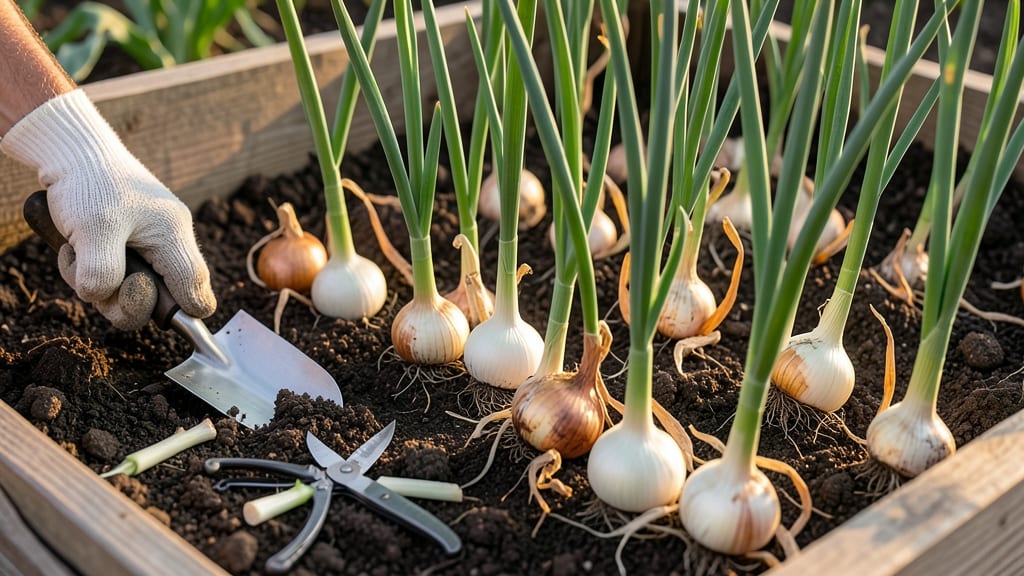
Harvest candy onions when their tops turn brown and begin to dry back 🧅—this is the sweetest stage, and missing it means sacrificing flavor for tougher bulbs.
Picture this: you’ve nurtured your candy onions all season, and now the moment of truth arrives. But how do you know if they’re ready? It’s not just about days in the ground—leaf color, bulb size, and even the weather play a role.
In Zone 6a, that window typically falls between late August and early September, but regional differences mean you’ll need to watch for those telltale signs rather than a calendar date.
Below, I’ll walk you through the exact visual cues—from papery skin to firmness tests—and the best practices for digging, curing, and storing your harvest to keep that sweetness intact.

How to identify candy onions ready for harvest by size and bulb shape
Harvesting candy onions at the right moment ensures their signature sweetness and tender texture. Unlike regular onions, these gems need precise timing—too early, and you’ll get small, bland bulbs; too late, and they’ll turn tough or bitter.
The key lies in watching for three critical cues: bulb size, top condition, and skin texture. Let’s break down what to look for in your garden.
First, focus on the bulb diameter, which should measure between 2 to 3 inches across. This is the sweet spot for candy onions, where flavor and size are perfectly balanced.
Use a ruler or your fingers to check—if the bulb feels like a golf ball in size, it’s likely ready. Smaller bulbs (under 2 inches) won’t have developed their full sweetness, while larger ones may start to hollow out.
Next, examine the top size, which should be about 1 to 2 inches in diameter. The tops (or greens) of candy onions will naturally yellow and dry out as the bulb matures.
When the tops shrink to this size, it’s a clear sign that the bulb below is fully developed. If the tops are still lush and green, give your onions more time to grow.
Don’t overlook the skin texture, which should feel papery and dry to the touch. Run your fingers over the bulb—if the skin feels smooth and slightly rough (like onion paper), it’s ready.
Avoid harvesting if the skin is still slick or rubbery, as the bulb isn’t fully matured. This papery skin is a natural protective layer that forms as the onion prepares for harvest.
| Harvest Cue | Specifics | Action |
|---|---|---|
| Bulb Diameter | 2–3 inches | Harvest when firm and round |
| Top Size | 1–2 inches | Check for yellowing and shrinking |
| Skin Texture | Papery and dry | Avoid if still rubbery or slick |
| Root Condition | Brown and woody | Gently tug to test readiness |
| Firmness | Solid, not squishy | Squeeze gently to confirm |
Another critical clue is the root system. When candy onions are ready, their roots will turn brown and feel woody. If you gently tug on the bulb and it comes out of the soil with minimal resistance, it’s time to harvest.
Resist the urge to pull onions too soon—roots that are still white or fleshy indicate the bulb isn’t fully matured.
To test firmness without damaging the bulb, press your thumb into the top of the onion. A ready bulb will feel solid and resilient, almost like a small rock. If it feels soft or squishy, it needs more time.
Over-mature onions (those left too long in the ground) will start to feel hollow or spongy, signaling they’ve passed their prime. This is a common mistake that leads to bitter, pungent flavors.
Regional climate plays a role in harvest timing. In cooler zones (USDA 3-5), candy onions may mature earlier, around late July to early August. Meanwhile, in warmer zones (USDA 7-10), they might not reach peak sweetness until September or October.
Always monitor your onions closely, as weather fluctuations can shift the timeline. Keep a garden journal to track when your candy onions typically mature in your area.
One final tip: harvest in the morning when temperatures are cooler. This helps preserve the bulb’s moisture and sweetness. Use a fork to gently loosen the soil around the onion before pulling it free.
Avoid cutting the tops—leave them attached to allow the bulb to cure properly. Once harvested, lay the onions in a dry, shaded spot for 1–2 weeks to develop their full flavor and storage life.
By mastering these visual and tactile cues, you’ll never miss the perfect moment to harvest candy onions. The reward? Onions so sweet and tender, they’ll make every dish taste like a garden-fresh masterpiece. Happy harvesting! 🧅
Best harvesting methods to preserve candy onion sweetness and texture
Timing is everything when harvesting candy onions—pull them too early, and you’ll get tiny, bland bulbs. Wait too long, and their signature sweetness turns bitter. The key lies in a mix of visual cues, bulb firmness, and even the time of day you harvest.
I’ve learned that morning harvests preserve the most flavor, while afternoon digging can stress the plants and reduce sweetness.
Start by checking the top size of your candy onions—look for a diameter of 1-2 inches. The bulb itself should measure 2-3 inches across. If the tops are still green and growing, they’re not ready.
But if the leaves have turned brown and papery, it’s time to act. This balance ensures you get the perfect blend of size and sweetness.
Candy onions lose their sweetness when left in the ground past maturity. Overripe bulbs develop hollow centers and a sharp, pungent flavor. If your onions have shriveled tops and the neck has dried completely, you’ve waited too long.
Harvest when the tops are brown but still crisp—not fully dried or collapsed.
Morning is the best time to harvest because the soil is cooler and firmer, making it easier to dig without damaging the bulbs. Use a garden fork to loosen the soil around the base, then gently lift the onions.
Avoid pulling by the tops—this can tear the bulbs and invite rot. Handle them carefully to preserve their delicate texture and sweetness.
Once harvested, let your candy onions cure in the sun for 2-3 hours to toughen their skins. Lay them in a single layer on a mesh screen or clean towel, away from direct sunlight.
This step is crucial—it prevents moisture loss and helps them store longer. After curing, trim the tops to 1 inch above the bulb and remove any excess soil.
Store your cured onions in a cool, dry place with good airflow, like a mesh bag or ventilated container. Avoid plastic bags, which trap moisture and cause rot. In ideal conditions, they’ll keep for 2-3 months.
For longer storage, braid the tops together and hang them in a dark, dry spot—this traditional method preserves sweetness for up to 6 months.
One common mistake I see is harvesting candy onions after a heavy rain. Wet soil makes the bulbs more fragile, increasing the risk of bruising. If you must harvest after rain, wait until the soil is dry enough to crumble easily.
Another pitfall? Storing onions with apples or potatoes, which release ethylene gas and speed up spoilage. Keep them separate for the best results.