
How To
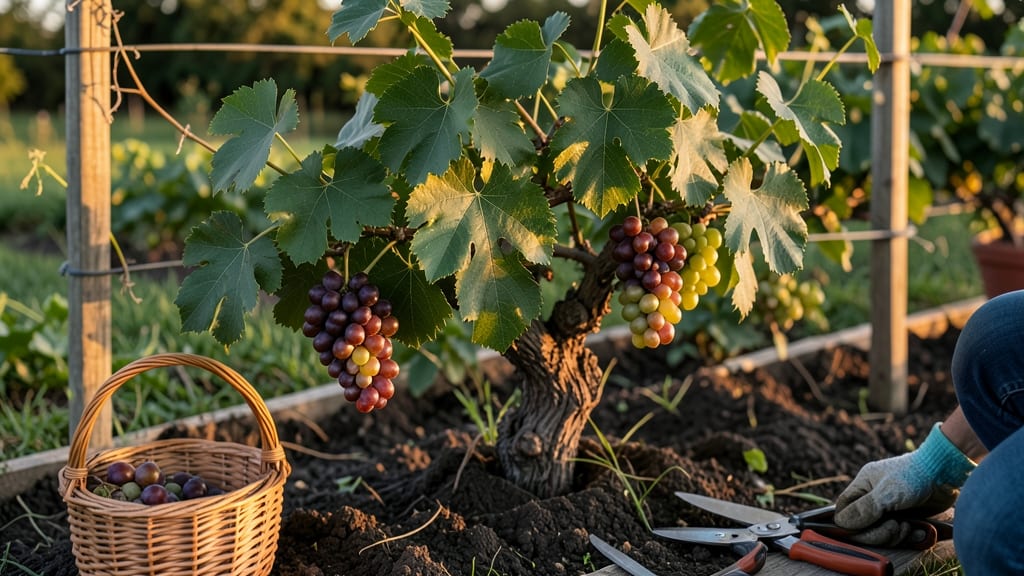
Harvesting muscadine grapes at the right time means the difference between sweet, juicy berries and tough, seedy ones 🍇 — and missing that window can leave you with fruit that’s past its prime.
Most gardeners wait until late August or September, but the truth is, these grapes don’t ripen all at once. You’ll need to check them every few days for three key signs: color, skin thickness, and how easily they twist off the vine.
In USDA Zone 6, where frost can sneak up by October, timing is everything. A late harvest might mean frost-damaged fruit, while picking too early leaves you with bland, underripe berries that won’t make great wine or jams.
Below, I’ll walk you through the exact visual cues to watch for, how to test sugar levels, and when to adjust for your local climate—so you never miss the perfect moment again.

3 Key signs to identify perfect muscadine grape ripeness
Harvesting muscadine grapes at the right time transforms your vineyard into a treasure trove of sweet, juicy fruit. Unlike table grapes, muscadines ripen later in the season—often between late August and October—depending on your USDA zone and microclimate.
In the Southern U.S. (Zones 7-9), grapes typically ripen 2-3 weeks earlier than in cooler regions like Zone 6. Missing these 3 key ripeness signs can mean the difference between perfect fruit and mealy, overripe grapes.
First, focus on berry color, the most obvious visual cue. Unripe muscadines start green or pale yellow, gradually deepening to deep purple, black, or bronze depending on the variety. For example, 'Scuppernong' grapes turn a rich purple-black, while 'Carlos' develops a bronze-brown hue.
Wait until 100% of the berries in a cluster show this mature color—even a few green grapes can signal underripeness.
Next, perform the stem separation test, a foolproof way to check ripeness without damaging the fruit. Gently grasp a grape between your thumb and forefinger and twist it away from the vine. If it separates cleanly with a slight popping sound, it’s ready to harvest.
Unripe grapes will resist separation or snap off at the stem, leaving the fruit hanging. This test works best in the morning after dew has dried, when grapes are firmest.
The final clue lies inside the grape: seed development. Cut open a ripe muscadine to reveal fully brown, hard seeds that fill the center. Underripe grapes contain soft, white, or translucent seeds, while overripe ones may have shriveled or hollow seeds.
Pro tip: If you’re growing muscadines for wine or jelly, aim for fully brown seeds—this ensures maximum sugar content and flavor extraction.
| Ripeness Sign | What to Look For | Action to Take |
|---|---|---|
| Berry Color | Deep purple/black or bronze (100% uniform) | Harvest when color is consistent across clusters |
| Stem Separation | Grape twists off cleanly with slight resistance | Test 3-5 grapes per cluster before harvesting |
| Seed Development | Fully brown, hard seeds filling the center | Slice open 1-2 grapes to confirm internal ripeness |
| Regional Timing | Southern US: Late Aug-Oct; Northern US: Sept-Oct | Monitor local frost dates to avoid early harvests |
Regional variations play a huge role in harvest timing. In warmer climates (Zones 8-9), muscadines may ripen as early as late August, while in cooler zones (6-7), you might not see peak ripeness until mid-to-late October.
Pay attention to local frost dates: Harvest at least 2-3 weeks before the first frost to avoid damage. For example, in North Carolina’s Piedmont region, I’ve found that 'Doreen' grapes ripen around September 15, while 'Fry' grapes linger until October 10.
Don’t rely solely on color—some muscadine varieties, like 'Supreme', develop a reddish tint when overripe. Instead, combine all three signs: color + stem separation + seed development.
For instance, I once harvested a batch of 'Scuppernongs' based on color alone, only to discover the seeds were still white and underdeveloped. The resulting grapes were sour and seedy, a lesson I won’t repeat!
Always test a few grapes from different clusters to account for uneven ripening on the vine.
If you’re growing muscadines for fresh eating, aim for maximum sugar content—this usually means harvesting when grapes are slightly softer than when used for wine or juice. For wine-making, I prefer a firm yet yielding skin to preserve acidity and structure.
To test sweetness, simply taste a grape: It should be naturally sweet with a balanced tartness. If it tastes overly tart or bland, wait another 3-5 days before harvesting.
One common mistake is harvesting too early to avoid bird damage or rot from rain. While it’s tempting to pick grapes when they’re 90% ripe to protect them, underripe fruit lacks flavor and sugar. Instead, use bird netting or row covers to shield your crop.
I’ve also had success with hand-picking damaged grapes and leaving the rest to ripen. This selective harvesting method lets you extend the ripening process while minimizing losses.
Pro tip: Keep a harvest journal to track ripening patterns in your specific climate. Note the exact dates you harvest each variety, along with weather conditions and fruit quality. Over
How to test sugar levels in muscadine grapes for peak flavor
Sweetness is the ultimate indicator of peak muscadine grape ripeness, but how do you measure it accurately? A refractometer lets you test Brix levels—the sugar content—so you can harvest at the perfect moment.
For home gardeners, this tool reveals whether your grapes are just right or still need time on the vine.
Muscadine grapes typically reach 16-22 Brix at peak sweetness, but variety and climate can shift this range. For example, Scuppernong grapes often hit 20+ Brix in warm Southern summers, while Northern-grown varieties may max out at 18 Brix. Testing a few clusters ensures consistency across your vines.
To test sugar levels, start by selecting 2-3 ripe-looking clusters from different parts of the vine. Crush a few grapes into a small bowl, then place 3-5 drops of the juice onto the refractometer’s prism.
Cover the prism and look through the eyepiece—most models show a Brix reading on a scale. If your refractometer lacks an eyepiece, check the colored scale against the juice.
For inconsistent ripening across vines, test grapes from sunny and shaded areas separately. Shaded clusters often lag behind by 2-4 Brix, so harvest them first if you’re making wine or juice.
If some grapes test at 14 Brix while others hit 20 Brix, pick the riper ones immediately and leave the rest to mature another 3-5 days.
A taste test is your backup when tools aren’t available. Fully ripe muscadines should taste naturally sweet with a tart balance—like a mix of grape and citrus. If they’re overly tart or bland, they’re not ready.
Overripe grapes lose sweetness and develop a mealy texture, so harvest before they reach 24 Brix unless you’re making jam.
Store your refractometer in a cool, dry place after each use to maintain accuracy. Clean the prism with distilled water and a soft cloth, and recalibrate it annually or if readings seem off.
With practice, you’ll predict harvest timing just by glancing at your vines—and enjoy grapes at their sweetest, juiciest peak every season.