
How To
Harvesting roselle at the right time unlocks its signature tartness and fiber-rich texture—wait too long, and you lose flavor to bitterness.
Picture this: you’ve nurtured your 🌿 roselle all season, and now the calyces are swelling with potential. But how do you know when to snip? One wrong move, and you’re left with underripe pods that taste bland or overripe ones that turn mushy.
The secret lies in three simple visual cues that transform guesswork into a foolproof harvest.
Most gardeners in USDA Zone 6a start harvesting between July and October, but timing depends on your plant’s signals—not just the calendar. A deep red calyx that unfurls fully, a stem that yields slightly when pressed, and crisp edges are your green light.
Miss these signs, and you risk ruining the tart, citrusy punch that makes roselle a kitchen star.
In this guide, I’ll walk you through those three key indicators, plus how to test tartness without tools and the common mistakes that turn great harvests into disappointments. Ready to turn your roselle into the star of your next tea or stew?

3 Visual cues to identify perfect roselle harvest time
Harvesting roselle at the right moment transforms its tart, citrusy flavor and fiber-rich texture into a culinary treasure. But timing is everything—pick too early, and you’ll get bland, underdeveloped calyces; wait too long, and they’ll turn mushy or bitter.
The secret lies in these 3 visual cues that signal peak ripeness.
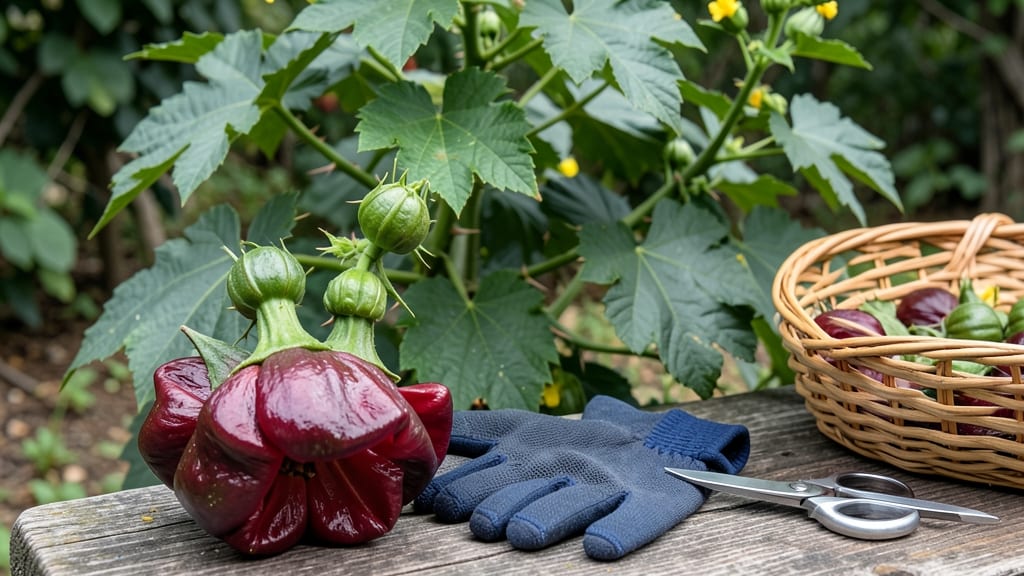
First, focus on the calyx color, which shifts from green to a vibrant deep red as it matures. This isn’t just about aesthetics—it’s your first clue that the flavor compounds are fully developed.
Next, check the calyx size: fully ripe ones will be plump and 2-3 inches long, while immature ones stay small and tight.
Finally, examine the seed development inside the calyx. When seeds are fully formed but still firm, the calyx is at its prime. Overripe seeds turn brown and soft, ruining the texture.
These cues work together to ensure you harvest roselle with the perfect balance of tartness, fiber, and crunch.
The calyx color is your most reliable indicator. A deep red hue means the calyx has absorbed enough sunlight to develop its signature tartness and anthocyanins—the antioxidants that give roselle its vibrant color.
Compare it to a ripe strawberry: the deeper the red, the sweeter (and in this case, the tangier) the flavor.
Size matters too. A 2-3 inch calyx is ideal because it’s fully expanded but hasn’t started to shrink or wilt. Measure a few calyces from different plants—variations in size can signal uneven ripening due to sun exposure or soil nutrients.
If most are smaller, wait a few days before harvesting.
Don’t overlook the seed development. Gently squeeze the calyx—if the seeds inside feel firm and plump, you’re golden. If they’re hollow or crumbly, the calyx is past its prime. This step is crucial for fiber content, which peaks when seeds are fully developed but still crisp.
Regional climate plays a role too. In hotter zones like Florida or California, roselle may ripen faster (as early as 90 days), while cooler areas like Zone 6 might need up to 180 days.
Adjust your harvest timeline by monitoring these 3 visual cues rather than relying on a fixed calendar.
One common mistake is harvesting based on flower color alone. While the flowers start as yellow, they fade as the calyx matures. Focus on the calyx itself, not the flower petals.
Another pitfall is cutting stems too early—always wait until the calyx unfurls fully and the stem feels slightly yielding when pressed.
To test readiness, pluck a calyx and give it a gentle twist. If it detaches easily with a slight resistance, it’s perfect. If it snaps off cleanly, it’s overripe.
For consistent harvests, pick every 2-3 days once the first calyces turn deep red. This encourages more blooms and extends your harvest season.
Store freshly harvested roselle in the fridge for up to 5 days or freeze them for long-term use. The fiber content and tartness degrade quickly after harvest, so timing is everything.
Master these 3 visual cues, and you’ll always enjoy roselle at its peak—whether in hibiscus tea, stews, or jams.
How to test roselle tartness before harvesting (No tools needed)
Harvesting roselle at the perfect moment ensures that tartness peaks and fiber content remains ideal. Without tools, I rely on simple sensory tests that reveal ripeness through touch, sight, and even taste. The key is understanding how calyx color, stem firmness, and environmental cues interact to signal readiness.
Start by examining the calyx color. Fully ripe roselle calyces transition from green to a deep, vibrant crimson red. This color shift isn’t just about aesthetics—it’s a clear indicator that the tartness compounds have developed fully.
A partially open calyx with green hints means it’s still too early, while a fully unfurled, deep red one is ready for harvest.
Press the stem gently—if it resists slightly but yields under pressure, it’s ripe. A soft or mushy stem means it’s overripe, while a hard, unyielding one signals underripe calyces. Test 2-3 calyces per plant to confirm consistency.
Next, I perform a taste test on a small sample. A ripe roselle calyx should deliver a bright, tangy tartness with a hint of citrus. If it tastes bland or overly bitter, it’s not ready yet.
Overripe calyces, on the other hand, lose their crispness and develop a mushy texture and a dull, less vibrant flavor. This test is foolproof for confirming ripeness without guesswork.
Environmental factors also play a role in maturity. Roselle plants grown in warmer climates (like USDA Zone 9+) may ripen faster, while cooler regions (Zone 7 or below) could extend the harvest window.
Watch for morning dew—if calyces stay dry and crisp despite humidity, they’re likely ready. Conversely, persistent dampness can delay ripening or cause rot.
Finally, check the seed development inside the calyx. Ripe roselle seeds should be plump and fully formed, though they’re not typically harvested for consumption. If the seeds appear shriveled or the calyx feels hollow when gently squeezed, it’s past its prime.
This internal check is my last verification before committing to a full harvest.
By combining these sensory tests—color, firmness, taste, and seed developmenttartness and texture. With practice, you’ll develop an intuition for the ideal moment, making your harvests consistently delicious.