
How To
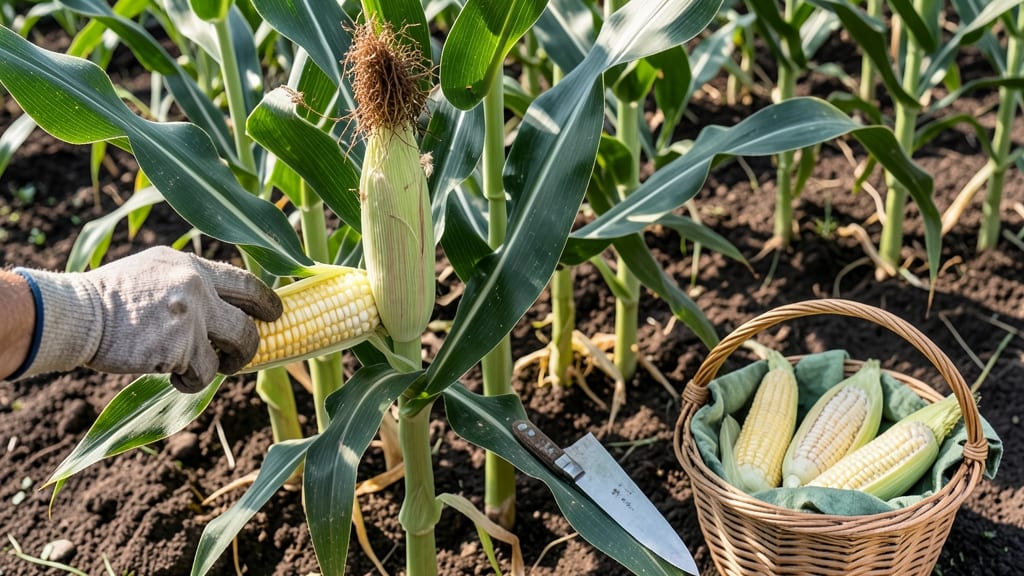
Harvesting sweet corn at the right time means plump, tender kernels bursting with flavor 🌽 — and missing that window means tough, starchy ears that taste like disappointment.
Here’s the truth: most gardeners wait too long, assuming bigger ears mean better corn. But by the time the husks start drying out, the sweetness has already turned to sugar crystals, and the texture goes from velvety to mealy.
The key is catching those 12-24 hours after pollination when the kernels are milky white and the silks have just turned brown.
In USDA Zone 6a, where summer heat can rush the process, timing becomes even trickier. A late afternoon check for dried silks and a firm but not hard ear is your best bet—especially when the stalk near the ear is about pencil-thick.
One wrong move, and you’re left with corn that tastes like overcooked pasta.
Below, I’ll break down the three visual cues that guarantee perfect sweetness every time, plus how to adjust for heat waves, drought, or unexpected rain. No more guesswork—just corn so sweet, you’ll want to eat it straight off the cob.

3 Visual cues to harvest sweet corn at peak sweetness
There's nothing worse than biting into a sweet corn ear that's tough and starchy instead of juicy and tender. The secret to perfect sweetness lies in harvest timing, and nature gives you three clear visual cues to follow.
These simple checks—tassel color, silk condition, and kernel plumpness—will ensure you pick your corn at its sweetest possible moment every time.
Most gardeners wait too long, missing the 12-24 hour window after pollination when sweetness peaks. But don't worry—once you learn these three foolproof visual signals, you'll never guess again.
I've used these same methods for years in my garden, and they've never failed me. Let's break down exactly what to look for in each stage.
Check the Tassel Color
Look for brown and dried tassels at the top of your corn plant. When the tassels turn completely brown and brittle, it means pollination has occurred and the ears are developing rapidly.
Examine the Silk Color
The silks (those long strands at the end of the ear) should be completely brown and crispy. If they're still green or moist, the corn needs more time. Brown silks mean the kernels are filling out fast—harvest within 1-2 days for peak sweetness.
Test Kernel Plumpness
Use your thumb to press a kernel. If it's plump and milky white inside (like fresh cream), it's ready. If it's hard or translucent, wait another day. For the milk stage, slice open an ear—if the juice runs milky white, you've timed it perfectly!
The tassel color is your first warning that pollination has happened. When those top tassels turn from green to dry brown, it's a sign the corn is actively developing ears.
I always check this first thing in the morning because dew can sometimes make things look fresher than they are.
Next, focus on the silk condition. Those silky strands at the end of the ear start out bright green but gradually dry out. When they're completely brown and crispy, it means the kernels are filling with milk and sugar.
This is your best indicator of when to harvest—don't wait until they're completely dry and brittle, or you'll miss the sweetness window.
Finally, the kernel plumpness test is the most reliable method. Slice open an ear lengthwise and look at the kernels. They should be plump and milky white inside. If you see a clear liquid instead of milk, the corn is past its prime.
For extra assurance, press a kernel with your thumb—it should give slightly but not feel mushy.
One common mistake I see is waiting until the silks fall off completely. By then, the corn has often started converting its sugars into starch, making the kernels tough.
The key is to harvest just before the silks dry out completely—usually when they're about 75% brown and crispy. This timing ensures maximum sweetness.
If you're growing sugar-enhanced varieties, like 'Silver Queen' or 'Peaches and Cream', these cues are even more critical because their sweetness peaks earlier. Always check the back of your seed packet for specific harvest recommendations, but these visual cues will work for nearly any sweet corn variety you grow.
Pro tip: Keep a small notebook by your garden to track when you see these signs. Over time, you'll notice patterns based on your climate and variety. For example, in hotter summers, the silks may dry out faster, so you'll need to check your corn more frequently.
In cooler climates, the process happens more slowly.
Once you master these three visual cues, you'll never have to guess when to harvest again. Your family will thank you every time you serve up perfectly sweet, tender corn straight from the garden.
And remember—when in doubt, harvest a little early. Corn continues to sweeten slightly after picking, but it won't get sweeter if you wait too long.
How long after pollination should you harvest sweet corn?
Sweet corn reaches its peak sweetness in a surprisingly short window after pollination—just 12 to 24 hours. This tight timeline means timing your harvest is everything. Once pollination occurs (when silks turn brown and crispy), sugars in the kernels convert rapidly, and waiting too long turns sweetness into starch.
Understanding this window helps you avoid tough, dry kernels that ruin the buttery flavor we all love.
Pollination happens when pollen from the tassels fertilizes the silks, triggering kernel development. The milk stage—when kernels are plump and milky white—begins almost immediately. This is your harvest sweet spot.
Missing it by even a day can mean the difference between tender, juicy corn and something closer to field corn. Climate plays a role too, as hotter weather speeds up sugar conversion, shrinking that critical window.
| Stage | Time After Pollination | Harvest Readiness | Climate Impact |
|---|---|---|---|
| Silks Turn Brown | 0-6 hours | Pollination begins | Warmer temps speed up process |
| Silks Dry & Crispy | 6-12 hours | Kernel development starts | Cool weather extends window |
| Milk Stage (Plump Kernels) | 12-24 hours | Peak sweetness—harvest now! | Heat reduces window to <12 hours |
| Dough Stage (Hard Kernels) | 24+ hours | Sweetness lost—starchy texture | Drought stress accelerates starchy conversion |
In cooler climates (USDA Zones 3-5), you might have a slightly longer window—up to 36 hours—because sugar conversion slows. But in hot zones (Zones 7-10), that milk stage shrinks to as little as 8-12 hours.
Pay attention to your local weather: a heatwave can turn sweet corn into tough corn faster than you expect. Morning harvests are ideal because cooler temps preserve sweetness longer.
To maximize your harvest, check ears twice daily during peak season. Look for silks that are completely brown and dry, then slice a kernel open—it should ooze milky liquid, not be hard or translucent. If you’re unsure, harvest a few ears early; they’ll still be delicious, just slightly less sweet.
The key is consistency: once you master this 12-24 hour window, you’ll never settle for bland corn again.
Pro tip: Use a sharp knife and cut the ear about ½ inch below the base to avoid damaging the stalk. Harvesting properly ensures the plant can redirect energy to other ears, boosting your overall yield.
And if you’re growing multiple varieties, keep a harvest journal to track pollination times—it’ll help you predict future harvest windows like a pro.
Remember, sweet corn’s flavor peaks at 70-75% moisture content. Waiting until the dough stage (when kernels feel hard) means you’ve missed the boat. The sooner you harvest after pollination, the sweeter—and more satisfying—your corn will be.
Now grab those knives and get ready for the tastiest ears of the season!