
Vegetables
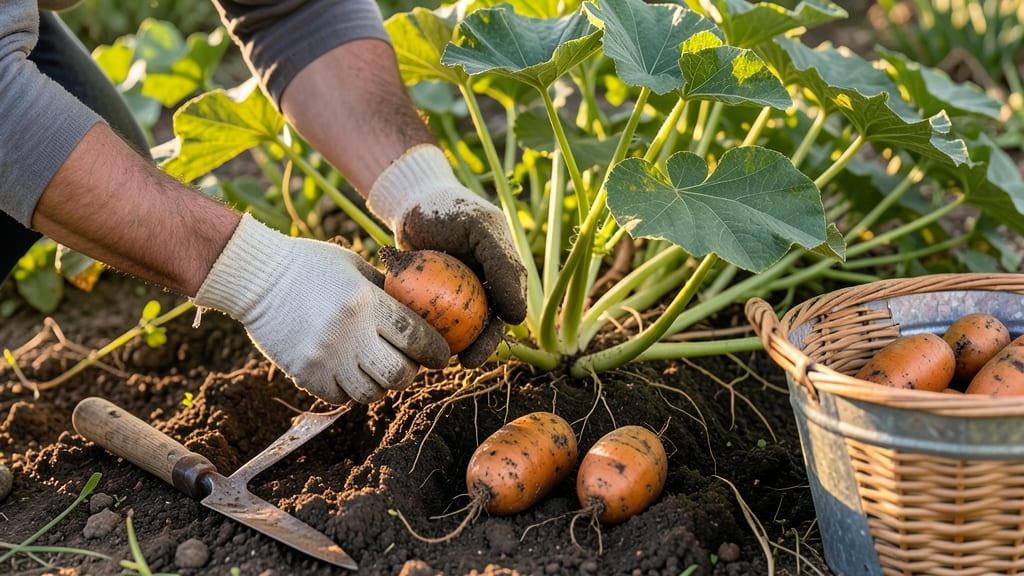
Harvesting sweet potatoes at the right time means the difference between tender, flavorful tubers and tough, woody messes — and the key is knowing when to pull them from the soil.
Picture this: you’ve spent months nurturing your 🍠 plants, and now the vines are yellowing while the soil feels rock-hard when you dig your finger in. That’s your cue to grab a fork and start harvesting before the first frost ruins everything.
But how do you tell if they’re ready? It’s not just about days after planting — soil temperature, leaf color, and even the skin’s resistance to a fingernail all play a role. Miss these signs, and you’ll end up with small, underdeveloped tubers or ones that store poorly.
Below, I’ll walk you through the three foolproof signs that your sweet potatoes are ready to harvest, plus how to handle them afterward for the best flavor and storage life.

3 Visual & physical signs your sweet potatoes are ready to harvest
Timing your sweet potato harvest is like catching a wave—too early, and you miss the sweetness; too late, and you're left with tough, woody tubers. The key lies in observing three clear visual and physical cues that tell you when your plants are ready.
These signs don’t just indicate maturity; they also ensure your harvest stores well and tastes delicious. Let’s break down what to watch for in your garden.
First, understand that sweet potatoes need 90–150 days to mature, but relying solely on days isn’t foolproof. Instead, focus on the plant’s natural signals. The skin slip test, soil hardness, and leaf color changes are your best friends here.
These three methods work together to confirm your sweet potatoes are ready for harvest, so let’s dive into each one with actionable steps.
📌 3 Foolproof Signs Your Sweet Potatoes Are Ready
- 1. Vine Yellowing & Leaf Drop: Vines turn yellow-brown and leaves wilt or fall off. This signals the plant is redirecting energy to the tubers.
- 2. Skin Slip Test: Gently dig up a small tuber. If the skin slips off easily (like a sunburned finger), it’s ready. If it resists, wait 1–2 weeks.
- 3. Soil Hardness: Press your finger 1–2 inches deep into the soil. If it feels firm and dry, the tubers have stopped growing.
- Bonus: Tubers should be 2–3 inches in diameter and firm to the touch. Smaller tubers mean they’re not fully developed.
🌱 Pro Tip: Harvest on a dry, sunny day to speed up curing and reduce disease risk.
Let’s start with the most obvious sign: your plant’s vines and leaves. When your sweet potato vines begin to yellow and die back, it’s a clear signal that the plant is shifting its energy from foliage to tuber development.
This process usually happens 2–4 weeks before harvest, so don’t wait until the vines are completely dead—act when they start to wilt or drop leaves. Ignoring this sign can lead to tubers that become woody or shriveled due to overmaturity.
Next, perform the skin slip test, a simple but effective trick to check tuber readiness. Dig up a small sample tuber (about 1–2 inches in diameter) and try to peel away the skin. If it slips off easily, your sweet potatoes are ready.
If the skin resists, your tubers need 1–2 more weeks in the ground. This test works because the skin toughens as the tuber matures, and an easy slip means the starch content is perfect for both eating and storage.
Don’t overlook the soil condition around your sweet potatoes. Press your finger 1–2 inches deep into the soil near the vines. If the soil feels firm and slightly dry, it’s a sign that the tubers have stopped growing.
Sweet potatoes thrive in well-draining soil, and when the soil hardens, it indicates the roots have reached their ideal size. This is especially important in sandy or loamy soils, where moisture drains quickly.
Here’s a common mistake many gardeners make: harvesting based on size alone. While tubers should be 2–3 inches in diameter, size doesn’t guarantee sweetness or storage potential. Always combine the skin slip test and soil hardness with vine color changes for the most accurate results.
For example, a 3-inch tuber with soft skin might still need time, while a 1.5-inch tuber with tough skin could be ready.
Regional climate plays a role too. In warmer climates (like zones 9–11), sweet potatoes may mature earlier, while cooler zones (6–8) might need an extra 2–3 weeks.
Pay attention to your local first frost date—sweet potatoes cannot tolerate frost, so harvest at least 2 weeks before the expected frost. In my Zone 7 garden, I always aim to harvest by early October to avoid any risk of frost damage.
One final tip: Harvest on a dry day to prevent soil from sticking to the tubers, which can lead to rot during storage. Use a garden fork to gently loosen the soil around the base of the vines, then pull the tubers free by hand.
Avoid cutting the vines—leave them attached to protect the tubers from bruising. Once harvested, let them cure in the sun for 10–14 days to develop their sweet flavor and thicken the skin for longer storage.
Mastering these three signs will transform your sweet potato harvest from hit-or-miss to consistently sweet and storage-friendly. The next time you’re tempted to dig up a tuber "just to check," remember: patience and observation are your best tools. Happy harvesting! 🍠
Sweet potato harvest timing: when to dig based on variety & climate
Timing your sweet potato harvest depends heavily on your climate zone and the variety you're growing.
In warmer climates like USDA Zone 9-11, sweet potatoes mature faster and can be harvested as early as 90 days, while cooler zones like Zone 6-7 may need up to 140 days for full maturity.
The key is balancing soil temperatures, frost risk, and the specific needs of your chosen variety.
Popular varieties like Beauregard (the classic orange sweet potato) and Jewel (great for storage) thrive in warm climates and are ready to harvest when vines yellow and tubers reach 2-3 inches in diameter.
Meanwhile, Purple sweet potatoes (like Georgia Jet) often need slightly longer growing seasons and benefit from cooler fall temperatures to develop their signature color and sweetness.
Here’s how to align your harvest timing with your growing conditions:
In cool climates, aim to harvest sweet potatoes before the first frost—even if they’re not fully mature. Tubers left in cold soil (below 50°F) develop a woody texture and lose sweetness.
If frost is imminent, dig immediately and cure them indoors for 10 days at 80-85°F and high humidity to improve flavor and storage life.
For extended storage, prioritize varieties like Jewel or Covington, which store well for 6-9 months in cool (55-60°F), humid (80-85%) conditions. Avoid storing Beauregard long-term, as it’s better eaten fresh within 3-4 months. Always handle tubers gently to prevent bruising, which shortens shelf life.
Pro tip: If your vines die back early due to drought or disease, the tubers may still be harvestable—just check for 2-inch diameter and firm skin. In short-season areas, consider using black plastic mulch to extend the growing season by 2-3 weeks and improve tuber quality.