
How To
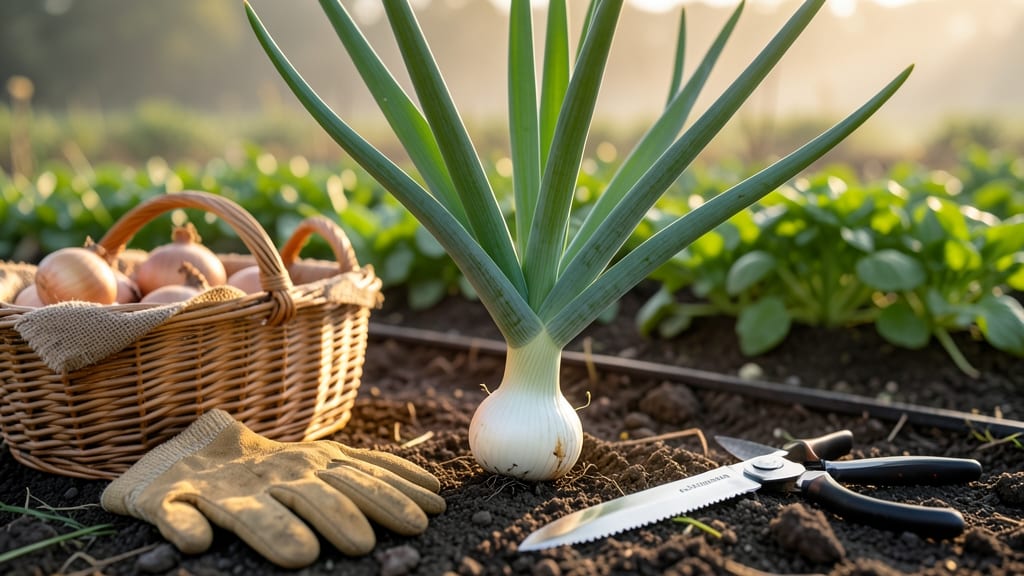
Harvesting white onions 🧅 when their tops yellow and fall over ensures the sweetest flavor and longest storage life.
Picture this: you’ve nurtured your white onions all season, only to pull them too early—still tough and sharp—or too late, when they’ve split open and gone bitter. That’s why timing is everything, and missing the window means wasting months of effort.
Here’s the secret: size, color, and texture are your best clues. A bulb that’s 2-3 inches wide, with a dry, papery neck and tops that’ve turned golden, is ready to harvest. But climate plays a role too—cool regions may need a slightly earlier pick than warmer areas.
In this guide, I’ll walk you through three foolproof tests to nail the perfect harvest time, plus how to cure and store them for months. No more guesswork—just sweet, flavorful onions straight from your garden.

3 Size-based tests to determine perfect white onion harvest timing
Perfectly timed white onion harvests depend on three key size-based tests: bulb diameter, neck thickness, and overall shape. These physical indicators reveal when your onions have reached peak sweetness and storage potential. Ignoring these cues often leads to either underdeveloped bulbs or overripe onions that split or rot.
First, focus on the bulb diameter—this is your most reliable indicator. Ideal white onions should measure between 2 to 3 inches in diameter when harvested.
Smaller bulbs (under 1.5 inches) lack full flavor development, while larger ones risk splitting during curing. Use a ruler or caliper for precise measurements if needed.
Next, examine the neck thickness where the bulb meets the green tops. At harvest time, this neck should feel dry and papery to the touch, almost like thin parchment. A thick, green neck means the onion needs more time, while a completely shriveled neck signals it was harvested too late.
Finally, check the bulb shape. Mature white onions develop a rounded, symmetrical form. If your onions appear elongated or lopsided, they likely need more growing time. Uneven shapes often result from inconsistent watering or poor soil drainage.
| Test Type | Ideal Specification | Action Required |
|---|---|---|
| Bulb Diameter | 2-3 inches | Harvest when firm |
| Neck Thickness | Dry and papery | Check daily for change |
| Bulb Shape | Rounded and symmetrical | Avoid water stress |
For gardeners in cooler climates (USDA Zones 3-5), aim to harvest white onions in late July to early August when daytime temperatures stay below 80°F. Warmer regions (Zones 6-10) can extend harvests until mid-September, but monitor size tests closely as heat accelerates maturity.
Pro tip: Conduct a tactile test by gently squeezing the bulb between your fingers. Ready-to-harvest onions should feel firm but yield slightly, like a ripe avocado. Soft bulbs need more time, while overly firm ones may have dried out too long in the soil.
Timing matters most in storage potential. Onions harvested too early store poorly (3-4 months max), while perfectly timed bulbs last 6 to 8 months when cured and stored properly. The size tests ensure you balance sweetness with longevity—critical for winter pantries.
Remember that soil conditions affect size development. Sandy soils produce smaller bulbs, while loamy soils encourage ideal 2-3 inch diameters. Amend your garden beds with compost before planting to create optimal growing conditions for your white onions.
If you're growing short-day varieties (common for white onions), they'll mature faster in long summer days. For these types, prioritize the neck thickness test over calendar dates, as daylight hours trigger maturity more than temperature does.
For a foolproof method, combine all three tests: measure the bulb, check the neck, and assess the shape. When all three indicators align, you've found your perfect harvest window—the sweet spot between flavor development and storage readiness.
How to test white onion sweetness before harvesting
White onions develop their signature sweetness when harvested at the perfect moment—too early, and they’re bland; too late, and they become tough or sprout prematurely. The key is testing for flavor maturity using simple, hands-on methods that don’t require fancy tools.
I’ve relied on these tricks for years to ensure my onions are peak sweetness and store well all winter.
One of the easiest ways to gauge sweetness is the leaf color shift. Healthy green tops gradually turn straw-colored or yellowish-brown as the bulb matures. This change signals the plant is redirecting energy from foliage to the bulb, which is when sugars concentrate.
However, don’t wait until the leaves are completely crispy—harvest just as they start to yellow for the best balance of sweetness and texture.
⚠️ callout-warning ⚠️
⚠️ Harvesting Too Late Ruins Flavor
White onions left in the ground past their prime develop woody bulbs and bitter notes. The neck (where the bulb meets the stem) should be dry and papery—if it’s still green or moist, wait 3-5 more days. Overripe onions also sprout prematurely, making them unusable for storage.
💡 Pro Tip: Test one bulb by peeling back the outer layer. If the skin slips off easily and the layers are firm but not tough, it’s ready. If it’s still sticky or slimy, the onion needs more time.
The squeeze test is my go-to for confirming sweetness without digging up the entire plant. Gently grasp a bulb through the soil and give it a firm squeeze. A ripe white onion will feel firm but slightly yielding, like a ripe avocado.
If it’s too soft, it’s underdeveloped; if it’s rock-hard, it’s past its prime. This test works best in the morning when bulbs are fully hydrated.
Another telltale sign is the bulb diameter. Aim for onions that are 2-3 inches wide at the base. Smaller bulbs (under 1.5 inches) are too immature and lack sweetness, while larger ones (over 3.5 inches) often become pithy or hollow.
Measure a few bulbs in your patch to spot the sweet spot—literally! For variety like ‘Sweet White Spanish’, this size ensures both flavor and storage potential.
Don’t overlook the neck thickness, the stem connecting the bulb to the leaves. At the perfect harvest time, this neck should be about 1 inch thick and starting to shrivel. If it’s still thick and green, the bulb needs more time.
A thin, dry neck means the onion is ready—pull it then to preserve sweetness. For long-term storage, harvest when 60-70% of the tops have yellowed but before they flop completely.
Timing also depends on your climate. In cool regions (USDA Zones 3-5), harvest in late summer (August-September) when daytime temps drop below 80°F. In warmer zones (6-10), aim for early fall (September-October) to avoid heat stress.
I’ve found that harvesting in the early morning after dew has dried reduces stress on the plant and locks in sweetness.