
Picking
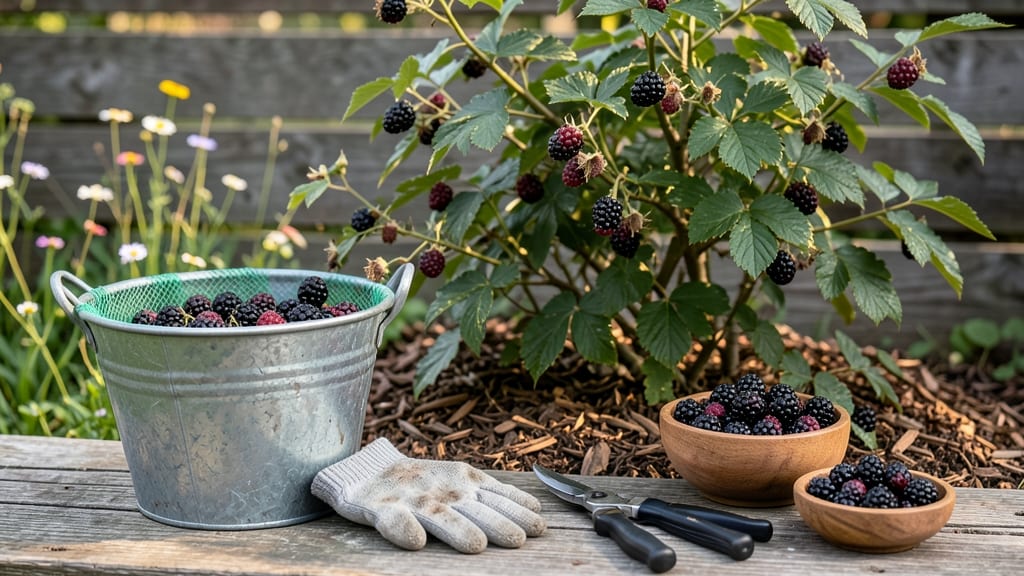
Timing your blackberry harvest right means the difference between sweet, juicy fruit and tart, mealy disappointment—here’s how to master the art of picking at peak ripeness.
Picture this: you’ve waited months for your 🫐 bushes to burst with color, only to bite into a berry that’s still sour or mushy. That’s the moment you realize timing isn’t just about patience—it’s about precision.
The right harvest window turns a good crop into an exceptional one, and knowing the signs saves you from wasted effort (and hungry birds swooping in before you do).
Blackberries typically ripen between July and September, but the exact moment depends on your variety and climate. In USDA Zone 6a, where many gardeners grow them, the harvest usually kicks off in late July—though some early varieties may start as soon as June.
The key isn’t just the calendar, though; it’s what’s happening on the plant itself.
In this guide, I’ll walk you through three foolproof visual cues to pick blackberries at their sweetest, plus how to harvest without damaging your bushes. Whether you’re dealing with uneven ripening or bird interference, you’ll leave here with a strategy that maximizes your yield—and your patience.

3 Visual cues to identify blackberries at peak harvest time
Timing your blackberry harvest perfectly ensures the sweetest, juiciest berries possible. Unlike some fruits that ripen off the vine, blackberries must be picked at peak ripeness—they won’t improve after harvesting.
The key lies in three simple visual cues that tell you when to grab your harvesting shears and start picking.
First, pay attention to the color transformation of the berries. While variety colors differ (black, red, purple), the rule remains: fully colored berries are ready. A uniform deep hue means it’s time to harvest, while any lingering green or pale patches signal underripe fruit.
This visual cue is your first checkpoint before even touching the berries.
Next, perform the gentle squeeze test. Fully ripe blackberries should feel plump but slightly soft when pressed lightly between your fingers. If they’re rock-hard or mushy, they’re not ready. This firmness test is crucial because it confirms the berries have reached their optimal sugar content without becoming overripe.
- 🟣 Fully Colored: Berries are uniformly dark (black, red, or purple) with no green patches.
- 🤲 Slightly Soft: Gently squeezed berries yield slightly but don’t feel mushy.
- ✂️ Easy Separation: Berries detach easily from the stem when pulled gently.
Don’t overlook the cluster separation test, which is often overlooked but equally important. A ripe blackberry should detach cleanly from the vine when you gently pull it away.
If it resists or the stem snaps instead, it’s not ready yet. This test ensures you’re picking berries at their peak flavor and texture, not before or after.
For red or purple varieties, the color test is especially critical since these types may not darken as dramatically as black blackberries. Look for a vibrant, consistent color across the entire berry. Even a single green spot can mean the fruit needs more time on the vine.
Harvesting too early leads to tart, underdeveloped berries, while waiting too long risks bird damage or overripe fruit. By mastering these three visual cues—color, firmness, and separation—you’ll consistently pick blackberries at their sweetest, most flavorful stage.
Pro tip: Harvest in the morning when temperatures are cooler. This preserves the berries’ freshness and flavor longer, making your effort even more rewarding. Plus, cooler berries are less likely to bruise during picking.
Remember, blackberries won’t ripen further after picking, so these visual cues are your only chance to get it right. Once you’ve mastered them, you’ll never waste another underripe or overripe berry again!
Now that you know what to look for, grab your harvesting tools and enjoy the sweet reward of perfectly timed blackberries—straight from your garden to your table! 🫐
Best practices for harvesting blackberries without damaging the plant
Harvesting blackberries carefully protects your plant for future yields while ensuring you get the sweetest fruit. The key is using the right techniques to avoid breaking canes or stressing the plant. I’ve learned that gentle handling and proper timing make all the difference in maintaining a healthy blackberry bush.
Start by picking berries in the morning when they’re cool and firm, which helps preserve their flavor and texture. Avoid harvesting after heavy rain or when the fruit is wet, as this can lead to mold or rot. Always use clean, sharp tools to minimize damage to the delicate canes.
⚠️ callout warning ⚠️
⚠️ Avoid Overharvesting
Never pick more than 30% of ripe berries at once from a single cane. Overharvesting weakens the plant and reduces next year’s yield. Focus on clusters that are fully ripe to encourage more fruit production.
Use a pair of pruning shears or harvesting scissors to snip clusters cleanly from the cane. This method prevents tearing the fruit or damaging the plant’s structure. For larger harvests, consider wearing gloves to protect your hands from thorns while maintaining a firm grip on the berries.
Work systematically from the bottom of the plant upward to avoid missing any ripe fruit. This approach also lets you spot early signs of pests or diseases, like spider mites or powdery mildew, which can affect future harvests. Remove any damaged or diseased berries immediately to prevent spreading.
After harvesting, rinse your berries gently in cool water and pat them dry with a clean towel. Store them in the refrigerator for up to 3-5 days in a paper towel-lined container to maintain freshness.
For long-term storage, freeze them whole or in small containers for later use in jams, smoothies, or baking.
To encourage future growth, prune old canes immediately after harvest. Remove any dead, diseased, or weak canes to redirect the plant’s energy toward producing new, healthy growth. This simple step can double your yield next season while keeping your blackberry patch thriving.