
Flowers
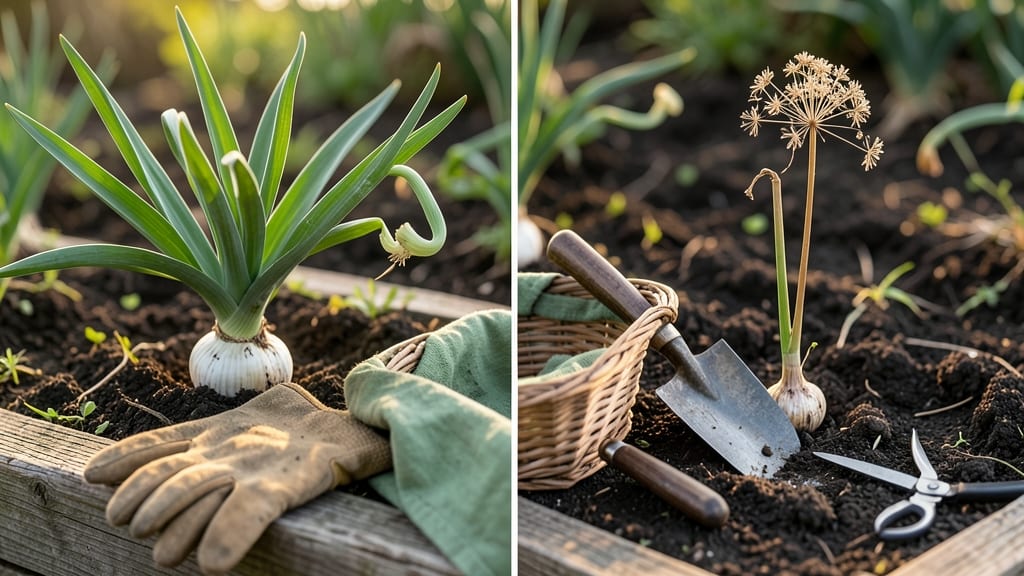
Harvesting garlic before or after it flowers determines whether your bulbs end up plump and flavorful or shriveled and weak.
Garlic growers often debate whether to harvest before or after flowering—but timing this wrong can shrink your bulbs by 50% or more. The secret to plump, flavorful harvests lies in understanding your garlic’s growth stages and climate needs.
For Zone 6 default growers, the ideal window is 4-6 weeks before frost, when about 50% of the lower leaves turn brown and crispy. Hardneck varieties (like Rocambole or Purple Stripe) often need harvesting after scapes emerge, while softnecks (like Silverskin) prefer harvesting before flowering.
In this guide, I’ll break down the exact visual cues to watch for, how regional frost dates shift your timing, and what happens if you harvest too early or too late. By the end, you’ll know exactly when to pull your 🧄 for the biggest, best-tasting bulbs.

When to harvest garlic for maximum bulb size: hardneck vs softneck differences
Harvesting garlic at the wrong time can mean the difference between plump, flavorful bulbs and shriveled, weak ones. The key lies in understanding your garlic type—hardneck vs softneck—because their growth cycles and ideal harvest windows differ dramatically.
For hardnecks, timing is all about those flowering scapes, while softnecks rely on leaf browning. Let’s break down the exact moments to dig for each type to maximize your harvest.
Most gardeners assume you harvest garlic after it flowers, but that’s only true for hardneck varieties. In fact, you should harvest hardnecks 4-6 weeks after scapes emerge, not after flowering.
Softnecks, on the other hand, never flower in temperate climates and should be harvested when 50% of lower leaves turn brown. The confusion often leads to bulbs that are either too small or too woody, so let’s clarify the timeline for both types.
Visual cues are your best friend when deciding harvest time. For hardnecks, watch for the scape (flower stalk) to emerge—this signals the start of your 3-4 week harvest window. For softnecks, focus on the bottom leaves browning while the top remains green. Ignoring these signs can cost you up to 50% of your bulb size, so pay close attention to your plants’ signals.
Climate plays a huge role in harvest timing, especially for hardneck varieties. In cooler regions like Zone 4-6, hardnecks often need harvesting by late June to early July to avoid frost damage. Meanwhile, in warmer zones like Zone 7-9, you might extend the window until mid-July.
Softnecks, which thrive in milder climates, can often wait until late summer, but never let them fully mature or they’ll become woody and pungent.
One common mistake is waiting until garlic fully flowers to harvest. For hardnecks, this is too late—the bulbs will shrink significantly because energy shifts from bulb growth to seed production. Instead, harvest when the scape is 6-12 inches tall but hasn’t yet flowered.
This ensures your bulbs stay large and flavorful. For softnecks, which rarely flower in most climates, focus on the leaf browning pattern rather than any floral cues.
Regional variations also matter. In the Pacific Northwest, for example, hardneck garlic often needs harvesting by early July due to shorter growing seasons. Conversely, in California’s Central Valley, you might push the harvest until August for softnecks.
Always check your local frost dates and adjust accordingly—harvesting too close to frost can leave bulbs soft and prone to rot during curing.
Pro tip: If you’re unsure, do a test harvest by digging up one bulb to check its size and firmness. A ready bulb will have paper-like skin forming around the cloves and feel firm but not rock-hard.
If it’s still soft, wait another week. If it’s already woody, you’ve missed the window. This simple step can save you from a poor-quality harvest and wasted effort.
Remember, the goal is to harvest when the bulb is fully developed but still plump. For hardnecks, this means before flowering, while softnecks should be harvested when half their leaves brown.
By following these guidelines, you’ll ensure your garlic bulbs are large, flavorful, and perfect for storage all winter long.
Now that you know the exact timing for each type, mark your calendar and set reminders for your harvest window. Whether you’re growing hardnecks or softnecks, paying attention to these cues will transform your garlic harvest from meh to magnificent.
How to tell if your garlic is ready: 5 visual cues that guarantee perfect harvest timing
Harvesting garlic at the right time transforms your crop from good to exceptional. Unlike many vegetables, garlic doesn’t ripen after picking—so spotting the perfect moment means the difference between plump, flavorful bulbs and shriveled disappointment.
The key? Watching for these 5 visual cues that signal your garlic is ready for harvest, whether you’re growing hardneck or softneck varieties.
Most gardeners focus on leaf color, but the real magic happens when you combine leaf browning patterns, bulb firmness, and root condition. For example, hardneck garlic often shows its readiness through scape maturity, while softneck varieties rely more on foliage changes.
Ignoring these signs can lead to bulbs that split, sprout prematurely, or store poorly—so let’s dive into what your garlic is really telling you.
🌱 Do You Harvest Garlic Before or After It Flowers?
- Softneck varieties: Harvest before flowering (typically late summer). These bulbs store longer and focus energy on bulb development.
- Hardneck varieties: Harvest after flowering (when 50% of lower leaves brown). The scape (flower stalk) signals bulb maturity—remove it to redirect energy to the bulb.
- Climate tip: In hot climates, harvest earlier (June-July). In cooler zones, wait until 4-6 weeks before frost to avoid bulb shrinkage.
- Premature harvest warning: If you pick too early, bulbs stay small and pungent. Over-mature garlic splits and sprouts, ruining storage potential.
- Pro tip: Gently dig up one bulb to check skin formation—if cloves are paper-thin and dry, it’s harvest time for the whole patch!
💡 Remember: Garlic bulbs stop growing 2-3 weeks before leaves die. Don’t wait until the foliage collapses!
First, focus on the lower leaves—they’re your garlic’s early warning system. When about 50% of the bottom leaves turn brown and crispy, that’s your cue to start checking bulbs. The top leaves may still look green, but the energy has shifted underground.
For hardneck varieties, this usually happens 4-6 weeks after scapes emerge, while softnecks follow a similar timeline but without scapes.
Next, examine the bulb size and firmness. Gently dig up a test bulb and feel its weight—ready bulbs should feel heavy for their size and have paper-thin skins forming between cloves. If the bulb feels light and squishy, it’s not ready.
Over-mature garlic, on the other hand, will have loose skins and may even split when handled. This is a classic sign you’ve waited too long.
Don’t overlook the roots—healthy garlic roots should be white and firm, not mushy or rotting. If you spot black or slimy roots, your garlic may have root rot from overwatering or poor drainage.
In this case, harvest immediately to salvage what you can, but plan to improve your soil next season. Well-draining soil with compost added at planting prevents this issue entirely.
For hardneck varieties, the scape (flower stalk) is your final clue. Once the scape hardens and curls upward, it’s a signal that the bulb is nearing maturity. You can remove the scape to redirect energy to the bulb, but don’t harvest yet—wait until those lower leaves brown.
If you harvest too soon after scape removal, the bulb won’t reach its full potential size.
Finally, time your harvest based on your climate zone. In Zone 6 or colder, aim to harvest 4-6 weeks before the first frost—this gives bulbs time to cure properly before winter.
In warmer zones (Zone 7+), you can harvest later, but watch for leaf yellowing as a sign of over-maturity. Pro tip: Hang harvested garlic in a dry, shady spot for 2-3 weeks to cure before storing.