
How To
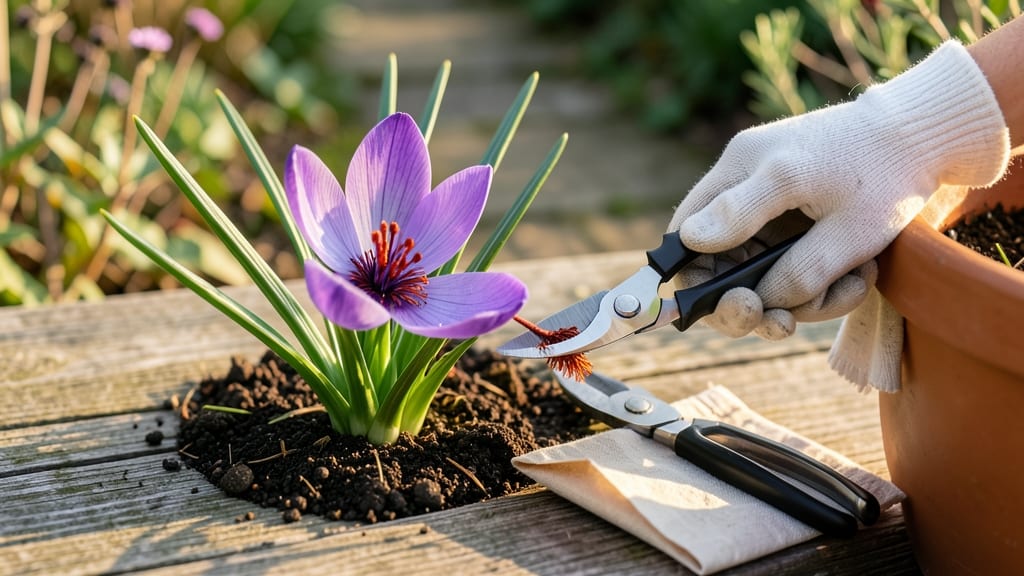
To harvest saffron from your Saffron Crocus 🌼, you’ll need to pluck those delicate red stigmas at the precise moment they’re ready—or risk wasting the world’s priciest spice.
Picture this: a crisp autumn morning, your garden bursting with purple Crocus sativus blooms, and the sun just right. One wrong move, and those bright red stigmas turn bitter or brittle. But get it right, and you’ll unlock flavor so intense it transforms risotto and paella into gourmet masterpieces.
Timing is everything—harvest too early, and the stigmas won’t develop their signature depth; too late, and they lose potency. Below, I’ll walk you through the exact 3-day window to harvest, how to spot perfect stigmas, and the gentle techniques that preserve their golden hue and aromatic power.
Ready to turn your garden into a spice goldmine? Let’s dive into the step-by-step guide that’ll ensure your saffron is as vibrant and potent as the day it’s plucked.

When to harvest saffron: identifying the perfect Crocus flower stage
Saffron harvests are all about timing—just a 3-day window separates peak quality from wasted flowers. The Crocus sativus blooms you’re waiting for appear in late autumn, typically between October and November, when cool mornings and dry air create ideal conditions. Miss this window, and your saffron stigmas lose their vibrant color and aromatic potency.
Harvesting too early means underdeveloped stigmas with weak flavor, while waiting too long risks overripe flowers that crumble or attract pests. The key is recognizing the perfect bloom stage—when purple petals fully unfurl and deep red stigmas protrude like tiny threads from the flower’s center.
This stage only lasts 24-48 hours per bloom.
| Stage | Visual Cues | Weather Conditions | Harvest Time |
|---|---|---|---|
| Not Ready | Flowers closed or partially open; stigmas pale green | Hot/humid days (above 75°F) | Avoid harvesting |
| Perfect Stage | Fully open purple petals; deep red stigmas (3-4 threads) | Cool mornings (50-65°F) with dry air | Harvest within 24-48 hours |
| Overripe | Wilted petals; brownish stigmas | Rainy or windy conditions | Discard or compost |
Start your harvest in the early morning (before 9 AM) when dew is still present but flowers are fully open. This cool, dry window ensures maximum aroma retention in the stigmas.
If you’re in a Mediterranean climate, aim for October 15–November 15, but adjust based on your local first frost date—harvesting before frost prevents flower damage.
Look for bright purple petals that unfurl naturally, not forcefully. The stigmas (the 3 crimson threads per flower) should be slightly sticky and easily detachable when gently touched.
If they snap off cleanly, they’re ready. Pro tip: Use a magnifying glass to inspect stigma color—deep red means peak flavor, while orange or brown indicates spoilage.
Weather plays a critical role in saffron quality. Harvest on clear, dry days with low humidity (below 60%) to prevent mold. Avoid harvesting after rain or in high winds, as moisture dilutes flavor and causes stigma contamination.
In USDA zones 6a-9b, aim for 50–65°F mornings—the ideal temperature for saffron potency.
Each Crocus sativus flower yields just 3-4 stigmas, so efficiency matters. Work quickly to collect 100–150 flowers per gram of dried saffron. Use sterilized scissors or your fingers (worn gloves) to pluck stigmas, leaving the style attached to the flower to preserve its structure for future blooms.
Never pull the entire stigma—just the red threads at the top.
Timing isn’t just about the day—it’s about the hour. The first hour after sunrise is prime because stigmas contain the most crocin (the compound that gives saffron its color). Afternoon harvests risk dried-out stigmas with diminished aroma.
Store freshly harvested stigmas in a paper envelope (not plastic) in a cool, dark place until you can dry them within 24 hours.
One common mistake is harvesting closed flowers in hopes they’ll open later. These won’t produce quality saffron—wait for fully open blooms. Similarly, avoid harvesting afternoon flowers, as they often wilt faster due to heat stress. Stick to morning blooms for the best yield and flavor.
To maximize your harvest, monitor your saffron crocus patch daily starting in late September. Each plant produces 5–10 flowers per season, so a 100-plant patch could yield 500–1,000 flowers—enough for 5–10 grams of saffron.
With patience and precision, you’ll turn those delicate purple blooms into the golden threads that make saffron worth its weight in gold. 🌼
Step-by-step saffron harvesting process for maximum yield and quality
Harvesting saffron requires precision and patience—just 3 stigmas per flower yield the world’s most expensive spice. The process starts with the right tools and timing, ensuring you preserve the vibrant color and aroma that define high-quality saffron.
I’ve harvested my own crop for years, and these steps guarantee you won’t waste a single flower.
Gather your essentials: latex-free gloves (to avoid contamination), sharp scissors or tweezers (for delicate handling), and clean drying trays lined with parchment paper. Work in the early morning when flowers are fully open but still fresh—this is when stigmas are at their peak potency.
Avoid harvesting on humid days, as moisture can ruin your yield.
-
Step 1Select fully open flowers with bright purple petals and deep red stigmas. Gently pinch the flower to check if stigmas separate easily—this confirms they’re ready.
-
Step 2Pluck stigmas carefully using your fingers or tweezers. Avoid touching the yellow style (the base), as it can contaminate the stigmas. Aim for 3 stigmas per flower—each one is a treasure.
-
Step 3Remove debris immediately by shaking stigmas over a clean tray. Discard any that look dull or damaged, as they won’t dry properly.
-
Step 4Dry stigmas within 6 hours in a dark, well-ventilated space at 60-70°F (15-21°C). Spread them on parchment paper in a single layer to prevent clumping.
-
Step 5Store in airtight containers once fully dried (after 3-4 days). Keep them in a cool, dark place to preserve their color and aroma for up to 2 years.
Never rush the drying process—moisture is the enemy of quality saffron. If you’re harvesting in bulk, label your containers with the harvest date to track freshness. The first few harvests might feel tedious, but once you master the technique, you’ll yield golden-red threads worth their weight in spice markets.
Pro tip: Harvest on cool, dry mornings to avoid wilting. If you miss the window, the stigmas will darken and lose flavor. Patience here pays off—one flower yields just 0.2 grams of saffron, so treat every stigma like the precious gem it is. 🌼
After drying, store your saffron in small glass jars away from light. The deeper the red and the stronger the aroma, the higher the quality. With these steps, your homegrown saffron will rival the finest Persian or Spanish varieties—no grocery store can match that! ✂️