
How To
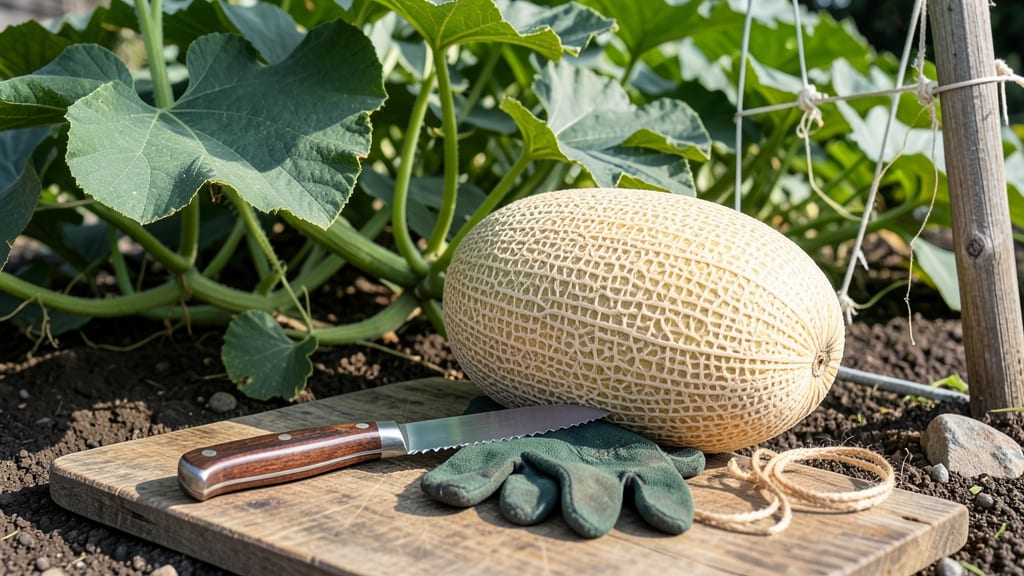
Knowing when to harvest cantaloupe means catching that perfect sweetness before it slips away—no more guessing games or bland fruit.
Picture this: you’ve waited months for your 🍈 to ripen, only to cut into one that’s either rock-hard or mushy. That’s the frustration of relying on vague advice like "when the vine turns brown."
But there’s a better way—three simple, non-destructive tests that tell you exactly when to pick for peak flavor.
From the telltale creamy blush of the rind to the way the stem slips free with a gentle tug, these cues don’t require a knife or a guess.
Plus, I’ll show you how heat waves and humidity can trick you into harvesting too early (or too late) and how to adjust for your 6a zone.
By the end, you’ll harvest cantaloupes so ripe they practically sing with sweetness—no more second-guessing, no more wasted fruit. Let’s get started.


3 Non-destructive tests to check cantaloupe ripeness before harvesting
Harvesting cantaloupe at the perfect moment means the difference between a bursting, sweet melon and one that’s either hard and bland or overripe and mushy. The good news? You can test ripeness without cutting into your fruit.
These science-backed methods rely on visual cues, touch, and scent—no knife required. I’ve used these techniques in my own garden for years, and they’ve never failed me.
Cantaloupes ripen on the vine, which means they won’t soften after picking like some other fruits. That’s why these tests are critical. Miss the window, and you’ll either wait weeks longer or end up disappointed.
The key is to check for these three signs simultaneously—they all confirm ripeness together. Let’s break them down so you can harvest with confidence every time.
How to Test Cantaloupe Ripeness Without Cutting
- 1 Stem Slip Test: Gently twist the fruit at its stem. If it slips easily with slight pressure, it’s ripe. A firm attachment means it needs more time.
- 2 Color & Netting: Look for a creamy yellow or orange blush on the side facing the ground. The net-like pattern should be well-defined, not faded or dull.
- 3 Aroma Check: Sniff near the stem end. A sweet, musky scent means ripeness. No smell? It’s not ready yet—wait a few more days.
Pro Tip: Combine all three tests for 100% accuracy. One test alone isn’t enough!
Let’s start with the stem slip test, my favorite because it’s foolproof. When cantaloupes are ripe, the stem naturally detaches easily from the fruit due to a chemical change in the stem tissue. This isn’t just a trick—it’s a biological signal that the fruit’s sugars have peaked.
I’ve seen gardeners skip this step and end up with melons that are hard on the inside despite looking ripe. Don’t make that mistake!
The color and netting are your next clues. A ripe cantaloupe will have a creamy yellow or orange blush, especially on the side that rested against the soil. The net-like pattern (those raised, diamond-shaped ridges) should be bold and well-defined.
If the netting looks faded or the color is still dull green, the melon needs more time. I once harvested a cantaloupe based on size alone, only to find it tasteless and watery—the netting was still pale, and I learned my lesson.
Finally, the aroma check is often the most reliable indicator. A ripe cantaloupe releases a sweet, musky scent near the stem end. It’s not overpowering—think of a mix between honey and fresh-cut grass. If you don’t smell anything, the melon isn’t ready.
Pro tip: Do this test in the late afternoon when the scent is strongest. I’ve caught melons that looked ripe but had no aroma—they were still hard inside.
Here’s a bonus trick: Give the cantaloupe a gentle thump near the stem. A ripe one will sound hollow, almost like a drum. If it sounds dull, it’s not ready.
I use this as a quick double-check before committing to the harvest. It’s amazing how often this simple test catches melons that look ripe but aren’t quite there.
Timing is everything with cantaloupes. They ripen best in warm, sunny conditions, typically between 75°F and 85°F. If your summer has been cooler, the ripening process slows down, and you’ll need to be extra patient.
I once grew cantaloupes in a shadier spot and ended up with melons that never fully ripened—even after 90 days! Always plant them in full sun for the best results.
One common mistake I see is harvesting cantaloupes based on size alone. A big cantaloupe isn’t necessarily ripe—it could just be heavy with water. Always combine size with the tests above.
Another pitfall? Waiting too long. Overripe cantaloupes develop a fermented smell and soft spots. If you miss the window, you’ll know it immediately.
Ready to harvest? Use a sharp knife or pruners to cut the stem, leaving about 1 inch of stem attached to the fruit. This helps preserve freshness. Store your cantaloupes in a cool, dry place (not the fridge) for up to a week.
They’ll continue to ripen slightly off the vine, but they won’t improve much beyond their peak flavor.
Now you’ve got the tools to harvest cantaloupes at their sweetest, every single time. No more guesswork, no more wasted melons—just perfectly ripe fruit straight from your garden to your table. Happy harvesting! 🍈
How to use the cantaloupe’s stem, color, and shape as ripeness indicators
Mastering the art of cantaloupe ripeness starts with understanding three key visual cues: the stem, skin color, and fruit shape. These subtle signals tell you exactly when to harvest without guessing.
The stem separation is your first clue—when it detaches easily from the fruit with a gentle twist, that’s your cue to pick. This happens because the fruit’s natural sugars trigger enzymes that loosen the connection.
Next, examine the skin color and netting pattern. A ripe cantaloupe develops a creamy yellow or beige blush on its surface, often accompanied by a pronounced net-like pattern that becomes more defined.
Avoid fruits with dull, greenish skin—they’re not ready yet. Pay close attention to the area where the fruit rests on the ground; this spot often ripens first and turns a deeper shade.
| Ripeness Indicator | What to Look For | Action |
|---|---|---|
| Stem | Separates easily with slight pressure | Harvest immediately |
| Skin Color | Creamy yellow/beige with defined netting | Check other indicators |
| Shape & Weight | Heavy for size, slightly soft when pressed | Test aroma next |
| Aroma | Sweet, musky scent at stem end | Harvest and enjoy! |
Don’t overlook the fruit’s shape and weight—a ripe cantaloupe feels noticeably heavy for its size due to concentrated sugars. When you lift it, it should feel solid but slightly soft when pressed gently near the blossom end (the flat side).
If it feels rock-hard or spongy, it’s not ready. Also, check for a slight give when you press your thumb against the skin; this indicates ripeness.
The aroma test is the final confirmation. Hold the cantaloupe near your nose and sniff the stem end—ripe cantaloupes emit a sweet, musky fragrance that’s unmistakable. If there’s no scent or it smells sour, wait a few days.
Pro tip: The aroma becomes stronger as the fruit ripens, so trust your nose over the calendar. Overripe cantaloupes may smell fermented, so act quickly when you detect that sweetness.
Seasonal conditions can affect ripening speed. In hot, dry climates, cantaloupes may ripen faster and need harvesting earlier, while cooler or humid weather can slow the process. Always combine these visual cues with the stem test for accuracy—it’s the most reliable indicator.
Once you’ve confirmed ripeness, harvest by twisting the stem gently to avoid bruising the fruit.
Practice these techniques over a few harvests, and you’ll develop an instinct for spotting the perfectly ripe cantaloupe every time. The key is patience—waiting for all three indicators to align ensures sweet, flavorful fruit that’s worth the wait. 🍈