
How To
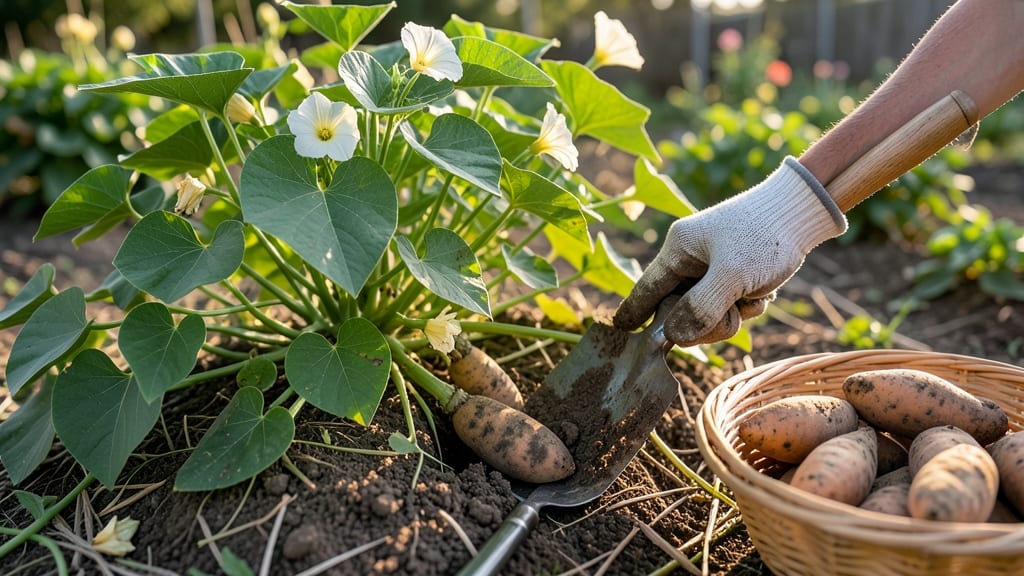
Telling when to harvest sweet potatoes is all about reading the plant’s signals—skin firmness, leaf color, and stem snap—before the first frost turns them tough and flavorless.
Picture this: you’ve nurtured your 🍠 plants all summer, and now the stakes are high. Harvest too early, and you’ll end up with small, underdeveloped tubers. Leave them too long, and they’ll turn woody and lose their signature sweetness.
The difference between a perfect harvest and a disappointing one often comes down to knowing exactly when to pull them.
Most gardeners wait 90 to 120 days after planting, but timing shifts with your climate. In Zone 6a, where frost can sneak in by mid-October, you’ll need to act fast once the vines start yellowing.
Meanwhile, in warmer regions, you might have a little more wiggle room—though even there, ignoring the signs can mean wasted effort.
In this guide, I’ll walk you through the three foolproof tests—skin hardness, stem snap, and leaf color—to nail your harvest window. Plus, I’ll cover when to adjust for early or late seasons and how to avoid the most common mistakes that turn great sweet potatoes into garden flops.

The 3 essential tests to determine sweet potato harvest readiness
Harvesting sweet potatoes at the right time ensures maximum sweetness and ideal texture. Too early, and you’ll get small, underdeveloped tubers. Too late, and they’ll become woody and tough. The key lies in three simple but critical tests: skin hardness, stem snap, and leaf yellowing.
Each method reveals a different aspect of your crop’s maturity, giving you a foolproof way to decide when to dig.
Start by observing your sweet potato leaves. Healthy green foliage means your plants are still growing, but when the leaves begin to yellow and die back, it’s a strong signal that the tubers below are maturing.
This natural process usually occurs 90-120 days after planting, depending on your variety and climate. Don’t wait until the vines are completely dead—harvest just as the leaves start to brown for the best results.
Next, focus on the skin hardness test, the most reliable indicator of readiness. Gently press your thumbnail into the skin of a tuber. If it resists pressure and doesn’t dent easily, your sweet potatoes are likely ready.
Soft or easily pierced skin means they need more time in the ground. This test is especially useful for varieties like Beauregard, which can vary in maturity dates.
Here’s how to compare the three key tests at a glance:
The stem snap test is another quick way to check maturity. Bend a vine near the base—if it snaps cleanly, your sweet potatoes are ready. If it just bends without breaking, they need more time.
This test works best in the late afternoon when stems are slightly drier. Pair it with the skin hardness test for extra confidence in your harvest timing.
For early-season varieties like Georgia Jet, you might see these signs as early as 90 days. Later varieties like Centennial can take up to 120 days.
Always adjust for your local climate—cooler temperatures slow maturity, while hotter weather speeds it up. If frost is on the horizon, prioritize harvesting even if all signs aren’t perfect.
Once you’ve confirmed readiness, dig carefully with a fork or your hands to avoid damaging the tubers. Handle them gently to prevent bruising, which can lead to rot during storage.
After harvesting, let them cure in warm, humid conditions for 5-10 days to develop their signature sweetness and improve shelf life.
Pro tip: If you’re unsure, harvest a few tubers early and taste-test them. Underripe sweet potatoes will be starchy and bland, while perfectly ripe ones are creamy and sweet. This hands-on approach ensures you’ll never miss the ideal harvest window again.
With these three tests—leaf yellowing, skin hardness, and stem snap—you’ll harvest your sweet potatoes at peak flavor and texture every time. Happy digging! 🍠
When and why you should harvest early vs. late season sweet potatoes
Timing your sweet potato harvest depends on your variety, climate zone, and whether you plan to eat fresh or store long-term. Early harvests yield smaller tubers perfect for immediate use, while late harvests maximize size but risk frost damage.
Let’s break down when to pull the trigger for popular varieties like Beauregard and Jewel, plus how to adjust for your local growing season.
For most sweet potato varieties, the ideal harvest window falls between 90-120 days after planting. However, early harvests (as early as 80 days) can produce smaller but sweeter tubers, while late harvests (up to 140 days) prioritize size.
Your decision hinges on balancing tuber maturity, frost risk, and storage goals—especially in cooler climates where frost can ruin your crop before it’s ready.
- 1
- 2
- 3
- 4
In warmer climates (Zones 8-10), you can afford to wait for late-season harvests (up to 140 days) to maximize tuber size.
But in cooler zones (6-7), prioritize harvesting before the first frost, even if tubers aren’t fully developed. Beauregard, a popular early-maturing variety, often yields harvest-ready tubers in 90-100 days, making it ideal for shorter growing seasons.
If you’re facing an early frost or need tubers for immediate use, consider an early harvest. Smaller tubers (2-3 inches) will be sweeter and less starchy, perfect for roasting or baking.
To encourage early maturity, reduce watering 2 weeks before harvest—this signals the plant to focus energy on the tubers rather than foliage. Just be prepared for a smaller yield per plant.
For long-term storage, aim to harvest when tubers are fully mature (3-5 inches) and the vines have completely died back. Cure harvested sweet potatoes in a warm (80-85°F), humid (80-90%) environment for 5-10 days to develop their skin toughness and sweetness.
Store in a cool (55-60°F), dark place with high humidity to prevent shriveling.
Pro tip: Keep a harvest journal to track when your specific variety reaches peak maturity in your climate. Note the days to maturity, leaf color changes, and skin hardness each year.
Over time, you’ll refine your timing to avoid woody tubers or frost-damaged crops, ensuring a bountiful harvest every season. 🍠