
Trees
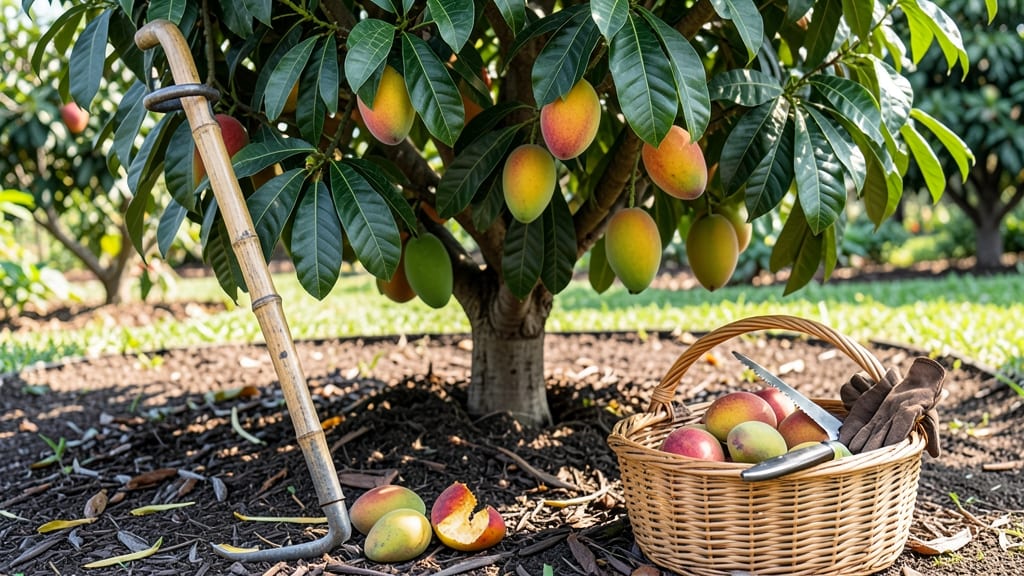
Timing your mango tree harvest correctly means the difference between juicy, sweet fruit and bitter, underripe disappointment—here’s exactly when to pick yours.
Picture this: you’ve waited months for your 🥭 mango tree to bear fruit, only to pluck a mango that’s still hard as a rock or so soft it collapses in your hand. The key? Knowing the ideal harvest window for your variety and climate zone.
In General (Tropical/Subtropical Regions) like USDA Zones 10-11, most mangoes ripen between April and August, but the exact timing depends on whether you’re growing Tommy Atkins, Keitt, or Ataulfo. I’ll break down the month-by-month guide and the five foolproof signs your fruit is ready—no guesswork needed.
You’ll also learn how to extend your tree’s productivity, so next season’s harvest is even better. Let’s get started!


Exact months for mango tree harvest by variety (US & tropical climates)
Harvesting mangoes at the perfect time transforms your homegrown fruit from bland to breathtakingly sweet. The harvest window varies dramatically by variety and climate, with tropical regions offering year-round opportunities while US subtropical zones (like Florida and California) have tighter seasonal constraints.
Understanding these monthly differences ensures you never miss peak ripeness.
Most mango varieties ripen between April and August, but some early bloomers (like Kent) can produce fruit as early as March, while late-season varieties (like Keitt) may linger until September.
In frost-sensitive regions, a single cold snap can ruin an entire crop—so timing is everything. Let’s break down the exact harvest months for the most popular varieties.
| Variety | Primary Harvest Months (US) | Tropical Climate Window | Key Ripening Cues |
|---|---|---|---|
| Tommy Atkins | June–August | Year-round (peaks May–July) | Green → red-pink blush; slight give when twisted |
| Keitt | July–September | June–August | Dark green → deep red; fragrant aroma |
| Kent | March–May | February–April | Yellow-green → golden; softens near stem |
| Ataulfo | April–June | March–May | Green → pale yellow; seed turns brown |
| Haden | May–July | April–June | Green → red-orange; slight sweet scent |
If you’re growing mangoes in USDA zones 10–11, you’ll find the longest harvest windows, often spanning 4–6 months. For example, Tommy Atkins and Haden thrive in Florida’s heat, while Keitt prefers the cooler subtropical climates of California’s Central Valley.
In tropical climates, harvests can be year-round, but monsoon seasons may delay ripening.
For early bloomers like Kent, start checking fruit in late February—these trees often produce first harvests before summer varieties even flower. Meanwhile, late-season varieties like Keitt may not reach peak ripeness until September, making them ideal for extended growing seasons.
Always monitor local frost dates; even a single 32°F night can ruin unripe fruit.
In container-grown mangoes (common in California or Arizona), harvest times may shift 1–2 weeks earlier due to limited root space and warmer microclimates. Use shade cloth in peak summer to prevent sunburn on fruit, which can alter ripening cues.
Pro tip: Hand-pollinate flowers in cool springs to ensure consistent fruit set.
Never assume all mangoes ripen at once—even on the same tree.
Some varieties (like Ataulfo) produce clusters of fruit with staggered ripening, while others (like Tommy Atkins) ripen more uniformly. Pick selectively by checking individual fruit for the cues below, rather than harvesting the whole batch at once. This extends your harvest season by weeks.
For commercial growers, harvest scheduling is critical to meet market demands. Early varieties like Kent align with spring markets, while late varieties like Keitt hit peak demand in summer and fall.
In tropical regions, plan for two harvest cycles annually—one after the wet season and another after the dry season—to maximize yield.
If you’re in a frost-prone area (like southern Texas), protect your tree with frost cloth or row covers during unseasonable cold snaps. Even a light freeze can damage flower buds or young fruit, delaying harvest by months. Mulch
5 Unmistakable signs your mangoes are perfectly ripe (not over or under)
Picking a mango at the perfect ripeness transforms your harvest from disappointing to downright delicious. Unlike some fruits that ripen off the vine, mangoes must be picked at just the right moment—too early, and they’ll taste bland; too late, and they’ll turn mushy.
I’ve learned this the hard way after overripe mangoes ended up as compost! The key is combining visual cues, tactile tests, and even your nose.
Don’t rely on color alone—some varieties like Ataulfo stay green when ripe, while others like Tommy Atkins turn deep red. Instead, focus on a mix of skin texture, stem response, and aroma.
These five signs will help you avoid the common mistakes that lead to wasted fruit, whether you’re growing in USDA Zones 10-11 or a tropical climate.
- 🌱 1. Skin Color Shift: The fruit’s hue deepens to its variety-specific color (e.g., golden yellow for Ataulfo, deep red for Keitt). Avoid picking if skin is still pale or green.
- 🤏 2. Gentle Give Near Stem: Press lightly near the stem—ripe mangoes yield slightly (like a ripe avocado) but don’t feel mushy. A hard fruit needs more time; a squishy one is overripe.
- 🌰 3. Seed Turns Brown: Cut open a test mango—the seed should be deep brown and firm. If it’s white or translucent, the fruit isn’t ready.
- 👃 4. Sweet Aroma Near Stem: Hold the mango to your nose—ripe fruit emits a fruity, floral scent near the stem. No smell? It’s not ready.
- 🔄 5. Stem Twist Test: Gently twist the mango at the stem—it should separate easily from the tree. If it resists, wait a few days.
Pro tip: Test one mango first by cutting it open—this saves your entire harvest from overripe disappointment. I always pick a few extra when they’re ready, since they’ll continue ripening indoors at room temperature for 2-3 days.
Store the rest in the fridge to slow ripening if you can’t eat them all at once.
Regional variations matter too—mangoes in cooler subtropical zones (like Florida) may ripen later than those in tropical climates. Pay attention to your tree’s local microclimate and adjust your timing accordingly. For example, Kent mangoes often ripen in June-July, while Ataulfo might be ready as early as May.
Avoid these common mistakes: Picking based on size alone (some mangoes stay small but ripen fully), ignoring the stem’s response, or waiting until the fruit falls—by then, it’s often overripe.
Trust your senses: sight, touch, and smell are your best tools. With these signs, you’ll never waste another mango again!