
Vegetables
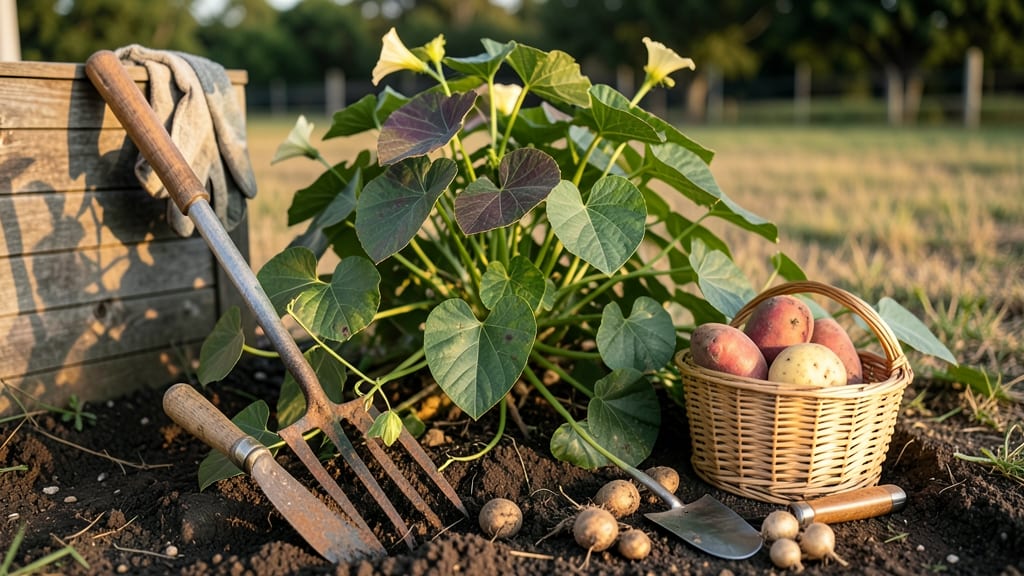
Harvesting sweet potatoes at the right time ensures tender, flavorful tubers instead of tough, stringy ones — and the key is knowing when the skin slips easily from the flesh.
Picture this: you dig up a plump 🍠 only to find it’s still hard as a rock, or worse, it’s already shriveled in the ground. Missing that sweet spot means wasted effort and a less-than-stellar harvest.
The good news? There are three clear signs to watch for, and they all happen within a 2-week window.
First, the leaves turn a crisp yellow and start to dry out, almost like they’re throwing in the towel. Then, the vines begin to wilt, signaling the plant is redirecting energy to the tubers.
Finally, the skin becomes firm and resists pressure — a sure sign it’s time to dig. But here’s the catch: if you wait too long, the flavor fades, and the texture turns woody.
In this guide, I’ll break down those three unmistakable signs, share variety-specific harvest times, and walk you through post-harvest care to keep your sweet potatoes fresh for months. No more guesswork — just perfect, ready-to-store tubers every time.

3 Unmistakable signs your sweet potatoes are ready to harvest
Harvesting sweet potatoes at the right time makes all the difference between a crop bursting with flavor and one that's tough and bland. The 90–140 day window after planting is your target, but relying solely on days doesn't account for your local climate or variety.
Instead, focus on these three visual and tactile cues that tell you it's time to dig.
First, the skin slip test is your most reliable indicator. When the skin peels back easily from the flesh with gentle pressure, that's your cue to harvest.
This happens because the tuber's protective layer thickens as it matures. If the skin stays firmly attached, your sweet potatoes need more time in the ground.
Next, observe the leaf color changes. Healthy green leaves gradually turn yellow and crispy as they die back naturally. This process, called senescence, signals the plant is redirecting energy to the tubers below. Don't wait for frost to kill the vines—harvest when about 50% of leaves have yellowed.
Finally, watch for vine wilting patterns. While some wilting is normal during hot weather, persistent drooping followed by complete collapse of the vines means the plant has finished its cycle.
The tubers will be at their peak sweetness and texture when the vines die back naturally rather than from frost damage.
-
1. Skin Slip Test
Peel back skin easily? It's harvest time! -
2. Leaf Color Change
50% yellow leaves = prime harvest window -
3. Vine Wilting
Persistent droop means tubers are fully developed
Timing matters because sweet potatoes continue to mature after harvest. If you dig too early, the tubers won't develop their signature sweetness. But if you wait too long, they become woody and fibrous.
The ideal harvest window balances these factors, giving you tubers that store well and taste amazing when cooked.
For Beauregard varieties, which are popular for their sweet flavor, aim for harvest when the vines start yellowing but before they completely die. Jewel varieties, known for their moisture content, should be harvested when the skin is firm but still slips easily.
The color of the skin can also give clues—darker skins often indicate full maturity.
Pro tip: Use a garden fork to gently loosen soil around the plants before pulling them up. This prevents damage to the tubers while making them easier to extract. Handle them carefully to avoid bruising, which can lead to rot during storage.
The first frost is your final deadline—if vines are still green when frost hits, cover them with row fabric to protect the crop.
Remember that storage life depends on proper harvest timing. Tubers harvested at peak maturity will keep for months in cool, dark conditions. If you harvest too early, they'll spoil quickly. Pay attention to these signs, and you'll know exactly when to dig for the perfect sweet potato harvest.
Sweet potato harvest time by variety: when to dig for best yield
Not all sweet potato varieties mature at the same time, and digging too early or late can ruin your harvest. The Beauregard variety, for example, typically reaches peak harvest in 110-120 days, while Purple varieties may take 120-130 days to fully develop.
These differences mean your harvest window can shift by 3-4 weeks depending on what you're growing.
Climate also plays a huge role. In USDA Zones 7-9, where growing seasons are longer, you can often extend harvest into late October. But in cooler Zone 6 areas, a frost warning can force an earlier harvest—even if the tubers aren't fully mature.
The key is balancing variety maturity with your local first frost date.
Here’s the critical detail: Over-mature sweet potatoes develop woody textures and bitter flavors, while under-mature ones stay small and watery. The 2-week window before full maturity is your sweet spot for digging—when the skin starts to slip easily from the flesh but hasn’t hardened completely.
| Variety | Days to Maturity | Best Harvest Window | Climate Notes |
|---|---|---|---|
| Beauregard | 110-120 days | Late Sept–Mid Oct | Zones 7-10; frost-sensitive |
| Jewel | 100-110 days | Early Sept–Early Oct | Zones 4-9; earlier harvest |
| Purple | 120-130 days | Mid Oct–Late Oct | Zones 6-10; needs warmth |
| Georgia Jet | 90-100 days | Early Sept–Mid Sept | Zones 5-9; fast-growing |
For shorter seasons (Zones 4-5), focus on early-maturing varieties like Georgia Jet or Jewel. These can be harvested as early as early September before frost sets in. In warmer climates (Zones 10+), you might even get a second harvest if you plant successive crops every 2-3 weeks.
Pro tip: If your vines turn yellow but the skin still doesn’t slip easily, wait 5-7 more days. But if a frost warning hits, dig immediately—even if the tubers aren’t perfect.
You can still cure and store them, though they may not be as sweet. The goal is to avoid frost damage, which turns tubers mushy.
Remember, the skin slip test is your best friend. Gently rub the skin with your thumb—if it peels away like a banana, it’s time to harvest. And always dig on a dry, sunny day to help the tubers cure faster after harvest. 🍠