
Vegetables
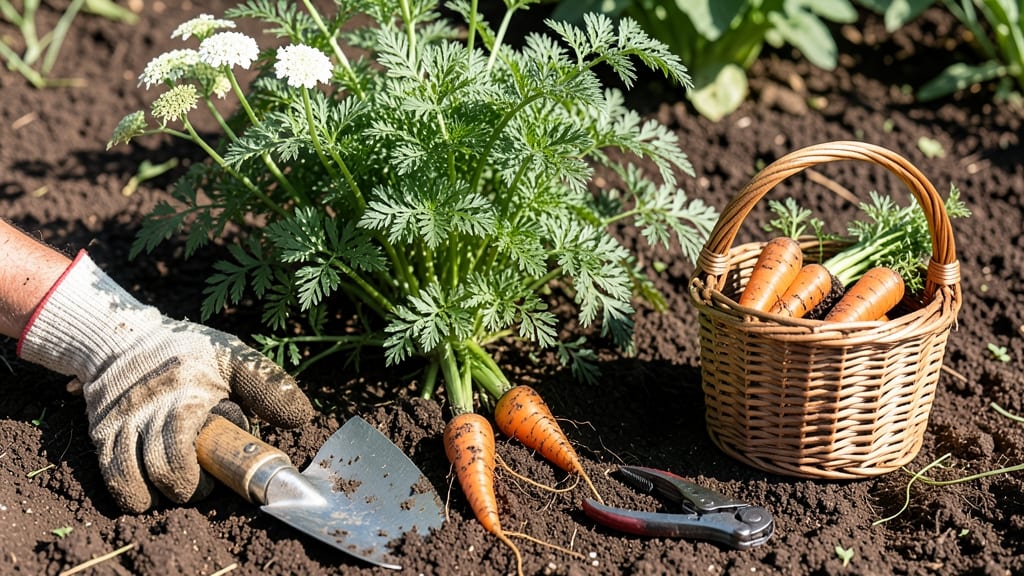
Knowing the right carrot harvest time turns a guess into a sweet, crisp reward—because pulling them too early means tough roots, and waiting too long risks splitting or bitterness.
I’ve dug up carrots that were still green-tipped and woody, only to regret it when the next batch cracked in the soil. The calendar gives you a starting point, but the real magic happens when you check the soil and the plant’s signals.
Here’s how to test for peak sweetness: from finger-penetration depth to root length and soil moisture, these three simple checks will tell you exactly when to harvest—without compromising the plant’s health.
Whether you’re growing Nantes for their slender shape or Danvers for their sturdiness, this guide breaks down the ideal timing by variety, regional adjustments, and how to store your harvest for maximum freshness.

3 Soil tests to determine carrot harvest time
Carrots don’t follow a strict calendar for harvest—they communicate readiness through soil conditions and subtle visual cues. Unlike leafy greens, these roots need precise timing to avoid woody textures or cracked roots.
The three soil tests below reveal when your carrots are at their peak sweetness, saving you from guesswork. Start by checking these three factors: soil penetration, root visibility, and moisture balance.
First, the finger-penetration test is the quickest way to gauge root development. Push your finger 2–3 inches into the soil beside the plant. If resistance meets your fingertip at 1–1.5 inches depth, the carrot’s shoulder is likely ready.
This method works best in loose, well-drained soil—the same type you prepared at planting. For compacted soil, use a small trowel to gently probe instead.
Warning: Over-penetration can damage nearby roots. Always test near the plant’s base, not directly over it, to avoid disturbing the growing zone. If the soil feels rock-hard or sandy, your carrots may be stunted or overcrowded—adjust planting density next season. For container-grown carrots, invert the pot to check root length through the drainage holes.
The root length observation test requires a bit more effort but reveals the most accurate harvest window. Gently brush away 1–2 inches of soil near the plant’s base to expose the carrot’s shoulder.
Aim for a 1–3 inch diameter—thinner roots are underripe, while thicker ones may be past their prime. Pro tip: Use a small hand fork to lift the soil without damaging roots.
If the exposed root has a green shoulder, it’s still photosynthesizing and needs 1–2 more weeks in the ground.
Soil moisture plays a critical role in harvest timing, especially in sandy or clay soils. Perform the moisture check by squeezing a handful of soil—it should hold together but not be soggy. Overly dry soil causes cracked roots, while waterlogged conditions lead to rot or pithy centers.
For container growers, stick your finger 1 inch deep; if dry, water thoroughly before harvesting. In hot climates, conduct this test in the late afternoon to account for evaporation.
Combine all three tests for foolproof results. For example, if your finger test shows resistance at 1.2 inches but the soil is bone-dry, wait 24 hours and water deeply before harvesting.
Conversely, if roots meet the length criteria but the soil is too wet, delay harvest by 3–4 days to let moisture stabilize. This multi-test approach minimizes errors like green shoulders (from early harvests) or bitter flavors (from overripe roots).
Regional adjustments matter too. In cool climates (Zones 3–5), carrots mature slower—prioritize the finger test over leaf size. In hot zones (7–10), focus on soil moisture to prevent cracking. Always harvest in the morning when roots are crispest.
Store freshly pulled carrots in moist sand or a plastic bag with a paper towel to maintain freshness while you enjoy your perfectly timed harvest.
Remember: Carrots continue sweeten after pulling, so don’t rush to the kitchen. Let them sit at room temperature for 1 hour post-harvest to develop full flavor. Now grab your trowel and put these tests to work—your next batch of homegrown carrots will thank you! 🥕
When to harvest carrots by variety: timing charts for sweetness
Not all carrots mature at the same pace—Nantes might be ready in 60 days while Danvers need 80. The key is matching your variety to your climate zone, since cooler regions add 10–20 days to maturity.
I’ve grown both in Zone 6a and Zone 8b, and the difference in timing is dramatic.
Use these color-coded stages to track progress: early (green), mid (yellow), and late (orange). For example, a Chantenay carrot’s skin will deepen from pale yellow to rich orange when ready—don’t wait until it’s overripe or the roots split.
Soil temperature also shifts harvest timing. In warmer zones (7+), carrots mature faster (subtract 10 days), while in cooler zones (5 or below), add 15–20 days. Always check soil moisture—dry conditions speed up maturity, while soggy soil slows it down.
| Variety | Days to Maturity | Early Stage (Green) | Mid Stage (Yellow) | Late Stage (Orange) | Zone Adjustment |
|---|---|---|---|---|---|
| Nantes | 60–70 days | 30–40 days (pencil-thin) | 45–55 days (½-inch thick) | 60–70 days (1–1.5-inch thick) | Subtract 10 days (Zone 7+) |
| Danvers | 70–85 days | 40–50 days (½-inch thick) | 55–65 days (1-inch thick) | 70–85 days (1.5–2-inch thick) | Add 15 days (Zone 5-) |
| Chantenay | 65–80 days | 35–45 days (½-inch thick) | 50–60 days (1-inch thick) | 65–80 days (1.5-inch thick) | Add 10 days (cooler soil) |
For early harvests, pull Nantes when the shoulder reaches 1 inch—they’re sweetest at this stage. Danvers, however, develop a thicker core, so wait until the root is 1.5 inches wide to avoid woody texture.
I once harvested Danvers too early and ended up with roots that tasted like cardboard.
Watch for foliage signals: when tops reach 6–8 inches and the leaves turn a deeper green, it’s time to check root size. If the soil is loose and crumbly, dig gently with a fork—resist pulling hard to avoid splitting.
In sandy soil, roots mature faster; in clay soil, they take longer.
Pro tip: Succession plant every 2 weeks for continuous harvests. By staggering varieties—like Nantes in early spring and Danvers in late summer—you’ll enjoy fresh carrots from April through October. Just remember: harvest before frost, or the roots turn bitter.