
How To
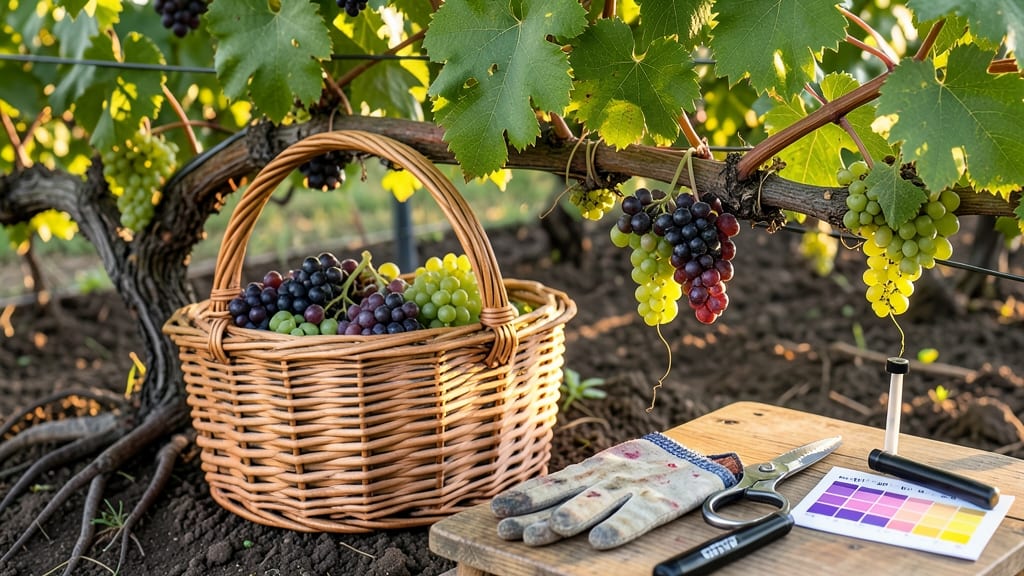
Harvesting grapes at the right time means the difference between sweet, juicy clusters 🍇 and tart, underripe fruit that’s barely worth the effort.
If you’ve ever bitten into a grape only to wince at the sour punch, you know the frustration. But here’s the good news: timing your harvest isn’t guesswork—it’s science.
The key lies in five simple visual cues that tell you exactly when your grapes are ready to pick, no fancy tools required.
From color changes to the telltale snap of a stem, these signs work for table grapes, wine grapes, and everything in between. And if you’re growing in Zone 6, knowing when to act means beating the early frost and locking in peak flavor before the season slips away.
Below, I’ll walk you through how to test for ripeness at home—including the sugar trick that takes just 2 minutes—so you can confidently harvest when your grapes are at their best.

5 Visual cues to determine when grapes are ready for harvest
Harvesting grapes at the perfect moment transforms your vineyard into a treasure trove of flavor. But without knowing the exact visual cues, you might end up with tart, underripe fruit or overly sweet raisins.
I’ve spent years perfecting my grape harvest timing, and these five key indicators will help you pick at peak ripeness every time. Whether you’re growing Concord grapes for jelly, Thompson Seedless for snacking, or wine grapes, these signs apply to all varieties.
Grapes ripen at different rates based on your climate zone, vine health, and even sunlight exposure. In my Zone 6 garden, I’ve learned to watch for subtle changes—like the shift from pale green to deep purple in Concord grapes—that signal it’s time to harvest.
Missing these cues can mean the difference between a juicy, sweet grape and one that’s tough or overly fermented on the vine. Let’s break down what to look for so you never miss the window.
Grapes should be fully colored—deep purple for Concord, golden for Thompson Seedless, or rich red for wine grapes. Uneven color means they’re not ripe yet.
Press a grape gently—if it doesn’t dent easily, it’s ready. Soft grapes are overripe, while hard ones are still firming up.
Crush a grape between your fingers—ripe grapes release a fragrant, sweet scent. No smell? They’re not ready.
Gently twist a grape—it should detach cleanly from the stem. If it resists, wait a few days.
For wine grapes, seeds should turn light brown. Dark seeds mean the grapes are still tart and underripe.
Let’s start with the most obvious clue: color. I can’t stress enough how critical this is. For example, my Concord grapes go from a pale green to a deep, almost black purple when they’re ready. If you’re growing Thompson Seedless grapes, look for a golden-yellow hue.
Wine grapes like Cabernet Sauvignon will shift from green to rich red or purple. Uneven color is a red flag—the grapes aren’t ripe yet. Pro tip: Check the sunniest clusters first, as they often ripen earlier.
Next, pay attention to the texture of the grapes. A ripe grape should feel firm but yielding—like a ripe peach. If it’s mushy, it’s overripe and likely to spoil quickly. To test, gently press a grape with your thumbnail. If it leaves a slight dent, it’s ready.
For wine grapes, this firmness is especially important, as overly soft grapes can ferment too quickly on the vine, leading to poor wine quality. I once harvested a batch of Cabernet Sauvignon that was too soft, and the wine turned out thin and lackluster. Lesson learned!
Your nose is your next best tool. Ripe grapes release a distinct, sweet aroma when crushed. If you crush a grape and it smells neutral or sour, it’s not ready. For Concord grapes, the scent should be rich and slightly floral.
In my garden, I often do a quick sniff test on a few clusters each morning. This simple trick has saved me from harvesting underripe grapes more times than I can count. The aroma is a reliable indicator of sugar development, which is directly tied to flavor.
Here’s a trick I picked up from a local viticulturist: the stem twist test. Gently twist a grape from its stem—it should detach cleanly with minimal force. If the grape resists or the stem snaps instead, it’s not ready.
This test works best in the morning when the grapes are cool and firm. I’ve found that Thompson Seedless grapes often pass this test a few days before they’re fully sweet, so I combine it with the aroma test for accuracy.
For wine grapes, this test helps ensure the grapes are at the perfect balance of ripeness and acidity.
Finally, for wine grapes, check the seed color. Ripe wine grapes have seeds that turn from white to light brown. Dark seeds mean the grapes are still tart and underripe.
I learned this the hard way with my first batch of Merlot grapes—the seeds were still dark, and the wine tasted harsh and unbalanced. Now, I always do a quick seed check before harvesting.
For table grapes like Concord, this isn’t as critical, but it’s still good practice to confirm overall ripeness.
One common mistake I see is relying on just one cue, like color alone. Grapes can look ripe but still taste tart if they haven’t developed enough sugar. That’s why I always combine at least three of these cues—color, aroma, and the stem twist test—to confirm ripeness. For example, if
How to test grapes for ripeness: the sugar, acid, and seed trick
Visual cues alone can only take you so far when determining grape ripeness. To truly nail the perfect harvest window, you need to dig deeper—literally. The sugar content, acidity balance, and even the seed color of your grapes hold the secrets to peak flavor.
These three factors work together to tell you whether your grapes are ready for the table, the winemaking vat, or the jam pot.
Most home growers overlook these science-backed ripeness tests because they seem complex. But with a few simple tools—some you may already own—you can measure Brix levels (sugar concentration), assess acidity, and check seed color changes to pinpoint the exact moment your grapes are at their best.
For wine grapes, this precision is critical, but even table grapes benefit from these tests to avoid that underripe tartness or overripe mealiness.
⚠️ callout-warning ⚠️
- Overripe grapes shrivel into raisins, losing sweetness and developing unpleasant flavors.
- Wine grapes left too long on the vine can ferment naturally, turning your harvest into spoiled fruit.
- Birds and pests target ripe grapes first—waiting too long means losing your crop to wildlife.
Start with the Brix test, which measures sugar content—the higher the number, the sweeter the grape. A refractometer (a small handheld device) is the gold standard, but you can DIY with a hydrometer or even a kitchen scale.
For table grapes, aim for 16-22 Brix, while wine grapes typically need 22-26 Brix for proper fermentation. To test, crush a grape and place the juice on the refractometer’s prism—wait 30 seconds for an accurate reading.
Next, check acidity levels, which balance sweetness. Underripe grapes taste tart, while overripe grapes lose their crispness. Use a pH test kit (available at garden centers) to measure acidity.
Most table grapes should have a pH between 3.0 and 3.5, while wine grapes often prefer slightly higher acidity (3.2-3.8) to prevent flat flavors. If your grapes taste too sharp, they’re not ready yet.
Don’t overlook the seed trick, a foolproof indicator for many grape varieties. Split a grape open and examine the seeds: deep brown or black seeds signal full ripeness, while pale or white seeds mean the grape needs more time.
This method works best for Concord, Thompson Seedless, and other seed-bearing varieties. For seedless grapes (like Red Globe), focus on color and sugar content instead.
Combine these tests for the most accurate results. For example, if your Brix reading is high but the seeds are still light-colored, wait another day. Conversely, if the seeds are dark but the acidity is off, you might need to adjust your harvest timing.
Once all three factors align—sweetness, balanced acidity, and ripe seeds—you’ve hit the perfect window for harvesting your grapes.