
How To
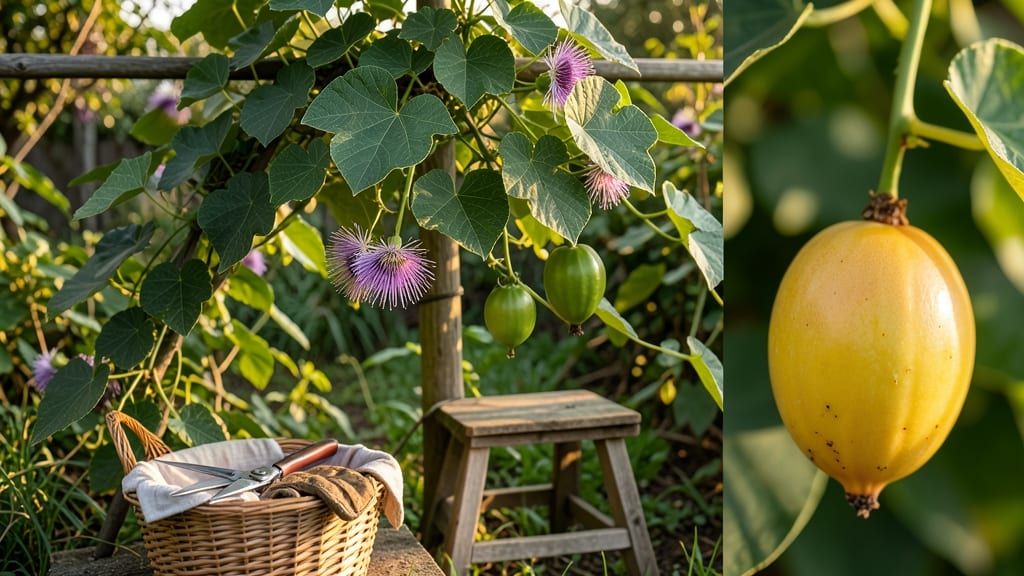
Harvesting passion fruit at the right moment transforms a tangy-sweet reward into a mealy mess—so knowing when to harvest passion fruit is the difference between juicy perfection and wasted effort.
Picture this: you’ve spent months tending to your 🍈 passion fruit vine, and now the fruit is changing color. But how do you know if it’s truly ready? One wrong twist too early or too late, and you’re left with flavorless pulp or a mushy disappointment.
The secret lies in three simple tactile checks—skin texture, weight, and stem separation—that tell you exactly when to pluck.
In tropical zones like 9-11, passion fruit ripens year-round, while cooler areas see harvests from spring to fall. Whether you’re growing purple, yellow, or hybrid varieties, the same principles apply: wait for that slight give when squeezed, a deepened hue, and a stem that releases effortlessly.
Miss these cues, and you might as well be harvesting rocks.
Below, I’ll walk you through the exact signs to watch for, how to adjust for your climate, and what to do if you pick too soon (or too late). By the end, you’ll never second-guess your harvest again.

3 Tactile signs your passion fruit is ready to harvest
There’s nothing quite like the moment you realize your passion fruit vine has produced fruit ready for harvest. But without knowing the exact tactile cues, you might pick fruit that’s either underripe and bland or overripe and mushy.
I’ve learned the hard way—overripe passion fruit tastes like watered-down lemonade, while underripe fruit is bitter and seedy. The key is trusting your hands and eyes to spot these three telltale signs of perfect ripeness.
Passion fruit ripeness isn’t just about color—though that’s a clue. The real magic happens when you touch, feel, and twist the fruit. Whether you’re growing purple passion fruit (Passiflora edulis) or yellow passion fruit (Passiflora edulis flavicarpa), these three checks will guarantee you harvest at peak flavor and texture.
Let’s dive into the hands-on indicators that’ll transform your passion fruit harvest from guesswork to guaranteed success.
⚠️ PRO TIP: Always harvest in the morning when fruit is coolest. This ensures the best flavor and makes it easier to spot subtle changes in texture and weight.
Skin Texture: The "Velvet Give"
Press your thumb gently against the fruit. A ripe passion fruit will feel slightly soft but still firm—like pressing a ripe avocado. If it feels hard and resistant, it’s not ready. If it’s mushy or dented, it’s overripe. For purple varieties, the skin should also have a slightly wrinkled texture near the stem end.
Weight: The "Heavy for Its Size" Test
Hold the fruit in your palm—ripe passion fruit feels unexpectedly heavy for its size. This happens because the flesh inside is fully developed and packed with juice. If it feels light or hollow, it’s underripe. Hybrid varieties (like 'Panama Gold') tend to be slightly heavier than traditional purple types at the same size.
Stem Separation: The "Gentle Twist" Rule
Grasp the fruit near the stem and give it a gentle twist. If it detaches easily from the vine with just a little resistance, it’s ready. If the stem snaps off cleanly or the fruit won’t budge, it’s not ripe enough. Yellow passion fruit often separates slightly earlier than purple varieties, so check them a day or two before the purple ones.
I once waited too long to harvest my yellow passion fruit, and by the time I noticed the skin had turned mushy, the inside was watery and seedy.
Now, I check these three signs every 2-3 days during peak harvest season (late summer to early fall in Zone 9b). The difference in flavor is night and day—ripe passion fruit bursts with tangy-sweet juice, while overripe fruit tastes dull and fermented.
For purple passion fruit, the skin should also develop a deep purple hue with a slight sheen, almost like a velvet finish. If you’re growing hybrid varieties, look for a mix of golden-yellow and orange tones—these often ripen slightly faster than traditional types.
Pro tip: Harvest in the morning when the fruit is coolest, as heat can make the skin feel softer than it actually is.
One common mistake I see is relying only on color to judge ripeness. A passion fruit can look fully colored but still be hard and underripe inside. That’s why I always combine the skin texture, weight, and stem separation checks.
For example, my purple passion fruit might look ripe by color but still feel rock-hard—that’s when I know to wait another day or two.
If you’re growing passion fruit in containers, these tactile signs are even more critical because potted vines can ripen faster due to warmer soil temperatures. I’ve found that container-grown fruit often needs to be harvested 1-2 days earlier than in-ground vines.
Always give the fruit a gentle squeeze and twist test before deciding—your hands know best!
Finally, if you’re unsure whether your passion fruit is ready, cut one open as a test. The flesh should be brightly colored (deep purple or golden-yellow) with a juicy, gel-like texture.
If it’s still pale or watery, wait another day. Once you master these three tactile checks, you’ll never waste another passion fruit again—just pure, bursting-with-flavor perfection every time. 🍈
Passion fruit ripeness by variety: purple vs. yellow vs. hybrid
Not all passion fruit ripen the same way—purple passion fruit (Passiflora edulis) and yellow passion fruit (Passiflora edulis flavicarpa) have distinct cues, while hybrid varieties blend traits. The color shift from green to mature hues signals readiness, but texture and scent seal the deal.
For example, purple varieties develop a deep violet hue, while yellows turn golden-orange with a slight waxy sheen.
Size matters too: ripe purple passion fruit typically reaches 2-3 inches in diameter, while yellow varieties grow slightly larger (3-4 inches). Hybrids often fall in between, offering a balance of sweetness and acidity.
The stem end also darkens and dries, making it easier to twist off the vine—a surefire sign of ripeness.
Harvesting at the right time maximizes flavor and texture. For purple passion fruit, wait until the skin yields slightly when gently squeezed—it should feel firm but not hard.
Yellow varieties often ripen later, so check for a waxy sheen and a fragrant aroma near the stem. Hybrids may require a middle-ground approach, balancing both color and scent cues.
Pro tip: Twist gently to detach the fruit—if it resists, it’s not ready. Overripe passion fruit becomes mushy and loses sweetness, while underripe fruit tastes bland and seedy. Aim for a bright, fragrant fruit that releases easily from the vine for the best results.
Climate plays a role too. In tropical zones (USDA 10-11), passion fruit ripens year-round, but in subtropical zones (USDA 9b), focus on harvesting between April and September. Adjust your timing based on local heat and rainfall—drier conditions may delay ripening.
Once harvested, store passion fruit at room temperature for 1-2 days to ripen further, or refrigerate for up to 2 weeks to slow the process. The key is consistency: check your vines weekly during peak season to avoid missing the perfect harvest window.