
How To
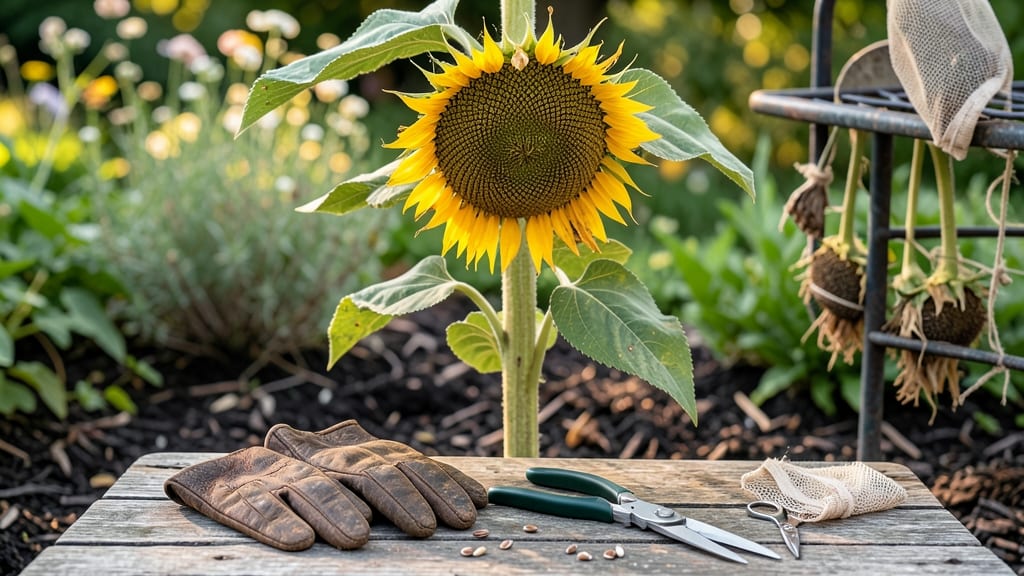
Harvesting sunflower heads for seeds happens when the back of the head turns brown and the petals start to droop 🌻 — timing it right means the difference between a bumper crop and a handful of shriveled seeds.
Picture this: you’ve spent months watching your sunflowers grow, only to wonder if you’ve waited too long when the first frost looms. The good news? Sunflowers give you clear signals, like dry petals and a papery brown center, that tell you exactly when to act.
In USDA Zone 6a, that window typically falls between late September and October, but regional variations mean you’ll need to watch for those visual cues over checking a calendar.
Harvest too early, and the seeds won’t be viable; wait too long, and birds or frost will beat you to it.
Below, I’ll walk you through the step-by-step process—from spotting the perfect moment to drying and storing your seeds—so you end up with a jar full of nutritious sunflower seeds ready for planting or snacking.

How to identify the perfect harvest time for sunflower seeds
Sunflowers reach their seed harvest peak when their visual cues and environmental conditions align perfectly. The ideal harvest window typically falls between late summer and early fall, but exact timing depends on your local climate and sunflower variety.
Missing this window means either underdeveloped seeds or frost damage—both of which ruin your harvest.
First, focus on the flower head's color changes. Mature sunflower heads show a brown center while the petals dry out and drop. This transformation signals that the seeds inside are fully developed and ready for collection.
Paying attention to these visual maturity signs prevents you from harvesting too early when seeds are still moist and undeveloped.
| Harvest Stage | Visual Cues | Environmental Factors | Action Required |
|---|---|---|---|
| Early Maturity | Petals still vibrant | Warm, dry weather | Wait 1-2 weeks |
| Ideal Harvest | Brown center, dry petals | No frost forecast | Harvest immediately |
| Overripe | Seeds black inside | Frost risk | Harvest and dry ASAP |
| Too Late | Head splits open | Frost damage | Seeds may not store well |
One of the most reliable indicators is the seed head's texture. When fully mature, the back of the head turns brown and papery, and the seeds will rattle inside when you gently shake the stem.
This acoustic test confirms that the seeds are dry and ready for harvest. If the head feels soft or moist, it's not yet time to pick.
Environmental factors like frost risk play a critical role in timing. In cooler climates, harvest before the first frost—typically between September and October. In warmer regions, you might extend harvesting into November.
Always check your local frost dates to avoid frost damage, which can spoil your seeds.
Another key visual cue is the seed color. Mature sunflower seeds turn black or dark gray on the inside when fully ripe. If you cut open a seed head and find seeds that are still white or light-colored, wait another 1-2 weeks before harvesting.
This simple color check ensures you're harvesting seeds at peak maturity.
Don’t forget to monitor bird activity—they love sunflower seeds! If you notice birds pecking at your heads, harvest those immediately to prevent seed loss.
Place bird netting over your sunflowers if birds are a recurring issue. Protecting your harvest from wildlife interference is just as important as timing.
For container-grown sunflowers, harvest slightly earlier than garden varieties since they often mature faster. Dwarf varieties typically reach harvest readiness in 60-70 days, while standard varieties take 90-120 days. Always refer to your seed packet instructions for variety-specific guidance.
Once you've confirmed the perfect harvest time, use a sharp pruning shear to cut the flower head along with 6-12 inches of stem. Hang the heads upside down in a dry, well-ventilated area for 1-2 weeks to fully dry.
Proper drying prevents mold growth and ensures long-term seed viability.
Timing your sunflower seed harvest correctly guarantees a high-quality, abundant yield that you can store for planting next year or enjoy as a nutritious snack. Paying attention to these visual and environmental cues makes all the difference between a successful harvest and a disappointing one. 🌻
Common mistakes that ruin sunflower seed harvests (and how to avoid them)
Harvesting sunflower seeds at the wrong time can turn your hard work into a disappointing pile of shriveled, unusable seeds. Even experienced gardeners sometimes miss the subtle cues that signal the perfect moment to harvest—like the brown center or dry petals.
One wrong move, and you could end up with seeds that won’t germinate or store properly.
I’ve seen firsthand how quickly a beautiful sunflower head can go from perfect to ruined in just a few days—especially when frost or birds get involved.
The key is knowing the red flags that mean you’ve waited too long, like green stems or moist seed heads, and acting fast to salvage what you can.
Here’s the hard truth: Harvesting too early is just as bad as waiting too long. If you pick sunflower heads before the seeds are fully mature, they’ll be underdeveloped and won’t store well.
But if you wait until the seeds are overripe, they’ll crack open or sprout in the head, making them useless for planting or eating.
⚠️ Critical Harvest Timing Mistake: Ignoring the "Rattle Test"
Sunflower seeds are ready to harvest when the head feels dry and seeds rattle inside when shaken gently. If the head is still green-backed or petals are vibrant, wait 3-5 more days. Harvesting too soon means immature seeds that won’t store properly.
Pro Tip: Shake a mature head over a paper bag—if seeds fall out easily, it’s harvest time!
Another common mistake is cutting the stems too short when harvesting. If you trim the stem below the seed head, you lose the natural handle that makes drying easier. Always leave at least 6-12 inches of stem attached so you can hang the head upside down for drying.
Improper drying is the silent killer of sunflower seeds. Too much moisture during storage leads to mold or rot, while drying too quickly can cause seeds to crack. The ideal drying spot is a warm, dry, and well-ventilated area—like a garage or shed—where humidity stays below 50%.
I once stored seeds in a damp basement and lost half the harvest to mold!
Don’t forget about weather warnings. If a hard frost is forecasted before your sunflowers are ready, act fast. A light frost can actually help dry the heads, but a heavy freeze will ruin them.
Covering heads with row fabric or moving them indoors can buy you extra time if needed.
Finally, storing seeds incorrectly is a missed opportunity. Once dried, store seeds in an airtight container in a cool, dark place (like a pantry) where they’ll stay viable for up to 2 years.
Label your containers with the harvest date to track freshness—old seeds lose germination rates faster than you’d think!