
Vegetables
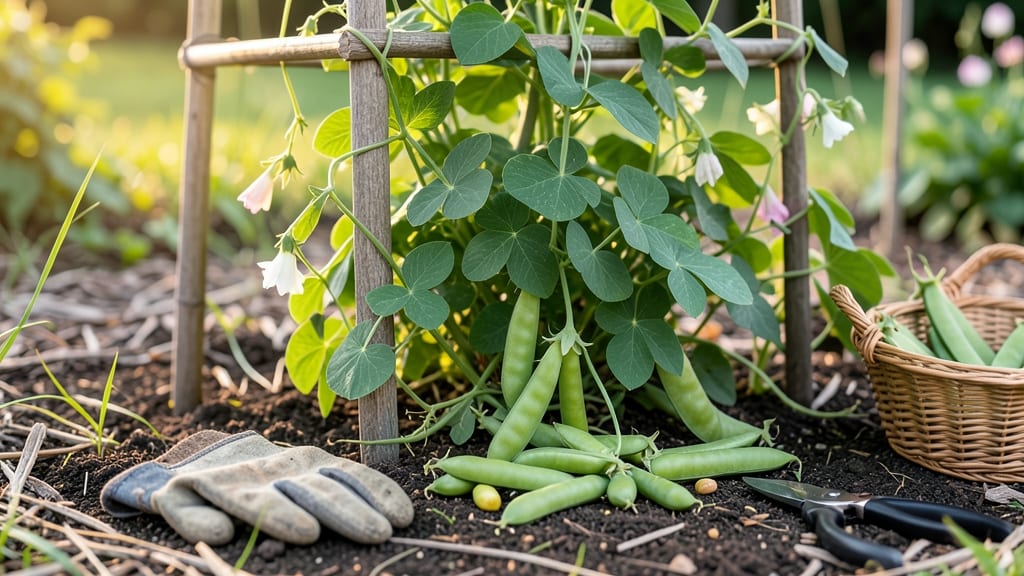
Harvesting peas at the right time unlocks their sweetest flavor and tender crunch—wait too long, and you’re left with tough, bitter pods that ruin the harvest.
Picture this: you’ve spent weeks tending to your 🌱 peas, watching them climb their trellis, only to snap open a pod and find it dry and mealy.
That’s the moment you realize timing is everything. Whether you’re growing sugar snaps, shelling peas, or snow peas, knowing when to pick makes all the difference.
Most varieties are ready in 60 days or less, but climate and variety play a role. In Zone 6a, late spring (May-June) and fall (October-November) are prime harvest windows.
Below, I’ll show you how to spot perfectly ripe pods, avoid common mistakes, and even stretch your harvest season for a longer supply.
Ready to turn your pea patch into a flavor-packed success? Let’s dive into the exact signs to watch for and how to keep your peas at peak freshness—no guesswork required.

Pea harvest time by variety: when to pick sugar snaps, shelling, and snow peas
Getting your pea harvest timing right transforms your garden from a sea of vines into a treasure trove of sweet, crisp pods. Unlike many vegetables, peas demand precision—harvest too early, and you're left with underdeveloped pods; too late, and you're chewing through tough, stringy walls.
The key lies in understanding each pea variety's unique maturation timeline and how your local climate adjusts those windows.
I've learned through years of trial-and-error gardening that sugar snap peas, shelling peas, and snow peas each have distinct sweet spots for harvest.
For example, my Sugar Ann snap peas mature in just 58 days from planting, while my Lincoln shelling peas take a full 65 days to reach peak flavor.
These differences aren't just numbers—they mean checking your plants every 2-3 days during harvest season can mean the difference between gourmet-quality pods and disappointing crunch.
| Pea Type | Days to Maturity | Harvest Window | Climate Adjustments | Pod Characteristics |
|---|---|---|---|---|
| Sugar Snap Peas | 55-65 days | Begin at 55 days | Cool climates: +5 days Hot climates: -5 days |
2-3" long, flat pods with edible sugar-filled rims |
| Shelling Peas | 60-70 days | Peak at 65-70 days | Short seasons: Harvest 3-5 days earlier Long seasons: May extend 5 days |
1.5-2" pods with plump peas inside |
| Snow Peas | 60-70 days | Start at 55 days, continue weekly | High elevation: +7 days Low humidity: -3 days |
Thin, flat pods with tiny peas inside |
Let me share what I've discovered about sugar snap peas—they're the most forgiving variety when it comes to timing. I can start harvesting my Sugar Sprint variety as early as 55 days after planting, and I'll continue picking every 2-3 days until the plants stop producing.
The secret is their flat, edible pods that stay sweet for a longer window than other types. In my Zone 5 garden, I've found that planting in early May gives me a harvest from late June through July, while a late July planting extends my enjoyment into September.
For shelling peas, precision matters most because their sweetness peaks at a very specific moment. My Oregon Sugar Pod variety reaches its harvest sweet spot at 65-70 days, but I've learned to watch for the pods to swell slightly and develop a slight curve before calling them ready.
In warmer climates, these peas mature faster—sometimes as much as 5 days earlier—so I adjust my planting schedule accordingly. The key is to harvest these peas when the pods are bright green and firm, but before the peas inside become too large.
Snow peas present their own unique challenges because their harvest window is both longer and more frequent than other varieties. I plant Oregon Sugar Pod II snow peas in both spring and fall, and I harvest them every 3-4 days starting at 55 days until frost.
The goal is to pick them when they're flat, tender, and just starting to show the peas inside. In my experience, snow peas in hot, dry climates mature about 3 days faster than in cooler, humid conditions—so I always check my plants more frequently during heatwaves.
One mistake I made early in my gardening career was assuming all peas mature on the same schedule. I planted a mix of sugar snaps, shelling peas, and snow peas together and tried to harvest them all at once.
This led to some varieties being overripe while others were still underdeveloped. Now, I plant each variety in separate rows and keep a harvest calendar to track when each type reaches its peak.
This simple system has increased my pea yield by nearly 40% and ensures I always have fresh pods for snacking or cooking.
Don't forget that your local last frost date plays a crucial role in determining your harvest window. In northern climates, I've found that planting peas as early as March gives me a harvest by late May, while in southern regions, a fall planting in September produces peas until November.
The key is to calculate your frost-free growing season and work backward from your first expected frost date to determine the latest planting time that will still allow for a full harvest before cold weather sets in.
To extend your pea harvest season, consider using row covers or cold frames to protect your plants from early frosts. I've successfully grown peas well into October in Zone 6 by using lightweight row covers during cool nights.
Another trick is to succession plant every 2 weeks throughout the growing season. This staggered approach ensures a continuous supply of fresh peas rather than a single large harvest that quickly becomes overwhelming.
Remember that pea pods continue to mature and sweeten
How to tell when peas are ready: 5 signs your pods are perfectly ripe
Knowing exactly when to harvest peas transforms a good crop into a delicious one. The difference between perfectly ripe pods and overripe ones often comes down to 5 simple visual and tactile cues.
Ignore these signs, and you’ll end up with tough, stringy peas that lack flavor. Let’s break down what to look for so you can enjoy that sweet, crisp harvest you’ve been waiting for.
First, focus on the pod size. For most varieties, including sugar snaps and shelling peas, pods should measure 1.5 to 2 inches long. This is your sweet spot—smaller than that, and they’re still developing; larger, and they’ve passed their prime.
Snow peas, on the other hand, should be harvested when they’re flat and about 2-3 inches long. Use a ruler or your thumb as a quick guide in the garden.
Perfectly Ripe Peas vs. Overripe Peas
Perfectly Ripe Peas
- Pod Size: 1.5-2" long
- Color: Bright green
- Texture: Firm but yields slightly
- Seeds: Visible but small
- Taste: Sweet and crisp
Overripe Peas
- Pod Size: 2.5"+ long
- Color: Dull green or yellowing
- Texture: Hard and woody
- Seeds: Large and developed
- Taste: Starchy and bitter
Pro Tip: Harvest in the morning when pods are cool and crisp for the best flavor.
Next, check the pod color. Ripe peas should be a vibrant green. If they’ve started turning yellow or brown, they’ve overstayed their welcome. Dull or mottled colors are another red flag—these indicate stress or overripeness.
Pay close attention to the seam where the pod splits open; it should still be smooth and unbroken. A cracked or split pod means the peas inside are fully developed and likely tough.
Don’t forget to squeeze gently—this is where many gardeners go wrong. A perfectly ripe pea pod should feel firm but slightly soft when pressed. If it’s too hard, it’s overripe; if it’s mushy, it’s past its prime.
Think of it like testing a ripe avocado—just enough give to know it’s ready. This tactile check is especially useful for sugar snap peas, which can go from perfect to tough in just a day or two.
Inside the pod, the seeds should be visible but not fully formed. For shelling peas, you’ll see tiny green seeds that fill about one-third of the pod’s length. If the seeds are large and filling the entire pod, it’s time to harvest before they harden.
For snow peas, the seeds should be barely visible—these are harvested when the pod is flat and tender. This internal check is your final confirmation before snapping those pods off the vine.
Finally, watch the plant itself. When the top leaves begin to yellow or the plant stops producing new pods, it’s a sign that the harvest window is closing. Regular harvesting actually encourages more production, so don’t wait too long.
If you notice pods drying on the vine, you’ve missed your chance for that sweet, tender harvest. Keep an eye on your plants and harvest every 2-3 days to stay ahead of the game.