
Picking
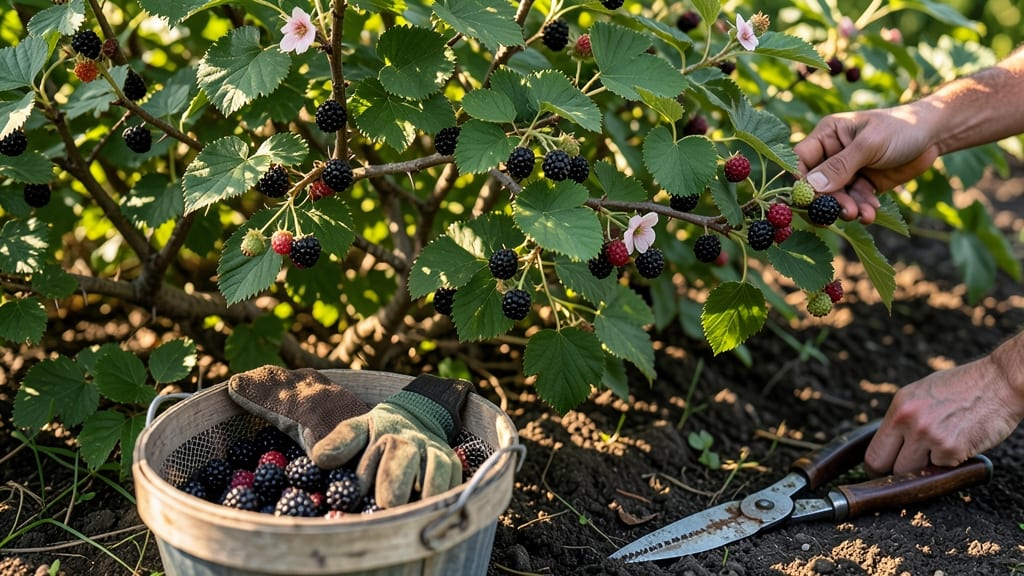
Your blackberry harvest season arrives when those glossy 🫐 berries turn deep black and plump—just when you’ve been dreaming of fresh cobbler or jam.
Imagine plucking a berry only to find it still tart and underripe. That’s the moment you realize timing matters more than you thought. The right window between late summer and early fall can turn a good harvest into a spectacular one.
This guide breaks down exactly when blackberries ripen in your region, how to spot the perfect berry, and the best methods to pick without damaging your plants.
Whether you’re in USDA Zone 6a or further south, you’ll learn how to extend your harvest and enjoy those sweet, juicy treats all season long.
From identifying ripe berries to storing them properly, you’ll discover the secrets to a bountiful blackberry harvest that keeps coming back year after year.

When do blackberries ripen? Exact harvest season by variety and region
Blackberries transform from tart green buds to sweet, juicy treats over 6-8 weeks, but the exact harvest season depends on your USDA zone and variety.
In USDA zones 5-7, most blackberries ripen between late July and September, while warmer zones (8-10) may see harvests as early as June. Understanding these timelines helps you plan for the peak flavor window—when berries are at their sweetest and most abundant.
Your location plays a critical role. Northern climates (zones 5-6) often experience shorter harvest seasons due to early frosts, while southern zones (8-10) enjoy extended fruiting. Even within the same region, early-season varieties like Triple Crown may ripen weeks before late-season types such as Natchez.
This variety-driven timing ensures you can stretch your harvest from mid-summer to early fall.
Here’s how to align your expectations with regional ripening patterns and variety-specific schedules to maximize your blackberry yield:
In USDA zone 5, where winters are harsh, blackberries like Arapaho ripen as early as July to avoid frost damage. These early-season varieties thrive in cooler climates, producing fruit before heat stress sets in.
Meanwhile, zone 10 gardeners can enjoy Oregon Evergreen berries well into October, thanks to milder winters and extended growing seasons.
For gardeners in transition zones (7-8), a mix of early and late varieties ensures a continuous harvest. Planting Triple Crown alongside Natchez stretches your season from July to September, giving you fresh berries for over 8 weeks.
This strategy works especially well in humid climates, where disease pressure is higher, and a staggered harvest reduces stress on the plants.
Climate also affects ripening speed. In dry, hot zones (like Arizona or California), blackberries may ripen 2-3 weeks faster than in cooler, wetter regions (like the Pacific Northwest). To compensate, increase watering during fruit development and use mulch to retain soil moisture.
In humid southern zones, watch for fungal diseases like botrytis, which can accelerate ripening unevenly across the plant.
If you’re in zone 6 or below, focus on early-ripening varieties like Chester or Chester Thornless. These varieties mature in mid-August, just before the first frost typically arrives.
For zone 9 and above, late-season types such as Natchez or Apache shine, offering berries well into fall. Even in these warmer zones, a light frost can trigger early ripening, so monitor your plants closely.
Pro tip: Use row covers in early spring to protect blossoms from frost, which can boost your fruit set and ensure a more reliable harvest. This technique is especially useful for zone 6 gardeners, where late frosts are common.
Pair this with regular pruning to remove weak canes and improve airflow, which can delay ripening slightly but improves berry quality.
Finally, keep an eye on bird activity during peak ripening. Birds love ripe blackberries, and they can strip your
How to tell when blackberries are fully ripe and ready to pick
Picking blackberries at the perfect moment transforms a simple harvest into a sweet, juicy reward. The key lies in understanding three critical cues: color, texture, and flavor. Even experienced gardeners sometimes pick too early—resulting in tart, underripe berries—or too late, where fruit becomes mushy and attracts pests.
Let’s break down how to nail that sweet spot every time.
First, focus on berry color as your primary indicator. Fully ripe blackberries should be a deep, uniform hue—whether black, purple, or red, depending on the variety. Avoid picking berries with green or patchy coloring, as they’re still developing.
For example, Triple Crown blackberries turn glossy black, while Chester varieties develop a rich purple-black shade. Check for no white or green seeds when you cut one open—this confirms ripeness.
✅ Ready-to-Pick Blackberries
| Sign | Description |
|---|---|
| 🫐 Color | Deep, uniform black/purple/red (no green patches) |
| 🤲 Texture | Soft to touch, slightly yielding when gently squeezed |
| ✅ Detachment | Easily plucks off stem with slight pressure |
| 🍯 Flavor Test | Sweet with no tartness (taste one berry!) |
❌ Overripe or Underripe Blackberries
| Sign | Risk |
|---|---|
| 🟢 Green Berries | Tart, underdeveloped, won’t ripen further |
| 🔴 Firm Texture | Hard berries = immature; may never sweeten |
| 🐦 Bird Damage | Overripe berries attract birds; pick daily to avoid |
| 🌧️ Rain-Softened | Mushy texture = overripe; best avoided for fresh use |
Texture is your second clue—ripe blackberries should feel soft and slightly squishy when gently pressed. If they’re firm, they’re not ready; if they’re mushy or leaking juice, they’ve passed their prime. Pro tip: Hold a berry between your fingers and give it a light squeeze.
It should yield slightly, like ripe grapes, but not collapse. This test works best in the morning after dew dries, when berries are at their firmest.
Finally, trust your taste buds! The flavor test is foolproof: pick one berry and take a bite. A ripe blackberry should be sweet with minimal tartness. If it’s overly sour or mealy, wait a few days.
Remember, blackberries don’t ripen further after picking, so taste-testing saves you from disappointment. For varieties like Natchez, which ripen earlier, this test is especially critical.
Avoid these common mistakes: picking every berry at once (focus on clusters that are uniformly ripe) or ignoring bird activity. Birds target overripe berries, so harvest frequently—every 2-3 days during peak season—to protect your crop.
Use harvest bags or containers with lids to deter pests while you work. For thorny varieties like Chehalem, wear gloves to avoid scratches while checking ripeness.
Timing your harvest also matters. In USDA Zones 5-7, peak season runs from late July to early September, while warmer zones (8-10) may extend into October. Plan to harvest in the cool of the morning to preserve flavor and reduce bruising.
Store ripe berries in the fridge for up to 3 days or freeze them immediately for long-term use. With these cues, you’ll never miss the perfect blackberry again!