
How To
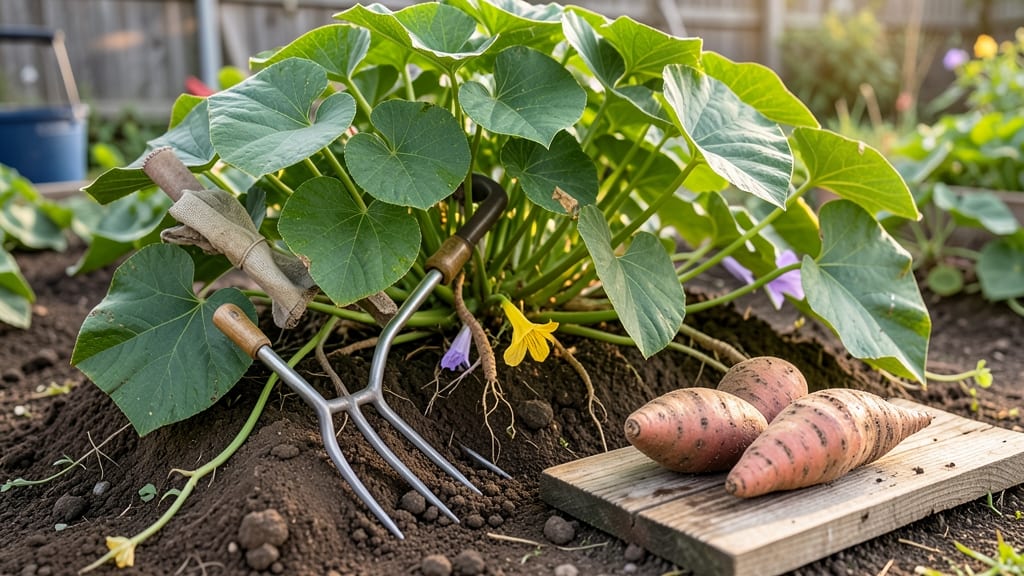
Harvesting sweet potatoes takes anywhere from 90 to 150 days after planting, depending on the variety and growing conditions—so timing is everything if you want tubers that are sweet, not woody.
Picture this: you’ve spent weeks nurturing your 🍠 plants, and now you’re staring at those lush vines, wondering, "Are they ready yet?" The truth is, rushing the harvest can leave you with small, underdeveloped roots, while waiting too long risks frost damage or shriveled storage potatoes.
Most gardeners in Zone 6 default (like me!) aim for late summer to early fall, when soil temperatures dip below 60°F—that’s your cue to dig. But the real secret lies in the leaves: yellowing vines paired with firm, hard-to-pierce skins mean it’s time to harvest.
Below, I’ll break down the exact days for popular varieties, how to tell when your sweet potatoes are truly ready, and a few pro tips to avoid the most common mistakes—so you can pull those golden tubers at just the right moment.

Sweet potato harvest timeline: exact days by popular variety
Timing your sweet potato harvest correctly ensures tender, flavorful tubers instead of woody, bitter roots. Most varieties mature between 90 to 150 days after planting, but exact timing depends on the variety, soil temperature, and your local climate.
For example, Beauregard, the most popular variety, typically reaches harvest readiness in 90 to 110 days, while Purple sweet potatoes may take up to 130 days to fully mature.
Harvesting too early results in small, underdeveloped roots, while waiting too long can lead to cracked or rotting tubers. The key is watching for visual cues like leaf yellowing, vine dieback, and soil temperature drops below 60°F (15°C).
In cooler climates, like Zone 5 or 6, you may need to adjust your harvest window by 2 to 4 weeks earlier to avoid frost damage.
For Beauregard sweet potatoes, the golden standard for home gardens, start checking for harvest readiness around 90 days after planting. Look for yellowing vines and 3 to 5-inch roots when you gently brush away soil.
If your soil temperature drops below 60°F (15°C), it’s time to harvest—cold soil can cause the roots to become woody or develop hollow centers.
If you’re growing Jewel sweet potatoes, aim for a 100 to 120-day harvest window. These varieties are prized for their tender, moist flesh, making them perfect for roasting or fresh eating.
Watch for brown leaves and 4 to 6-inch roots. In cooler climates, like Zone 7, consider using row covers to extend the growing season by 2 to 3 weeks.
The Purple sweet potato variety is a showstopper with its deep violet flesh, but it requires patience—these take 120 to 130 days to mature. Harvest when the vines are fully yellow and the skin is firm.
Purple varieties are sensitive to cold soil, so in Zones 8 and below, plant them in well-draining soil and use black plastic mulch to warm the roots.
For a quick harvest, try Georgia Jet, a baby sweet potato variety that matures in just 85 to 100 days. These are ideal for early-season gardens or container growing. Harvest when the vines wilt and the roots are 2 to 3 inches in diameter.
Georgia Jet is perfect for Zones 5 to 9, making it a great choice for northern gardeners with shorter growing seasons.
Regardless of variety, always harvest before the first frost. Sweet potatoes are frost-sensitive, and even a light freeze can damage the tender vines and immature roots.
If frost is forecasted, dig up your sweet potatoes immediately and cure them in a warm, humid space for 5 to 10 days to develop their storage sweet
Soil temperature and weather: how to tell when sweet potatoes are truly ready
Sweet potatoes thrive when soil temperatures hover between 70°F and 85°F during their growing season, but their readiness for harvest isn’t just about days on the calendar—it’s about what’s happening underground and above.
I’ve learned that soil temperature drops below 60°F often trigger the final stages of maturity, signaling it’s time to dig. This shift forces the plant to redirect energy from leaf production to root development, resulting in sweeter, firmer tubers.
Beyond temperature, watch for leaf yellowing patterns—healthy green vines turn golden-brown and start wilting, especially in the mornings. This is nature’s way of telling you the plant is shutting down its top growth to focus on root storage.
If you ignore these signs and wait too long, frost can damage the vines, leaving your potatoes exposed to rot or shriveled skin.
Too Early: Roots are small, soft, and prone to bruising. Harvesting before 90 days (for fast varieties) or 120 days (standard types) means you’ll miss peak sweetness and storage potential.
Too Late: Tubers shrink and develop woody centers. If frost hits before harvest, dig immediately—even if leaves aren’t fully yellow—to salvage your crop.
Pro Tip: Use a soil thermometer to track temps. Below 60°F for 3+ days? Time to harvest!
Root size is another critical benchmark. Aim for 4-6 inch tubers with firm skins that resist piercing with your fingernail. Smaller potatoes (under 3 inches) are best used fresh, while larger ones store better.
I once harvested a batch of Beauregard sweet potatoes at 5 inches—perfect for roasting—and another batch at 7 inches for long-term storage. The difference in texture and flavor was night and day!
Weather plays a sneaky role too. Dry spells before harvest concentrate sugars in the roots, making them sweeter, while prolonged rain can dilute flavor and increase disease risk. If you’re in a humid climate, prioritize harvesting when skies clear for at least 3-5 days to reduce rot during curing.
Don’t forget to cure your sweet potatoes post-harvest! Place them in a warm (80°F-85°F), humid (80-85%) environment for 5-10 days to develop their signature sweetness. Skip this step, and you’ll end up with bland, starchy tubers.
My first attempt at curing failed because I stored them in the fridge too soon—now I always use a cardboard box in my garage!
If you’re growing in cooler climates (Zones 4-5), extend your season with black plastic mulch or row covers to keep soil warm. In my Zone 6 garden, I’ve successfully harvested Georgia Jet sweet potatoes by mid-October by using these tricks.
The key is balancing soil warmth, leaf signals, and root size—not just counting days.