
How To
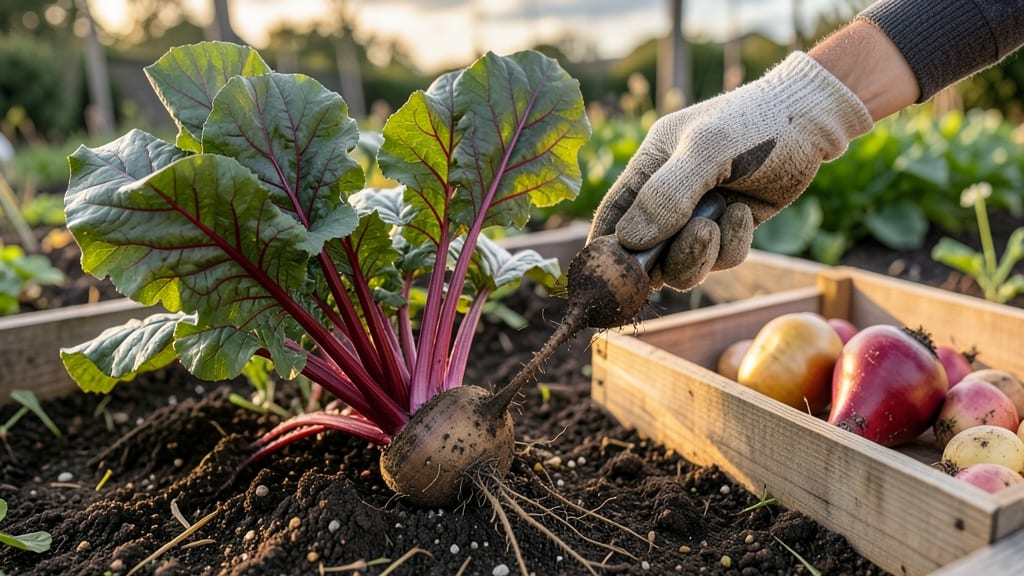
Knowing when to harvest beets comes down to a simple finger-press test that saves you from cutting into roots too soon or too late.
Beets are one of the most rewarding vegetables to grow, but timing their harvest perfectly can be tricky—pull them too early, and they’ll be bland; leave them too long, and they’ll turn woody.
The secret to sweet, tender beets lies in a simple finger-press test that reveals their readiness without a single cut.
In USDA Zone 6a, the best months to harvest are June–July or October–November, when the roots reach 1–3 inches in diameter and the leaves are dark and healthy. A firm, slightly springy skin means they’re ready, while a soft or woody feel signals they’ve passed their prime.
Below, I’ll walk you through the finger-press method, how to spot overripe vs. underripe beets, and how to store them for maximum sweetness—so you never waste another harvest again.

The finger-press test: how to Check beet sweetness without digging
Harvesting beets at the perfect moment transforms them from bland to bursting with sweetness. The finger-press test is my go-to trick for determining sweetness without digging up every root.
This method relies on root firmness and size cues that reveal whether your beets are ready for harvest—or still need time to mature.
Beets typically reach harvest readiness between 45 to 70 days after planting, but exact timing depends on the variety and growing conditions.
For example, baby beets like 'Baby Kermit' are ready in as little as 30 days, while heirloom types like 'Detroit Dark Red' need the full 60-70 days. The finger-press test bridges this gap by giving you real-time feedback.
How to Perform the Finger-Press Test
- 1 Check root size: Gently brush away soil to expose the top 1-2 inches of the root. Baby beets should be 1-2 inches in diameter, while mature beets should reach 2-3 inches.
- 2 Press gently: Use your thumb or forefinger to apply light pressure to the exposed root. If it feels firm but slightly yielding (like a ripe avocado), it’s ready. If it dents easily, it needs more time.
- 3 Inspect skin texture: Ready beets have smooth, taut skin. If the skin feels rough or woody, the beet has overmatured and lost sweetness.
- 4 Compare to variety standards: Refer to your beet’s maturity chart. For example, 'Chioggia' beets should have striped patterns fully developed, while 'Golden' varieties should be deep yellow-gold.
- 5 Harvest at peak: Dig up the beet using a fork or spade, leaving 1 inch of stem attached. Shake off excess soil and enjoy immediately or store in a cool, dark place for up to 2 weeks.
One of the biggest mistakes I see is over-relying on days to maturity without accounting for growing conditions. For instance, beets grown in cool weather (like early spring or fall) mature faster than those in hot summer heat.
Always cross-reference the finger-press test with visual cues like leaf color and root size.
For baby beets, harvest when roots are 1 inch or smaller and leaves are 4-6 inches tall. These tiny beets are perfect for salads and pickling. Meanwhile, mature beets should have deep, rich colors and a thick neck where the root meets the stem.
If you ignore these signs, you risk harvesting beets that are either underdeveloped or woody.
Pro tip: Test a few beets from the same patch to account for size variations. Some varieties, like 'Cylindra,' grow long and cylindrical, while others like 'Detroit Dark Red' are round. Adjust your finger pressure accordingly—cylindrical beets need slightly more firmness to be ready.
If your beets fail the finger-press test, don’t panic. Underripe beets can still be eaten (they’re just milder), while overripe beets become tough and lose sweetness. To salvage overripe beets, try roasting them—the heat caramelizes natural sugars, enhancing flavor despite their age.
Finally, always harvest beets on a cool, cloudy day to reduce stress on the plant. Avoid pulling them during peak heat, as this can cause the roots to bleed excessively and wilt. With the finger-press test in your toolkit, you’ll never guess again—just feel, see, and harvest with confidence!
Signs of overripe vs. underripe beets: what to watch for in soil and foliage
Knowing when to harvest beets depends on more than just days since planting—it’s all about reading the foliage and soil conditions. Overripe beets become woody and tough, while underripe ones stay bland and watery.
The key lies in observing leaf color, root size, and even the soil moisture around your plants.
Start by checking the leaf health. Healthy beet greens should be vibrant green and upright, with leaves measuring about 4-6 inches tall. If leaves turn yellowish or wilt, your beets may be overripe or struggling. Meanwhile, pale or stunted leaves signal underripe beets needing more time.
Root size is another critical clue. Baby beets (ideal for tender greens and small roots) should be 1-2 inches wide, while mature beets reach 2.5-3.5 inches. Digging up a test beet? If it’s smaller than a golf ball, it’s not ready yet.
Pay attention to the soil too. Well-draining, moist soil indicates healthy growth, while dry or compacted soil can stunt root development. Overripe beets often appear in cracked soil during dry spells, signaling they’ve outgrown their space.
For baby beets, harvest when roots are 1-2 inches wide and leaves are 3-4 inches tall. These are perfect for salads or quick cooking. Mature beets, on the other hand, need 2.5-3.5 inches of root diameter and 6-inch leaves for full flavor.
If you’re unsure, do the finger-press test: Gently press a beet root—if it yields slightly, it’s ready. If it feels rock-hard, it’s overripe. The earlier you harvest, the sweeter and tenderer your beets will be!