
Picking
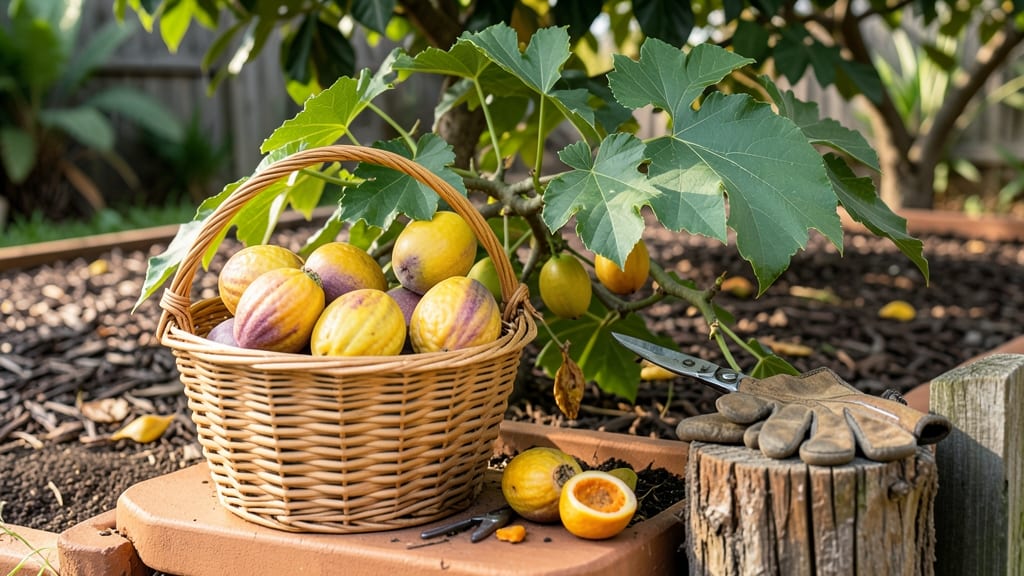
The passion fruit harvest time is all about that perfect color shift and a gentle twist—because one wrong move turns sweet rewards into mealy disappointment.
Picture this: you’ve spent months waiting for your 🍈 vines to burst with fruit, only to pick a green, hard passion fruit that’s flavorless as cardboard. Or worse, you twist too hard and crush the delicate flesh inside.
The difference between a juicy, vibrant harvest and a sad, mushy failure often comes down to two simple cues: color and touch.
In General (Tropical/Subtropical Regions), where passion fruit thrives year-round, the fruit goes through a dramatic transformation—from bright green to deep purple or golden yellow, depending on the variety.
But timing isn’t just about color; it’s also about that telltale give when you twist. Miss the window, and you’ll either have underripe tang or overripe mush.
Below, I’ll walk you through the exact color shifts to watch for, the foolproof twist test to check ripeness, and how climate—whether you’re in Zone 10-12 or a cooler 9a-9b with winter protection—affects your harvest schedule. No more guessing, just perfect-picked passion fruit every time.

How to identify passion fruit harvest time by color changes
Passion fruit ripeness isn't just about size—it's a color transformation that signals peak flavor and texture. In my Zone 10 garden, I’ve learned that missing this 3-stage progression means the difference between a juicy, sweet fruit and one that’s mealy or overly tart.
The process starts with bright green fruits that gradually shift through yellow or orange before reaching their final hue.
Understanding these color cues is especially critical in subtropical climates like mine, where cooler winters can slow ripening. Tropical growers may see faster transitions, but the principles remain the same.
Each color phase corresponds to internal seed development and sugar accumulation, so paying attention ensures you don’t harvest too early—or worse, let the fruit overripe and rot on the vine.
🌱 Did You Know? Passion fruit varieties like Purple Passionfruit (Passiflora edulis) and Yellow Passionfruit (Passiflora ligularis) follow slightly different timelines. Purple types often take 6-8 months to ripen, while yellow varieties may mature in 5-7 months under ideal conditions. This variation is why color tracking is your best tool.
| Stage | Color Description | Ripeness Level | Flavor & Texture | Seed Development | Harvest Ready? |
|---|---|---|---|---|---|
| 1 | Bright Green | Unripe | Hard, sour, bitter | Seeds white/translucent | ❌ No |
| 2 | Yellow/Orange (Purple: Deep Purple) | Partially Ripe | Slightly soft, mild sweetness | Seeds turning brown | ⚠️ Almost |
| 3 | Deep Purple/Red (Yellow: Golden) | Fully Ripe | Juicy, sweet, aromatic | Seeds fully brown/black | ✅ Yes |
🌿 Regional Note: Tropical climates may see faster color shifts (3-4 weeks), while subtropical zones like mine can take 6-8 weeks per stage.
The first stage (bright green) is your warning to wait patiently. At this point, the fruit is hard as a rock and packed with tannins that make it inedible. I’ve made the mistake of picking too early, only to discover a bitter, astringent pulp that ruined smoothies.
The key is to monitor daily once the fruit starts showing color changes near the stem.
When the fruit enters the second stage (yellow/orange or deep purple), it’s partially ripe but not yet at peak flavor. This is where many gardeners harvest too soon, thinking the color shift means readiness.
In reality, the fruit is still firm to the touch and lacks the complex sweetness of full ripeness. The seeds inside are also light brown, signaling they’re not fully developed for optimal flavor.
True ripeness arrives in the third stage, marked by a deep purple (or golden yellow) hue that’s uniform across the entire fruit. At this point, the skin should yield slightly when pressed with your thumbnail—like the give of a ripe peach.
Inside, the seeds are fully brown or black, and the pulp is gelatinous, fragrant, and bursting with sugar. This is the sweet spot for harvesting, and the moment I’ve learned to act quickly before overripening sets in.
In tropical climates, where temperatures stay warm year-round, the color transition can happen in as little as 3-4 weeks. But in subtropical zones like Southern California or Florida, cooler winters can pause ripening temporarily.
Last winter, my purple passionfruit vines took nearly two months to shift from yellow to deep purple due to 50°F nights. Patience is key—don’t rush it!
One pro tip I’ve picked up from local growers is to harvest in the morning when fruits are coolest and firmest. This reduces bruising and gives you the best chance to <
The gentle twist test: when to harvest for maximum sweetness
Mastering the gentle twist test is your secret weapon for harvesting passion fruit at its sweetest. Unlike many fruits, passion fruit doesn’t soften dramatically when ripe—it relies on subtle texture and color cues. The twist test helps you gauge ripeness without crushing the fruit or damaging the vine.
Start by selecting fruits that have fully developed their signature colors (deep purple for Maracuja, golden yellow for Granadilla).
Grip the fruit firmly near the stem and twist gently with your fingers. The key is to apply just enough pressure to feel resistance—not enough to snap the stem. A ripe passion fruit should separate cleanly from the vine with a slight popping sound, like a ripe avocado.
If the fruit resists or the stem tears, it’s not ready yet. This test works best in the early morning when fruits are cool and firm.
⚠️ callout warning ⚠️
- Twisting too hard can bruise the fruit or damage the vine.
- Testing green or half-ripe fruits—wait for full color change first.
- Harvesting overripe fruits (they’ll be mushy and seedy).
Pay attention to the resistance levels during the twist. A ripe fruit should yield with minimal force—think of it like twisting off a lightbulb. If the fruit feels too firm, it needs more time on the vine.
Conversely, if it detaches with almost no resistance, it may be overripe. Overripe passion fruit loses its vibrant flavor and becomes mealy and seedy, making it less enjoyable to eat.
For large passion fruit vines, use a pair of clean, sharp pruning shears to make a clean cut about 1/4 inch above the fruit. This prevents disease from spreading through jagged edges.
Always sanitize your tools with rubbing alcohol between cuts to protect your entire harvest. After harvesting, place the fruit in a well-ventilated basket to ripen further at room temperature.
Regional climates can affect ripening speed. In tropical zones (USDA 10-12), passion fruit ripens faster due to consistent warmth, while subtropical zones (USDA 9a-9b) may see slower maturation.
If you’re in a cooler climate, harvest slightly earlier (when 75% colored) and let them ripen indoors. A sunny windowsill speeds up the process without overripening.
Once you’ve perfected the twist test, you’ll never miss a peak-ripeness harvest again. The reward? Juicy, aromatic passion fruit bursting with flavor—perfect for juices, desserts, or fresh eating. Keep practicing, and soon you’ll be the envy of your gardening neighbors with your foolproof harvesting skills. 🌱