
Picking
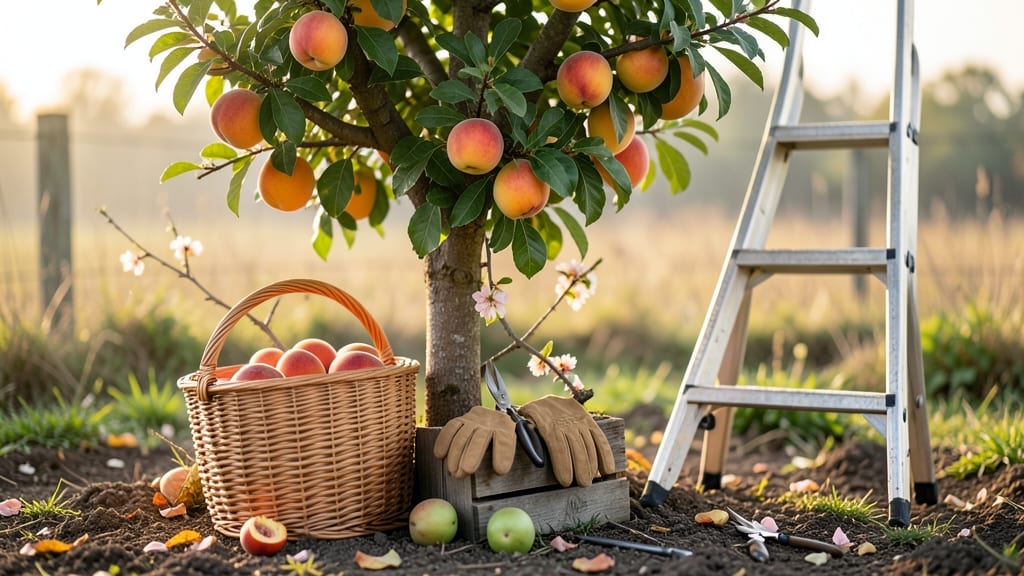
Peaches ripen during July and August—but timing your harvest wrong means mealy, sour fruit instead of juicy sweetness. 🍑
Picture this: You’ve waited months for your peach tree to burst with color, only to pick fruit that’s still hard or falls apart when sliced. The difference between a perfect harvest and a disappointment comes down to knowing when the fruit is just ripe—no guessing required.
In USDA Zone 6a, where many home gardeners grow peaches, the harvest window opens around mid-July for early varieties and stretches into August for later ones. But color alone isn’t enough—you’ll also need to check for that signature blush, a slight give when pressed, and a sweet, fragrant aroma.
Below, I’ll walk you through the exact signs to watch for, tools to make picking easier, and how to handle your harvest once it’s off the tree—so you end up with peaches that taste like summer, not disappointment.


How to determine the perfect peach harvest time by color, texture, and smell
Peaches ripen quickly, and picking them at the wrong time can turn your sweet harvest into a mealy disappointment. The key lies in combining three simple checks: color, texture, and aroma.
These cues work together to tell you when your peaches are ready to enjoy—not just for fresh eating but also for storage or preserving. I’ve learned the hard way that ignoring even one of these signs can ruin weeks of hard work!
Start with the color test, which varies by variety. Most peaches develop a deep yellow, orange, or red blush when ripe. For example, Elberta peaches turn golden with a red cheek, while Redhaven varieties develop a bright red blush.
However, color alone isn’t enough—some peaches stay green even when ripe, like Green Garnet varieties. Always cross-check with the other two tests!
| Variety | Color Cues | Texture Check | Aroma Test | Harvest Time (USDA Zone 6a) |
|---|---|---|---|---|
| Elberta | Golden yellow with red blush | Yields slightly to pressure | Sweet, floral scent | Late July |
| Redhaven | Bright red-orange blush | Gentle give near stem | Honey-like fragrance | Mid-August |
| Green Garnet | Greenish-yellow with red splotches | Softens near stem | Mild sweetness | Early August |
| J.H. Hale | Yellow with deep red blush | Stem twists easily | Strong peach aroma | Late July |
| Contender | Orange-red blush | Slightly soft at base | Sweet, tropical scent | Mid-August |
*Harvest times vary by 1-2 weeks based on climate and tree age. Always confirm with the stem test!
Next, perform the texture test by gently pressing the peach near the stem. A ripe peach will have a slight give—like pressing your thumb into a ripe avocado. If it feels rock-hard, it’s not ready yet.
Overripe peaches, on the other hand, become mushy and may leak juice when pressed. Pro tip: Twist the stem—if it separates cleanly from the fruit, it’s ready to pick!
The smell test is often the most reliable indicator. Hold a peach to your nose and take a deep sniff near the stem. A ripe peach should emit a sweet, floral, or honey-like aroma.
If it smells bland or sour, it’s not ready. Some varieties, like Redhaven, have a more pronounced scent, while others, like Green Garnet, are subtler. Trust your nose—it’s more accurate than color alone!
Regional differences matter! In warmer climates (Zones 8-10), peaches may ripen 2-4 weeks earlier than in cooler zones. For example, Elberta peaches in California’s Central Valley are often ready by late June, while those in Zone 6a (like my garden in Ohio) don’t ripen until late July.
Check local orchard harvest dates as a general guide, but always verify with your own color, texture, and smell tests.
One common mistake is picking peaches based on size alone. A large peach isn’t necessarily ripe—it might just be overfed! Focus instead on the three cues together.
For example, a Redhaven peach with a bright red blush but a firm texture isn’t ready, even if it’s the size of a baseball. Patience pays off—wait for all three signs to align!
If you’re harvesting for long-term storage, pick peaches when they’re firm but colored and let them ripen indoors at room temperature. This extends shelf life by 1-2 weeks. For immediate eating, wait until they’re fully soft and fragrant.
I like to harvest a few days before full ripeness if I plan to store them, then let them soften on my kitchen counter for 24-48 hours.
Finally, avoid harvesting in extreme heat or after rain, as this can stress the fruit and shorten its shelf life. Early morning is the best time to pick, when temperatures are cooler and the fruit is firmer.
Use a sharp pruning shear or clean knife to cut stems, leaving a 1-inch stem attached to prevent bruising. Handle peaches gently—they bruise easily, and bruised spots spoil faster!
With these cues, you’ll never miss the perfect peach harvest again. The first time I nailed it, I celebrated with a peach cobbler (well, as close as I could get without cooking emojis!). Now, I look forward to that sweet, juicy reward every summer. Happy harvesting! 🌱🍑
Peach ripening stages: when to pick for maximum sweetness vs. storage longevity
Peaches reach their peak sweetness when left on the tree to ripen fully, but this same maturity can shorten their storage life. Understanding the two key ripening stages—tree-ripe and market-ready—helps you decide whether to enjoy your peaches immediately or store them for later.
Tree-ripe peaches offer maximum flavor but soften quickly, while market-ready peaches hold up better for transport and short-term storage.
Tree-ripe peaches develop their full sugar content and aromatic compounds while still attached. These are the sweetest but require immediate use or refrigeration to prevent spoilage. Market-ready peaches, picked slightly firmer, can last 1-2 weeks at room temperature or up to 3 weeks in the fridge.
The choice depends on your priorities: flavor now or convenience later.
- Peak sweetness and flavor
- Best for immediate eating
- Develops complex aromas
- Spoils faster (2-3 days) at room temp
- Not ideal for shipping or storage
- Soft texture limits handling
- Lasts 1-2 weeks at room temp
- Better for storage and transport
- Firmer texture reduces bruising
- Less sweet or aromatic
- Requires extra ripening time at home
- May lack peak flavor potential
For tree-ripe peaches, look for a deep, even color and a slight give when gently squeezed near the stem. The fruit should also detach easily from the tree with a gentle twist.
If you plan to store them, pick peaches that are 80-90% ripe—they’ll soften further off the tree but won’t overripe as quickly.
To extend storage life, place peaches in a single-layer container and refrigerate at 32-36°F. Avoid washing until ready to eat, as moisture speeds up spoilage. For longer storage, consider freezing peeled slices in airtight bags, though texture may soften.
Peaches picked at market-ready stage can ripen at room temperature for 2-3 days before refrigeration.
Regional climate plays a role: Southern peaches often ripen earlier (June-July) and may need faster handling, while Northern varieties (July-August) can afford slightly longer storage. Always check for pest damage or bruising before storing, as these compromise shelf life. A quick inspection saves wasted fruit!
Pro tip: Place a paper towel in the storage container to absorb excess moisture, which helps peaches stay fresher longer. And remember—never mix ripe and unripe peaches in storage, as ethylene gas from ripe fruit speeds up ripening in nearby peaches, leading to uneven spoilage.