
How To
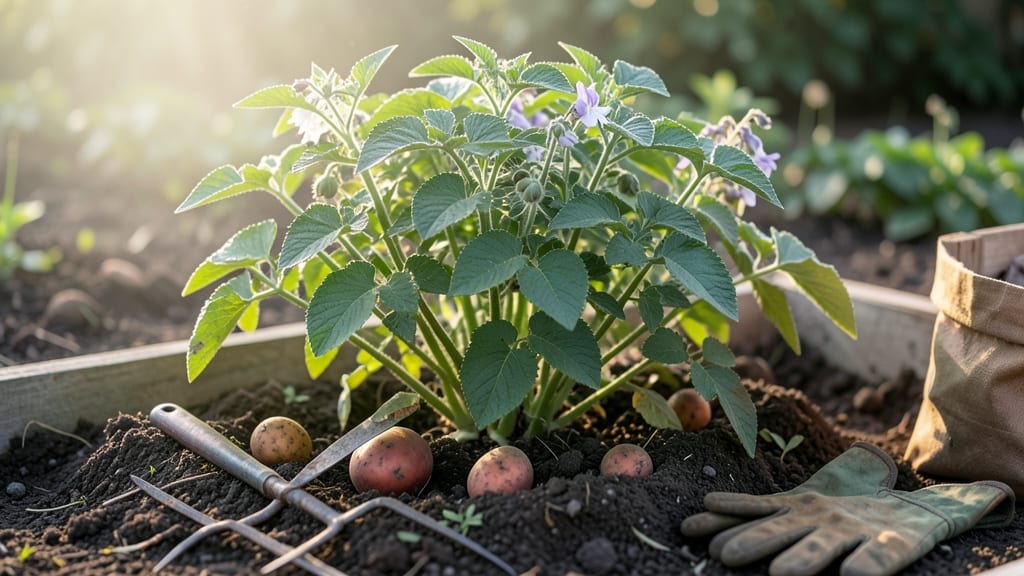
Harvesting potatoes takes between 70 to 120 days after planting, depending on the variety and growing conditions you’ve got going in your garden.
If you’ve ever eagerly checked your 🥔 patch only to find tiny, underdeveloped tubers, you’re not alone. The key to timing your harvest isn’t just about days on the calendar—it’s about recognizing when your plants are ready, not just when the calendar says they should be.
Early varieties like ‘Yukon Gold’ can be ready in as little as 60 days, while late-season types like ‘Russet Burbank’ may need the full 120 days.
Soil type, climate, and even how you mulch can shift that timeline by weeks, so knowing the signs of readiness is just as important as the days on the calendar.
Below, I’ll break down exactly how to tell when your potatoes are ready—plus how to adjust for your specific growing conditions—so you can dig up a harvest instead of waiting in vain.

Potato harvest timeline by variety: early, mid-season, and late types explained
Timing your potato harvest correctly ensures you get the best flavor and texture from your crop. The key lies in understanding your potato variety and recognizing the right visual cues.
Early varieties like 'Red Norland' can be ready in as few as 70 days, while late varieties like 'Russet Burbank' may take up to 120 days to mature. Let's break down the exact harvest windows for popular varieties and what to watch for.
Most gardeners start counting days from planting, but the actual harvest window depends on both variety type and growing conditions. Early potatoes are perfect for quick harvests, mid-season varieties offer a balance, and late potatoes store well for winter use.
Knowing these differences helps you plan your garden layout and succession planting for continuous harvests throughout the season.
| Variety Type | Days to Harvest | Harvest Window | Key Signs |
|---|---|---|---|
| Early (New Potatoes) | 70-85 days | Late June to early July | Foliage yellows, tubers 1-2 inches |
| Mid-Season | 85-100 days | July to mid-August | Flowers fade, skin toughens |
| Late (Storage) | 100-120 days | Mid-August to September | Foliage dies back completely |
| Examples | Yukon Gold (90 days) | Red Pontiac (85 days) | Russet Burbank (110 days) |
For early varieties like 'Red Norland' or 'Early Girl', you can start harvesting as soon as the tubers reach 1-2 inches in diameter. These potatoes are perfect for quick meals and can be harvested in batches throughout the season.
Look for yellowing foliage and rough skin as your primary indicators. I like to check these potatoes every 2-3 weeks starting around 70 days after planting.
Mid-season varieties like 'Yukon Gold' and 'Kennebec' are my go-to choices for a balance between harvest timing and storage potential. These typically mature between 85-100 days, and you'll notice the flowers begin to fade and the skin toughens significantly.
This is when the tubers are fully developed and ready for digging. I wait until the foliage starts yellowing before harvesting these varieties to ensure full flavor development.
Late varieties, such as 'Russet Burbank' and 'Idaho Russet', are designed for long-term storage and require the longest growing season. These potatoes take 100-120 days to mature, and I always wait until the foliage has completely died back before harvesting.
This ensures the tubers have fully developed their protective skins and stored enough starches for winter. I find that harvesting these potatoes too early results in thin-skinned tubers that bruise easily.
One of my favorite tricks for determining harvest readiness is the finger pressure test. Gently press the skin of a tuber—if it feels firm and rough, it's ready. If the skin is still smooth, give it another 1-2 weeks.
This method works especially well for new potatoes that you want to harvest early. Remember, over-maturing can lead to sprouting or skin toughening, which affects taste and storage life.
Harvest timing also depends on your climate zone. In cooler regions, potatoes often mature faster due to shorter daylight hours, while warmer climates may require shade cloth to prevent early flowering.
I've found that in Zone 6a, my late varieties sometimes need an extra 1-2 weeks compared to the published timeline. Always adjust based on your local conditions and the specific variety's needs.
If you're growing multiple varieties in the same garden, I recommend planting them in separate rows or containers to avoid cross-contamination. This makes it easier to monitor each variety's progress and harvest at the optimal time.
For example, I plant 'Red Pontiac' in one bed and 'Yukon Gold' in another, so I can harvest the 'Red Pontiac' first for early meals while the 'Yukon Gold' continues to mature.
Finally, don't forget that harvest timing affects storage life. Early varieties like 'Early Rose' are best eaten fresh, while late varieties like 'Katahdin' store beautifully in a cool, dark place for months.
Understanding these differences helps you plan your garden for both immediate use and long-term storage. With the right timing
How soil type and climate affect potato harvest speed (and how to adjust)
Your potato harvest speed isn’t just about the variety—soil type and climate play equally critical roles. In sandy soil, for example, tubers mature faster (as early as 60 days) because water drains quickly, but they may be smaller.
Meanwhile, clay soil can delay harvests by 2-3 weeks due to poor drainage and slower root development. Understanding these differences helps you adjust planting and care strategies for your specific garden conditions.
Climate also shifts the timeline dramatically. In cooler regions (USDA Zones 3-5), potatoes often take 10-14 days longer to mature compared to warmer zones (Zones 6-9). This is because cooler temperatures slow metabolic processes, including tuber formation.
If you’ve planted in a warmer microclimate, however, you might harvest earlier—but watch for heat stress, which can stunt growth if soil stays too dry.
Here’s how your soil type and climate zone impact harvest speed, along with actionable adjustments to optimize your timing:
Soil Type vs. Harvest Speed
- ✅ Faster harvest (60-80 days)
- ✅ Looser soil = less compaction
- ✅ Warmer soil speeds growth
- ✅ Ideal balance (80-100 days)
- ✅ Retains moisture without waterlogging
- ✅ Rich nutrients support larger tubers
- ❌ Slower harvest (90-110+ days)
- ❌ Poor drainage risks rot
- ❌ Cooler soil delays tuber formation
- 🔹 Sandy soil: Add compost to retain moisture
- 🔹 Clay soil: Mix in sand/peat moss for drainage
- 🔹 All soils: Use mulch to regulate temperature
In cooler climates, extend your growing season by choosing early-maturing varieties like ‘Red Norland’ (70 days) or ‘Kennebec’ (80 days). These thrive in shorter seasons and tolerate chilly soils better than late varieties.
For warmer zones, opt for heat-tolerant types like ‘Sweet Potato’ (though technically a different plant) or ‘Yukon Gold’ (90 days), but ensure consistent moisture to prevent stress.
If your potatoes are growing too slowly, focus on soil amendments. For sandy soil, work in 2-3 inches of compost before planting to improve moisture retention.
In clay soil, amend with coarse sand or perlite to break up compaction. Mulching with straw or grass clippings also helps regulate soil temperature—critical for faster tuber development in both hot and cold climates.
Finally, watch for visual cues like yellowing foliage or rough tuber skin, which signal readiness regardless of soil type. In clay-heavy soils, dig gently to avoid damaging tubers, while in sandy soils, harvest slightly earlier to prevent dehydration.
Adjusting for your local conditions ensures you’ll dig up potatoes at peak flavor and size, not months late.