
How To
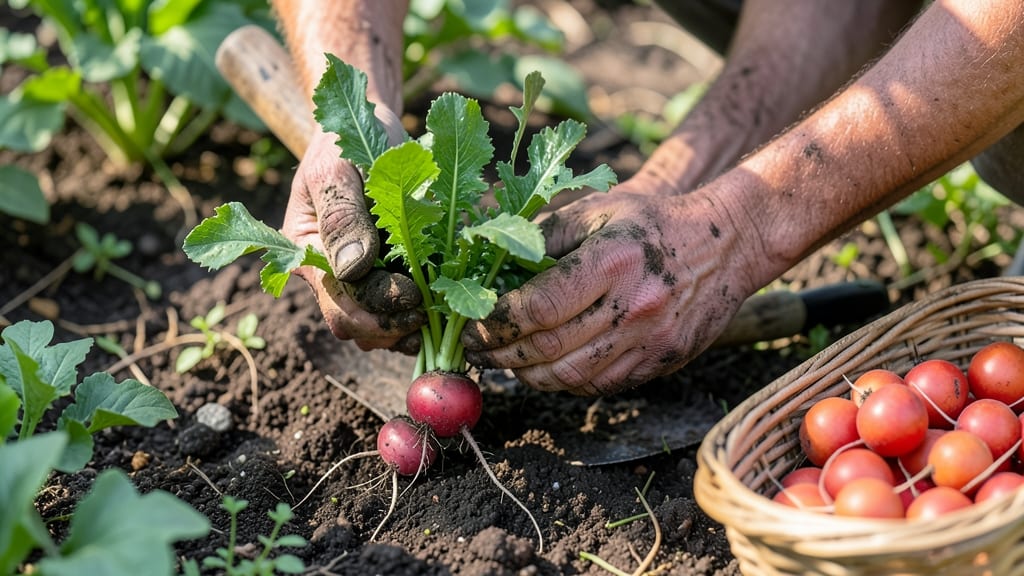
Harvesting French Breakfast radishes 🥕 at the right time turns a fast-growing crop into a crisp, pepper-free feast—or a tough, bitter disappointment.
Picture this: you’ve waited three weeks for those bright pink roots to pop up, only to pull one and find it still tiny and pale. Or worse, you dig too late and uncover a woody mess that’s all texture and no flavor.
The difference between perfect and ruined comes down to three simple visual cues.
Most gardeners know these radishes grow quickly, but few realize how fast they go from tender to tough. Too early, and they’re barely edible; too late, and they turn pithy.
The key is catching them when they’re 1 to 1.5 inches wide, with a deep, vibrant color and leaves that stay lush and green.
Below, I’ll walk you through exactly what to look for—plus how to adjust your harvest window based on whether you planted in spring or fall—so you never miss the sweet spot again.

3 Visual cues to harvest French Breakfast radishes at peak flavor
French Breakfast Radishes are one of the fastest vegetables in my garden, ready to harvest in just 20-30 days—but timing is everything. Harvest too early, and you'll get tiny, underdeveloped roots with mild flavor.
Wait too long, and those sweet, crisp radishes turn bitter and woody, ruining their delicate taste. The secret? Watching for these three key visual cues to pick them at their sweetest peak.
I've learned the hard way that radishes don't wait for you. Their growth is rapid, and that window for perfect harvest shrinks quickly. The good news? These three simple visual checks will help you avoid the common mistakes of harvesting too soon or too late.
Let's dive into what your radishes should look like when they're ready to pull from the soil.
When you see all three of these cues together, it's time to harvest. I always grab my favorite child-safe pruners or simply use my fingers to gently pull the radishes from the soil.
The roots should come out cleanly without much resistance. If they feel stuck, let them grow a little longer—they're not quite ready yet.
One mistake I made early on was waiting until the radishes looked "big enough" in my mind, only to find they'd become tough and bitter. French Breakfast Radishes are all about timing—they're designed to be harvested small for their best flavor.
That's why these visual cues are so important. The moment they hit that 1-1.5 inch diameter with vibrant color and tender texture is your perfect harvest window.
What happens if you miss that window? I've learned that radishes left too long in the ground develop a pithy center that becomes tough and fibrous.
The flavor also shifts from sweet to bitter and peppery, which is why these varieties are called "French Breakfast"—they're meant to be enjoyed fresh and mild. Once they go past their prime, even cooking won't save them.
Pro tip: For continuous harvests, I plant successive radish batches every 2 weeks. This ensures I always have fresh radishes ready to pick at the perfect moment.
The key is to stay vigilant—check your radishes regularly, especially as they approach that 3-4 week mark after planting. That's when they'll be hitting their peak flavor window.
Remember, radishes are cool-season crops that thrive in spring and fall. In hot summer weather, they bolt quickly, so timing your planting for cooler months gives you the best chance at perfect harvests.
When you see those three visual cues come together, grab your basket and enjoy the fruits of your labor—literally! There's nothing like the fresh, crisp taste of a radish pulled straight from your garden at its peak.
Now that you know what to look for, you'll never miss the perfect harvest moment again. Happy digging! 🥕
How long it takes: French Breakfast radish growth timeline by season
French Breakfast radishes grow blazingly fast, but their harvest window shifts dramatically between spring and fall plantings. In spring, cooler soil and shorter daylight slow growth slightly, while fall plantings benefit from warmer soil and longer daylight, speeding up maturity.
Understanding these seasonal differences means you’ll never miss the 30-day sweet spot again.
For spring plantings in USDA Zone 6a, aim to harvest between April and May—about 30-40 days after sowing. Fall plantings, however, mature faster, often ready by late September to October, with harvests possible in just 25-35 days thanks to warmer soil temperatures.
The key is tracking both days since planting and soil temperature, which directly impacts growth speed.
| Season | Planting Window | Days to Harvest | Ideal Soil Temp | Harvest Months |
|---|---|---|---|---|
| Spring | March-April | 30-40 days | 45-60°F | April-May |
| Fall | August-September | 25-35 days | 55-70°F | September-October |
Daylight hours also play a role. In spring, shorter days mean slower growth, while fall’s longer daylight accelerates maturity. For example, if you plant in late March, expect harvests around mid-April, but if you plant in early August, you might harvest as early as late August.
Always check your local frost dates—spring radishes should be harvested before the last frost, while fall radishes can often survive until the first frost.
Pro tip: Use row markers to track planting dates. Label each row with the sowing date so you can calculate the 30-day harvest window accurately. If you’re unsure, do a quick soil temperature check—ideal spring temps are 45-60°F, while fall temps should be 55-70°F.
Warmer soil speeds up growth, so adjust your expectations accordingly.
One common mistake is assuming all radishes take the same time to mature. Fall plantings often outpace spring ones by 5-10 days due to warmer soil. If your radishes seem to be growing unusually fast or slow, check the soil temperature and adjust your harvest timeline.
For example, if your soil is above 70°F, they may mature in just 20 days—so stay vigilant!
By aligning your harvest schedule with these seasonal cues, you’ll consistently enjoy crisp, pepper-free French Breakfast radishes. The difference between a perfect harvest and a bitter disappointment often comes down to timing—and now you’ve got the tools to nail it every season. Happy digging! 🥕